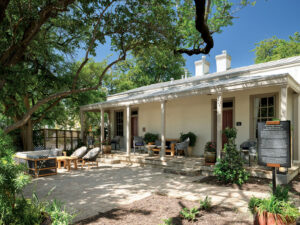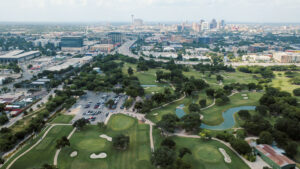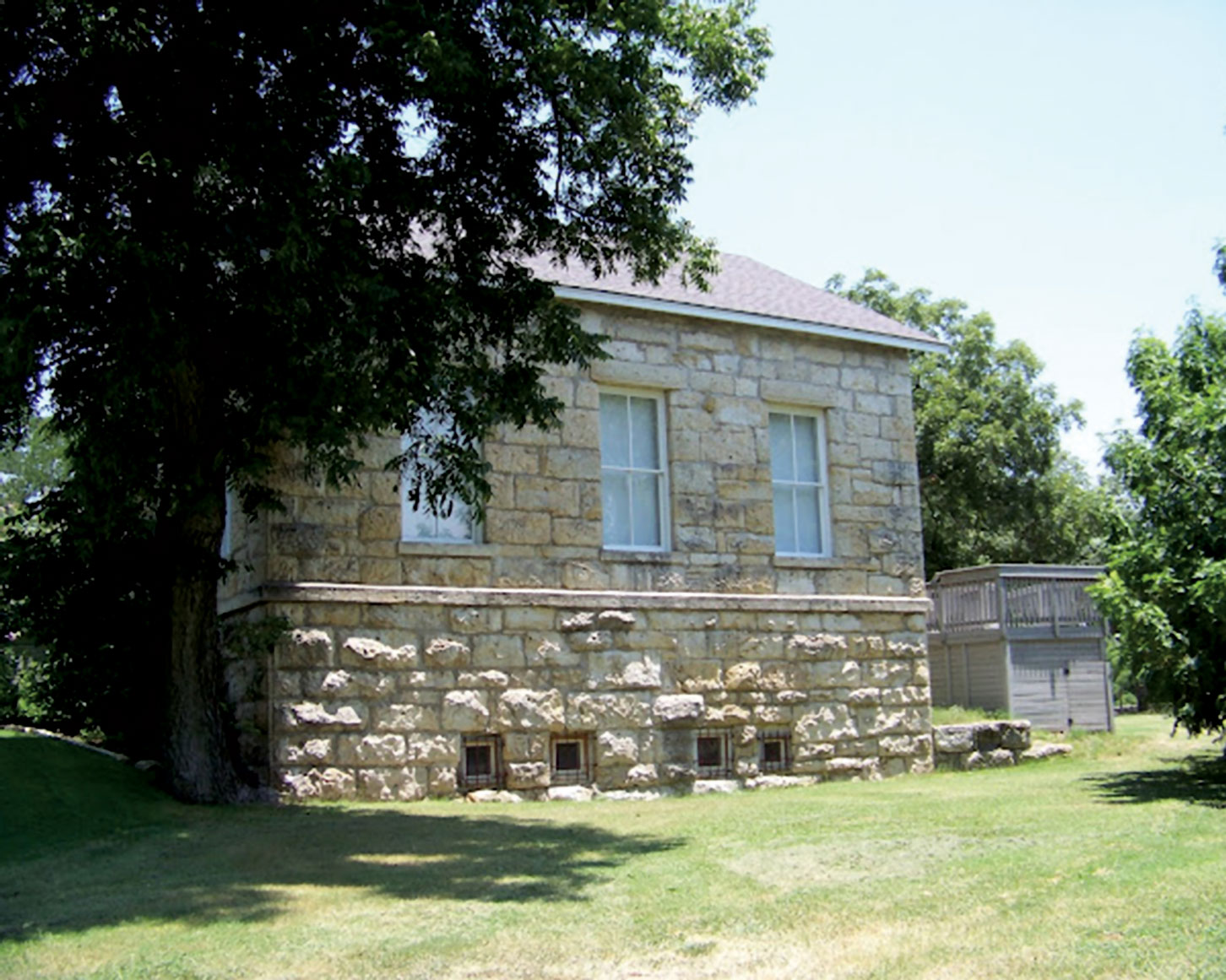
But that nearby limestone building has a fascinating history of its own. Built in 1885 as “Pump Station No. 2,” it was part of an expansion of the original San Antonio Water Works. But by 1915, it was abandoned and almost forgotten, as the city’s magnificent golf course took shape.
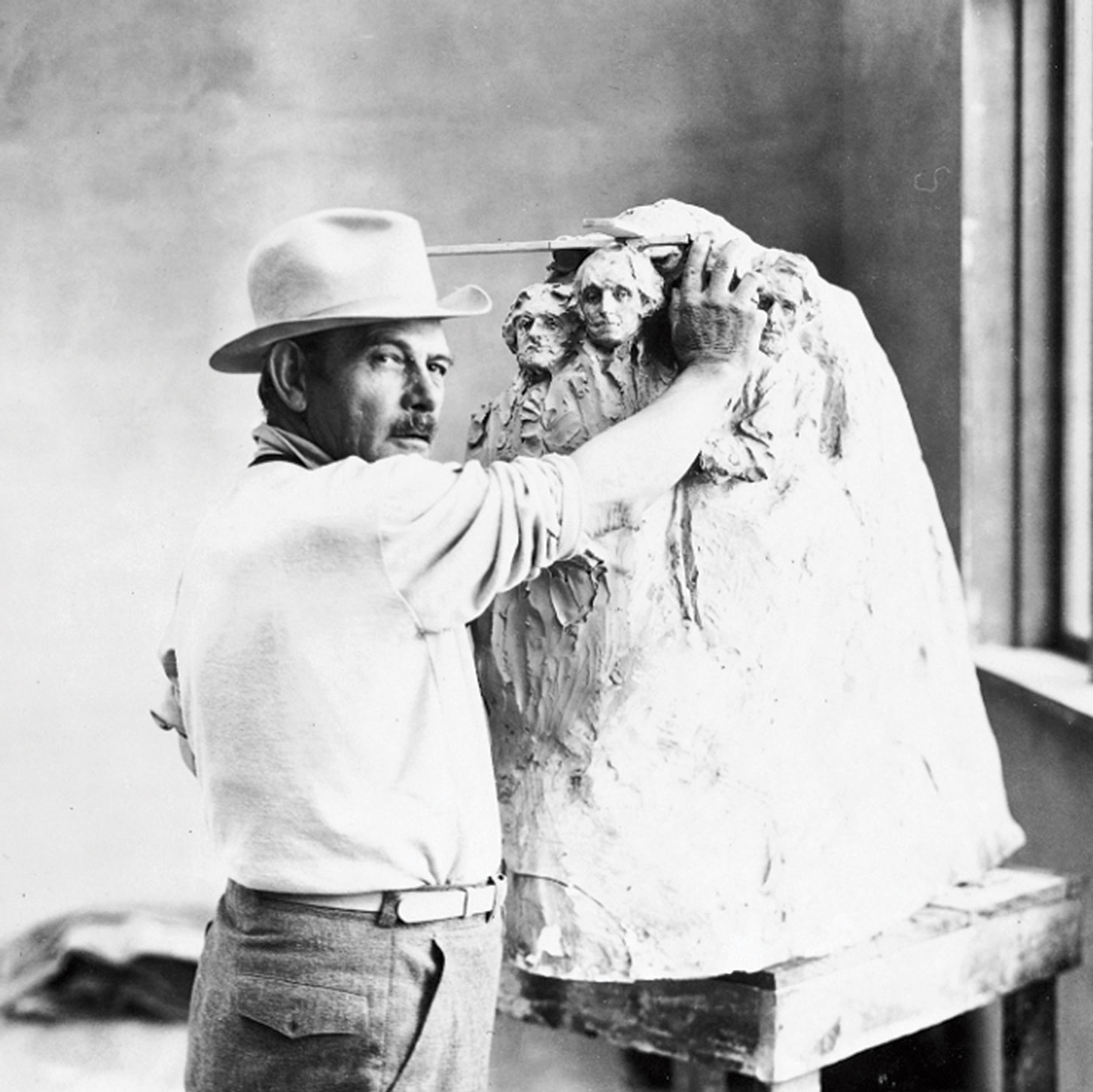
In 1924, the pump house got a new lease on life as an artist’s studio when Gutzon Borglum, the sculptor who created Mount Rushmore, came to town. John Gutzon de la Mothe Borglum was born in Idaho to immigrant Danish parents. His talent led him to study in California and, from there, to Europe, where he gained some fame. By the time he returned to the U.S. in the early 1900s, he was best known as a monument sculptor.
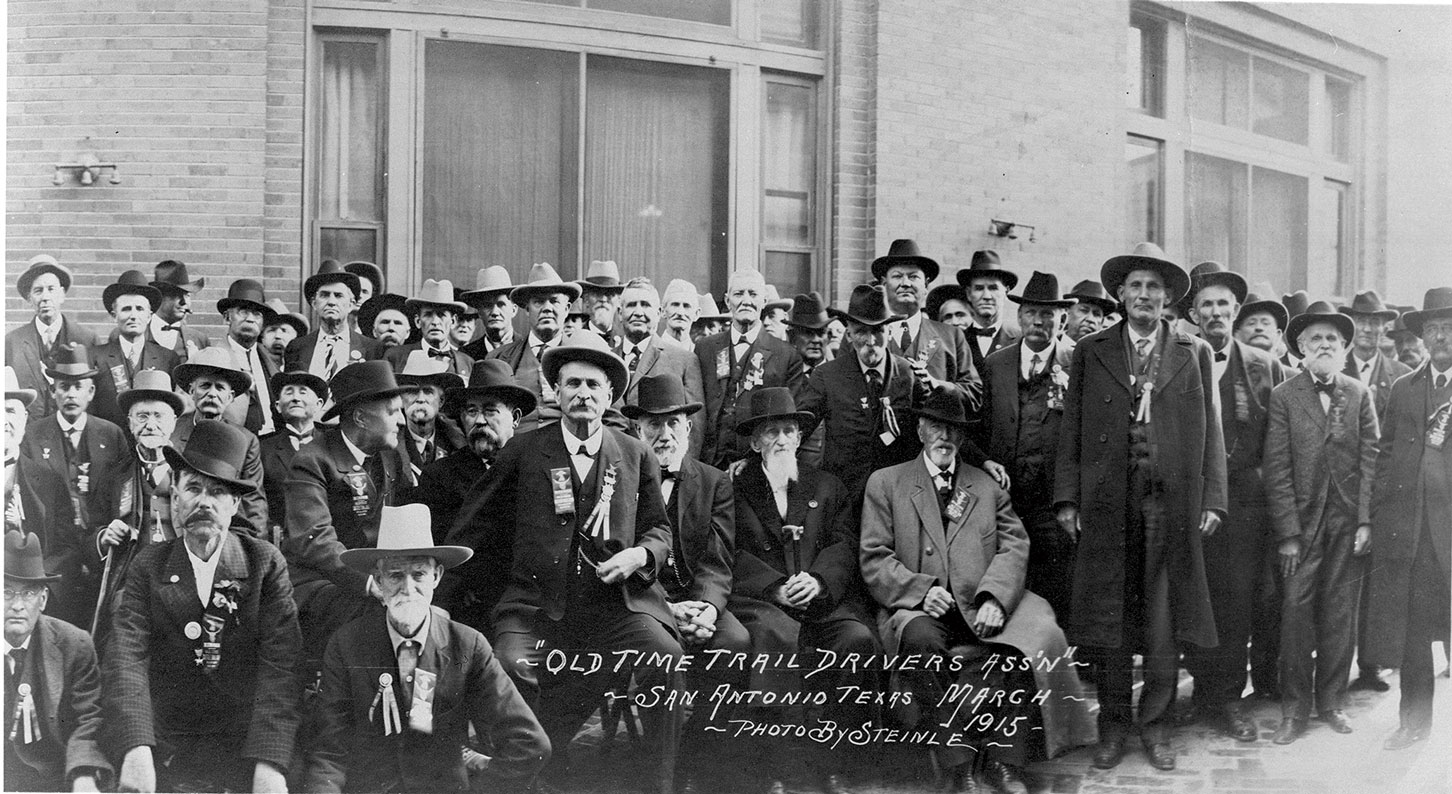
Borglum came to San Antonio in 1924 at the invitation of the Texas Trail Drivers Association, which commissioned a monument to the early cattle drivers. He moved into a suite at the Menger Hotel and started looking for a suitable studio. He found the abandoned pump house — perhaps because the Trail Drivers group held their meetings in Brackenridge Park. The building and location suited his needs, but he still spent a whopping $7,000 remodeling it, adding a 650-square-foot wooden extension, skylights and a view of the tree-lined golf course.
Over the next decade, he produced an extraordinary range of sculptures in this modest building — portraits, monuments and ambitious public works. He worked on the Trail Drivers’ project and a few other San Antonio commissions. But it was also here that he shaped the first versions — small in scale, enormous in consequence — of what would become one of the most recognizable monuments in the world.
In 1925, Borglum met with South Dakota officials who were considering commissioning a large sculpture of Western heroes as a tourist attraction. Borglum reshaped the vision. He proposed carving presidents — what he called the nation’s “empire makers” — for a monument that would define American identity itself. His vision began to take shape in San Antonio. Borglum started by experimenting with colossal carved heads. The early figures — George Washington, Thomas Jefferson and Abraham Lincoln — were first modeled here in clay and plaster.
The models created here helped secure funding and refine the technical challenges of carving on a massive scale. By the time work began on Mount Rushmore in 1927, the concept had already been tested far from the granite cliffs where it would ultimately rise.
March 25, 1867 – March 6, 1941
Each winter, as work on Mount Rushmore continued in the Black Hills of South Dakota, Borglum returned to his San Antonio studio. For more than a decade, the city remained part of his creative orbit.
His time in San Antonio ended abruptly in the 1930s, when he lost his bid to create a monument to the heroes of the Alamo. When the Alamo Cenotaph Commission chose rival sculptor Pompeo Coppini, Borglum left town for good.
By then, Mount Rushmore was well underway. Borglum would not live to see it completed; he died in 1941, and his son, Lincoln, finished the work. Ironically, Lincoln Borglum has a more permanent presence in San Antonio than his father did. Although he spent his last years in Beeville and died in Corpus Christi, he is buried under a relatively modest headstone in San Antonio’s City Cemetery #1.
The Trail Drivers sculpture Gutzon Borglum came here to create was finally cast in bronze a few years after he left town. Because funds were short, it is only about a quarter of the size Borglum first envisioned. You can see it at the Witte Museum, in Brackenridge Park, today.
The pump house entered a quieter chapter after Borglum left. He turned the studio over to the Witte, and it briefly became an art school. Then came more years of neglect, until a pair of architects restored it once again as an office. When they moved out a few years later, the building was abandoned yet again until 2007, when it was included in a multi-million-dollar overhaul of the park and golf course.
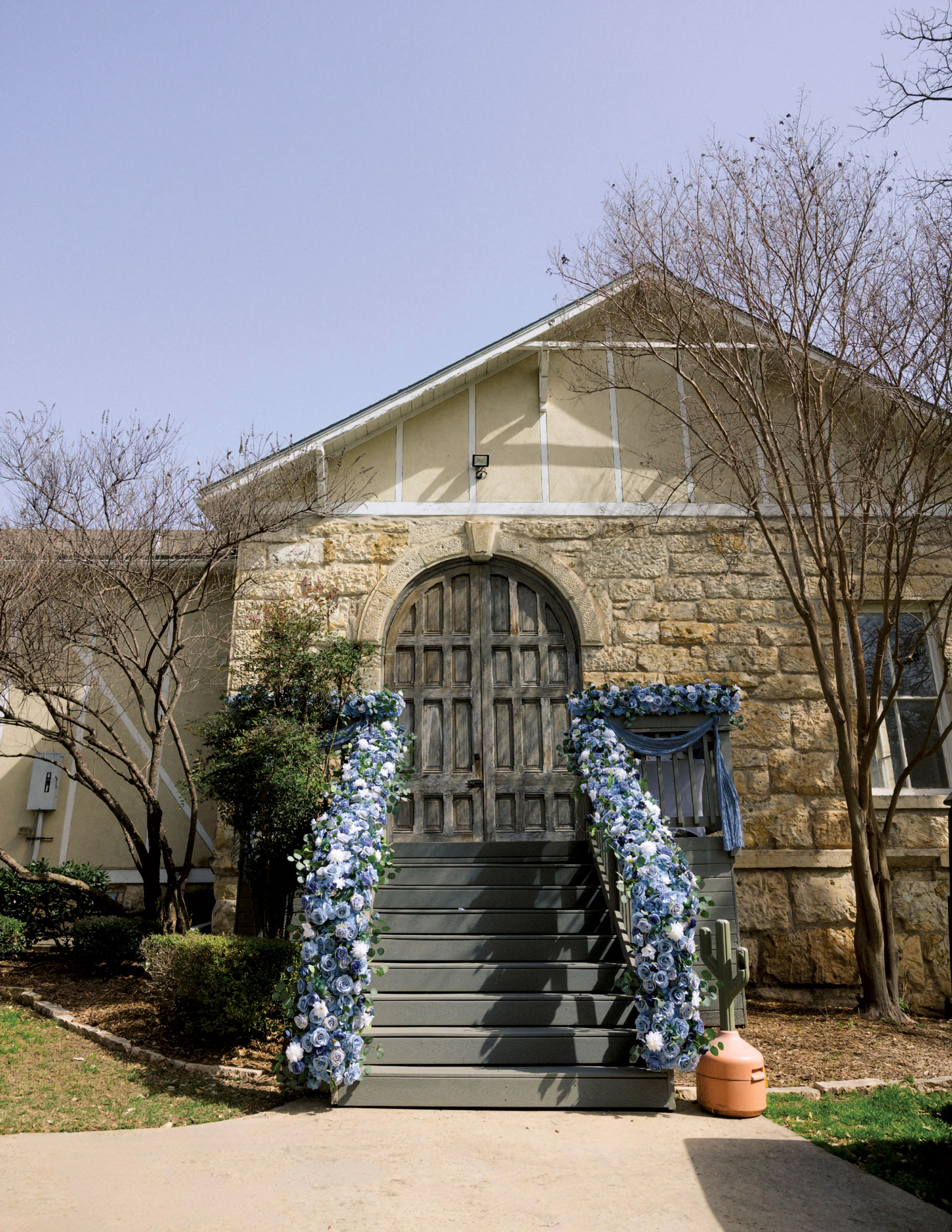
Today, the old pumphouse/studio has a new life as a unique event venue managed by the Alamo City Golf Trail. Inside the renovated building, it’s easy to miss what once happened there. The tools are gone. The models are gone. The sculptor himself has long since passed into history.
But the connection remains.
As guests gather beneath the restored beams of the old Borglum Studio, they occupy a space where something enormous once began — quietly, and quite improbably, in San Antonio.
*To inquire about renting the Borglum Studio for an event, email kate@satxgolf.com.