



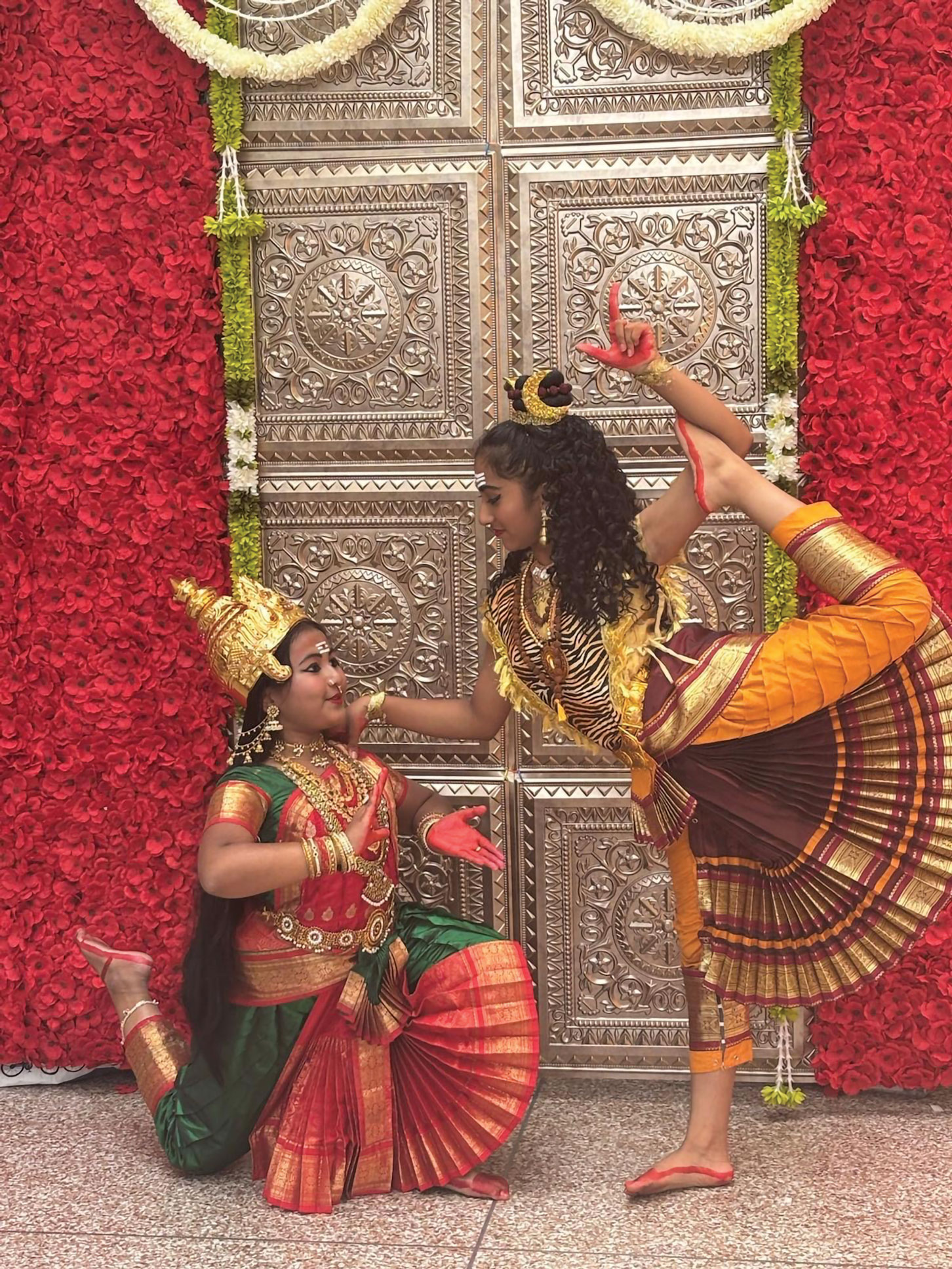
When India Dances
The colors flash before you first; the sound and movement follow. Jewel-bright reds, greens and blues shimmer across the stage. Gold-trimmed silk flashes under the lights, along with elaborate jewelry at dancers’ wrists, necks and foreheads. Then comes the sound: rows of tiny bells wrapped around the dancers’ ankles turn stamping feet into percussion, keeping intricate rhythms with the exotic sounds of percussion, flute, violin and voice. Now watch the dancers’ faces. Eyes dart and widen. Eyebrows lift. A head tilts. A hand unfurls. Fingers form precise shapes. Expressions flash from anger to tenderness, sorrow to surprise to joy. Eyes, hands, faces and bodies work together until movement becomes language. The dancers are telling stories. This is Bharatanatyam, the ancient classical dance tradition of South India, an art form that traveled thousands of miles and across generations to put down deep roots in San Antonio.