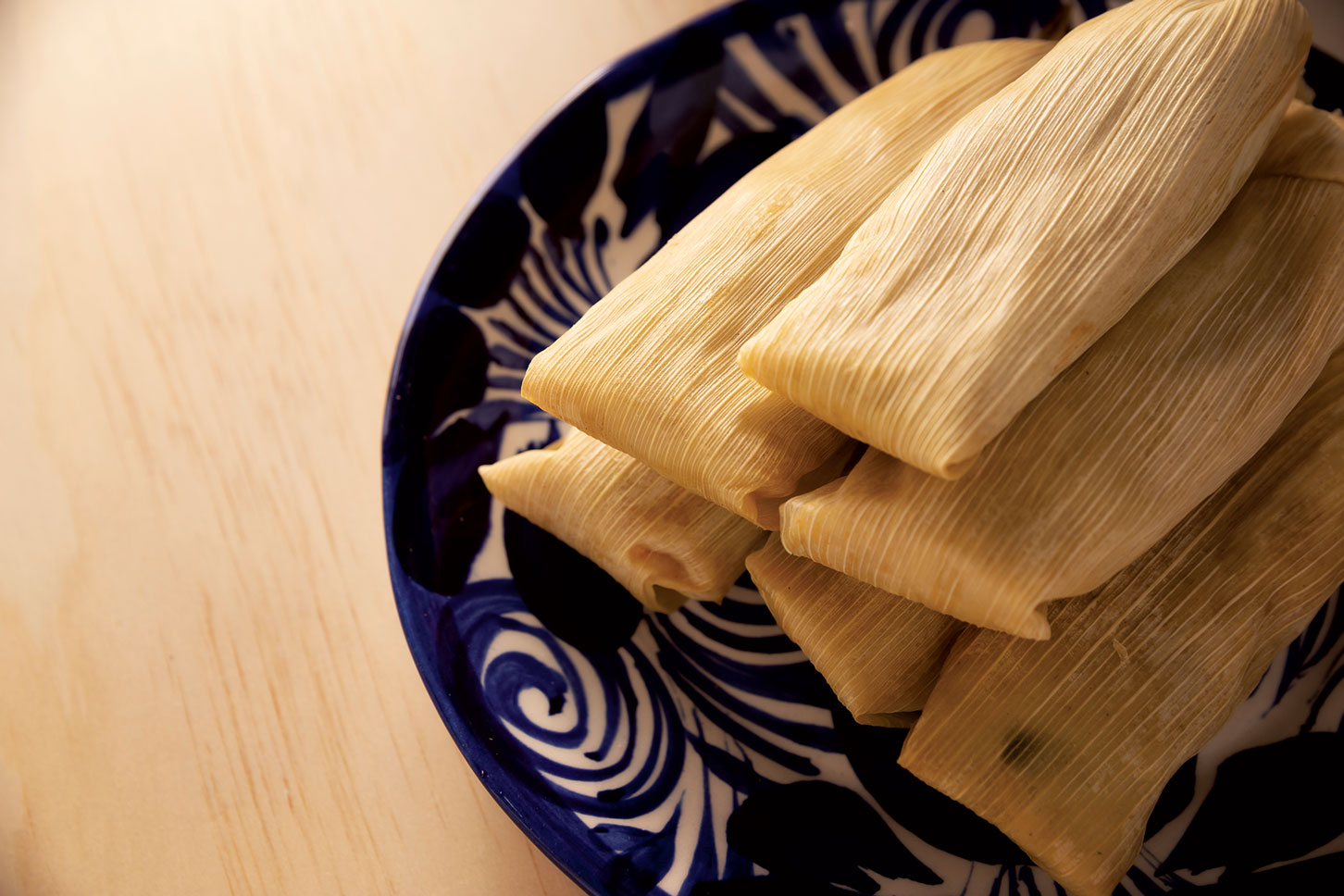
When the holiday season rolls around, South Texans start thinking of tamales. Where to get them, how many, what kind to get and when to order (early! Some places run out weeks before Christmas). And for do-it-yourselfers — who’s coming to the tamalada?
What’s with tamales? Why are they so special? Two main reasons — taste and tradition.
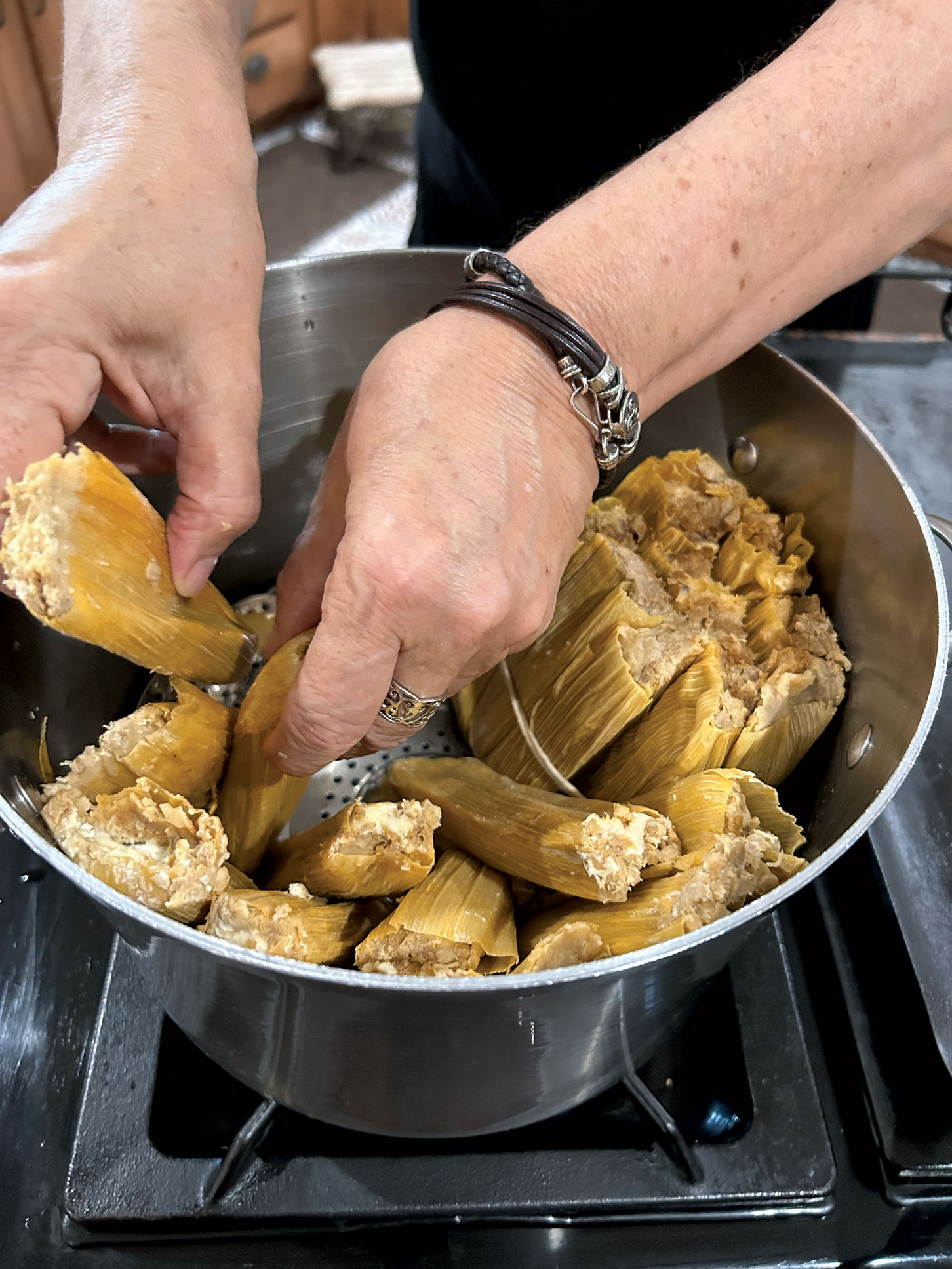
A good tamal is a delicacy. A neat corn-husk packet of light, tender masa (ground corn dough) that melts in your mouth, with a generous filling of something savory, spicy or sweet. (In tropical climates, plantain leaves are often substituted for corn husks, so the tamales are more square than long.) The wrapper, the filling — even the masa — can be adjusted to popular taste.
Tradition plays a big part in tamales’ popularity, and tamal tradition goes waaaay back. In Tamales, Comadres and the Meaning of Civilization, historian Antonia Castañeda writes that tamales originated in Mexico and Central America as early as 7000 BCE. Their masa was made of maize — the ancestor of the corn we know today. Corn was a vital staple for those civilizations. The rich and the poor ate some form of tamales. For lavish ceremonial occasions in Moctezuma’s court, tamales were stuffed with elegant edibles. The gods liked tamales, too, and each god had a favorite filling. For the Jaguar god, women prepared bean and chiles tamales, for the Lord of Fire, shrimp and chiles ones. Huitlacoche tamales and cups of hot chocolate were offered to the Lord of Rain and Thunder.
Like the old gods, today’s tamal-lovers have their own favorites with similar fillings. However, the most common tamal type in South Texas is pork simmered with red chiles, and there was no pork in the Aztecs’ time; Spaniards brought pigs to the New World later.
Tastes and ingredients change over time, but tamale traditions endure.
“The tradition hasn’t changed,” said Ellen Riojas Clark, PhD, co-author of Tamales, Comadres, and the Meaning of Civilization, with poet Carmen Tafolla. (An expanded edition of the popular book is due out from Texas A&M University Press soon.)
“We make tamales the way they were made thousands of years ago. To me, that’s astonishing. We still use corn that was first cultivated in Mexico. Chiles and tomatoes came from the Americas. We still use the molcajete, a tool thousands of years old.” (A molcajete is the rough black basalt mortar and pestle the Aztecs used to grind herbs and spices.)
Clark, a renowned professor emerita of bilingual-bicultural studies at UTSA, is also a go-to expert on the culinary traditions of Mexico and a passionate advocate of tamales. She wants to see San Antonio officially recognized as “The Tamal Capital of Texas.” “It has always been part of our cultural heritage in San Antonio,” she said. “We have them all the time, so most people just take them for granted.”
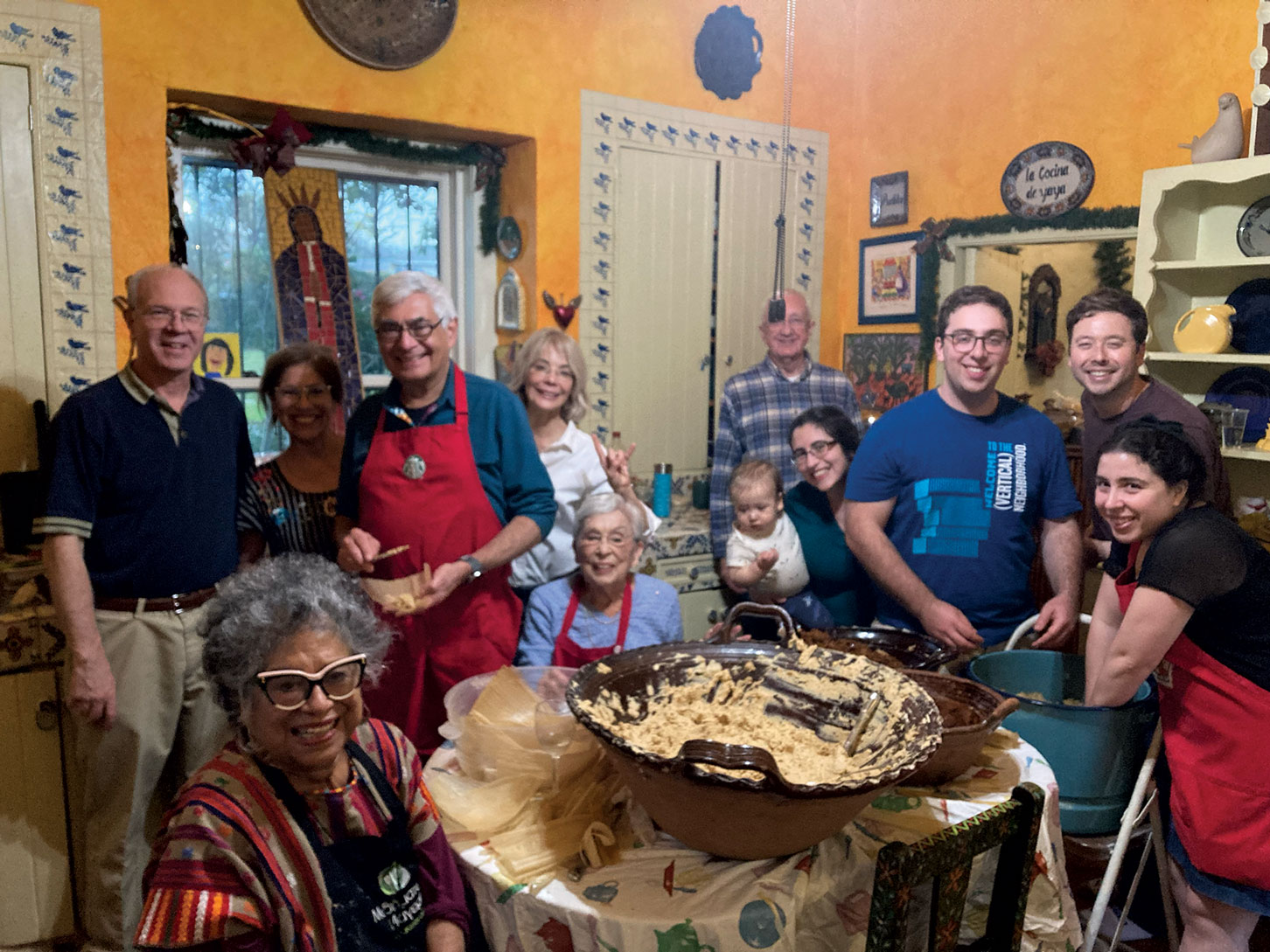
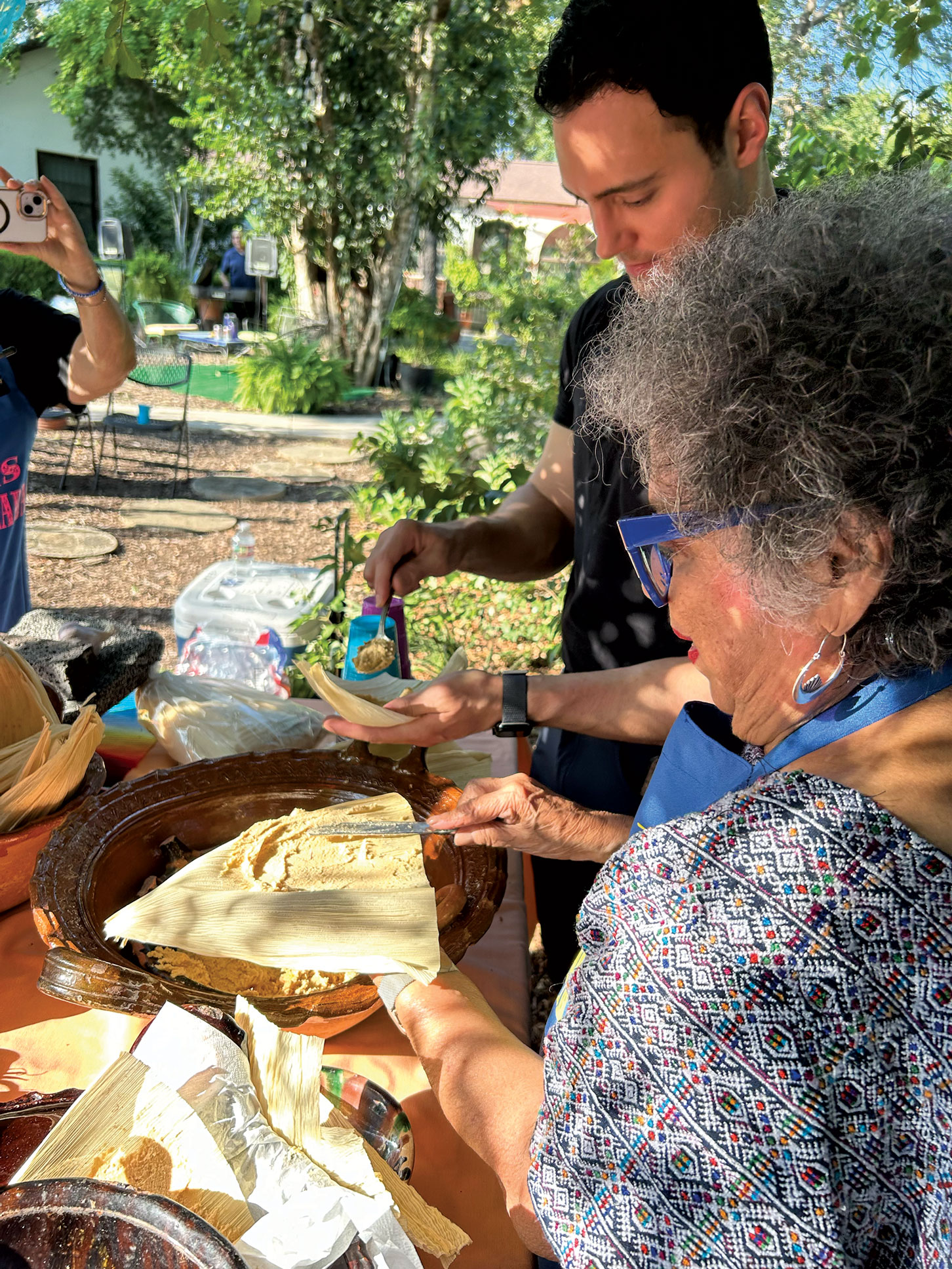
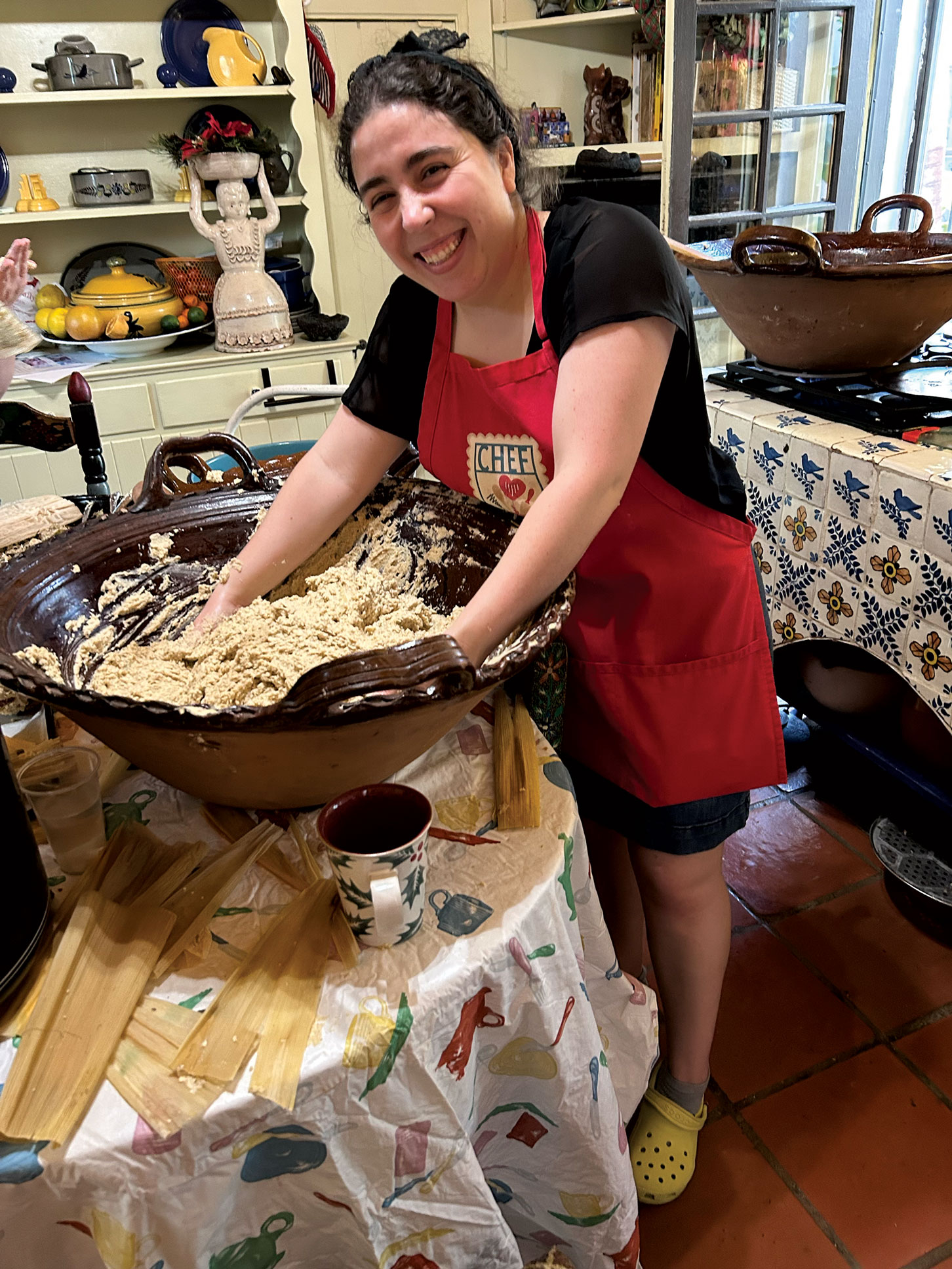
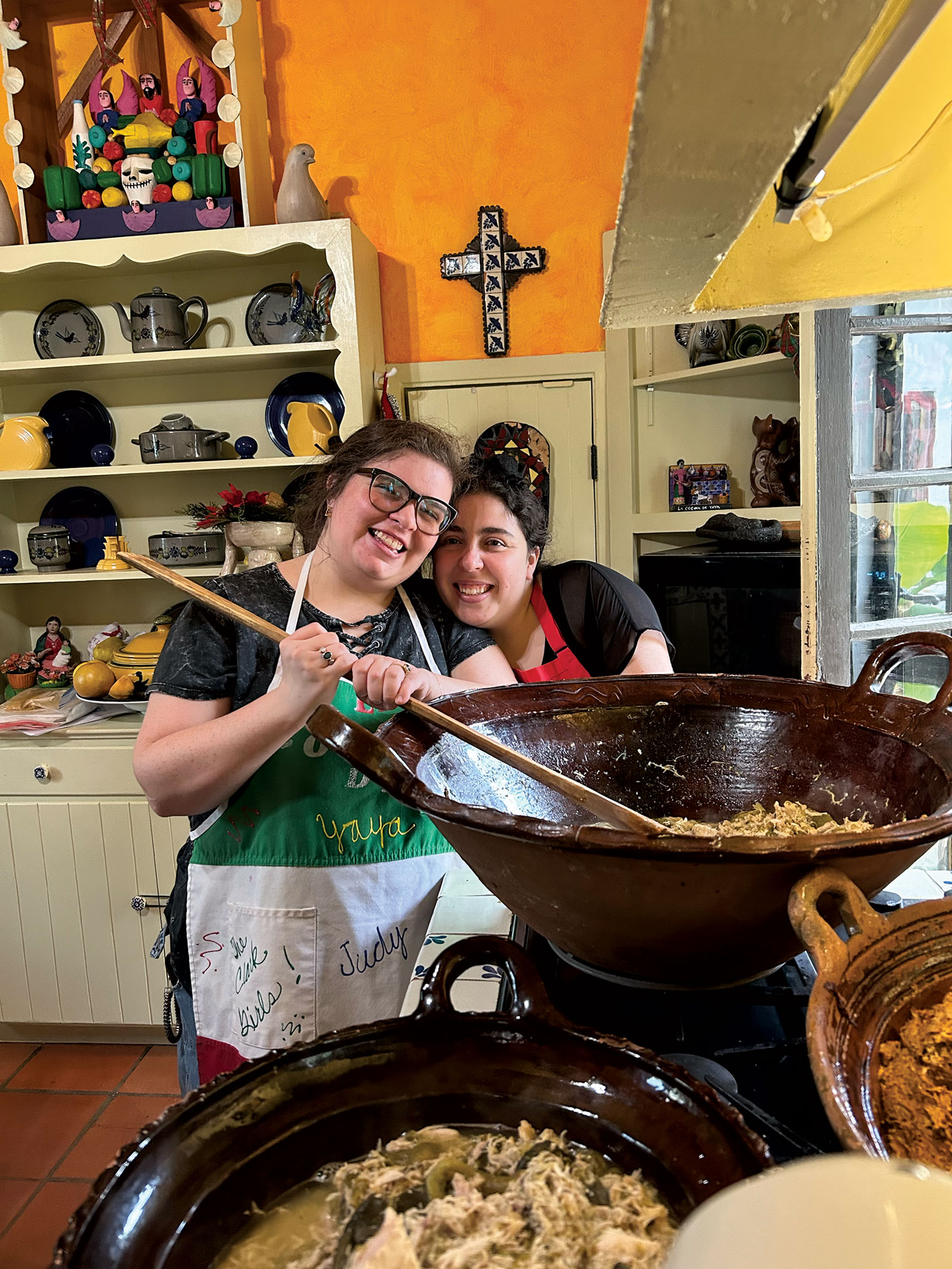
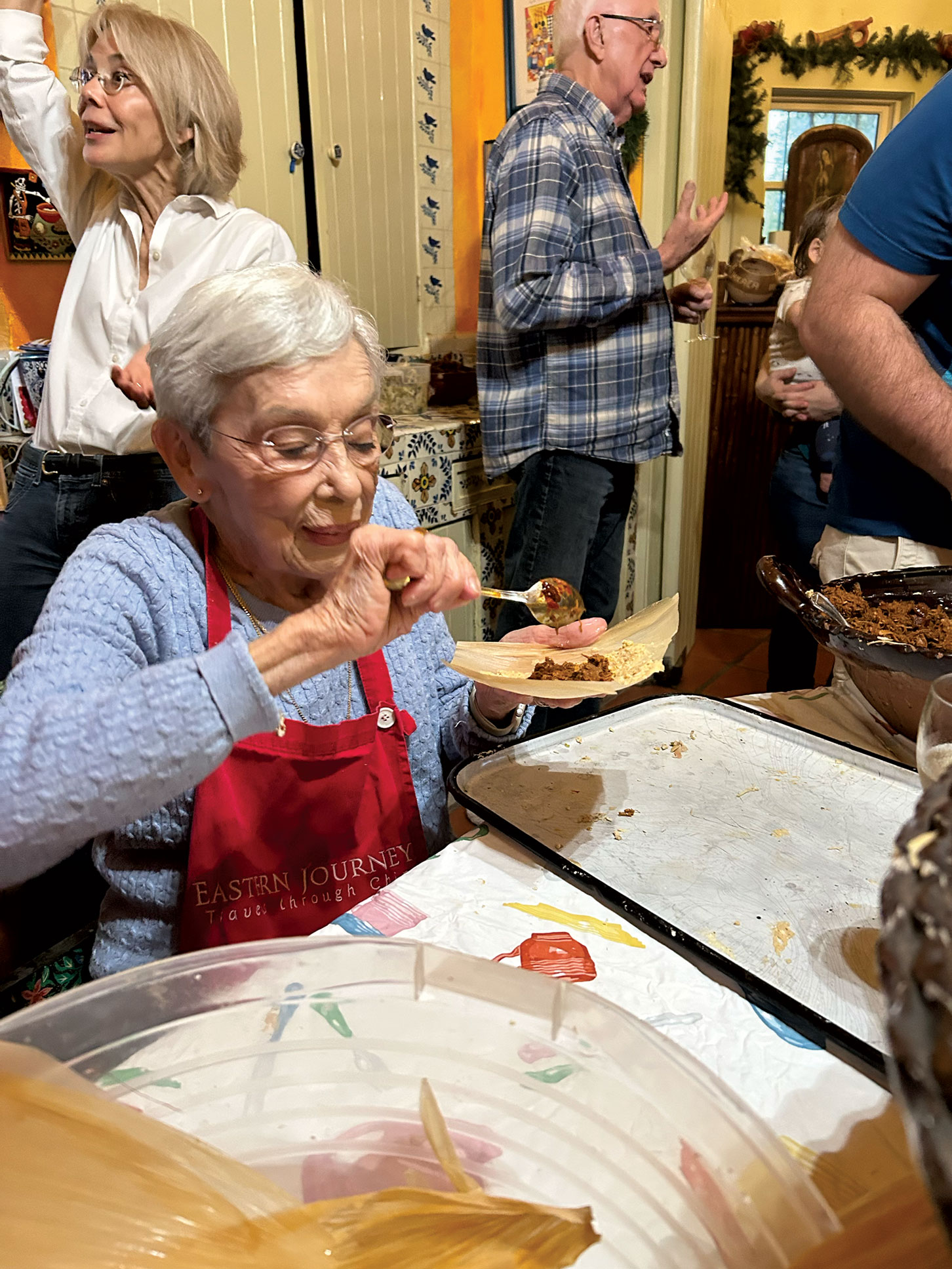
Clark relishes the title “La Mera Mera Tamalera” (the very best tamal maker). It’s also the title of a short documentary on tamaladas that won a prestigious James Beard Media Award this summer. Filmed during one of Clark’s legendary tamaladas, it highlights both traditional and modern tamal traditions. Guests are urged to wear dangly earrings and red lipstick in honor of Clark’s favorite aunt’s tamale-making attire. Clark does the initial tamal prep work in advance — buying the masa harina, simmering the spices and meat, and soaking the corn husks to soften them. (She dries them modern style, in her clothes dryer.) When the guests are assembled, Clark kicks off the tamalada with a ceremony. “Everybody gather around the pot and grab a spoon or knife or whatever, and SING!” she urges. They do, and tamal-making commences.
The tamalada is about much more than food, Clark said. It’s about appreciating cultural traditions — together. It’s a community event where women share stories about their families and often share some juicy chisme (gossip). It’s an affirmation of identity, an appreciation of Mexican-American culture that brings generations together.
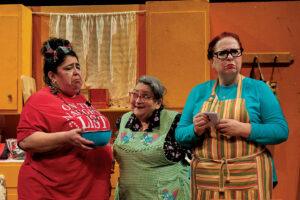
Those themes come to life in San Antonio writer Alicia Mena’s play, Las Nuevas Tamaleras, a beloved holiday tradition for many fans. Since its San Antonio debut at the Guadalupe Cultural Arts Center in 1993, the heart-warming bilingual comedy has developed a kind of cult following. It follows the efforts of three young Mexican-American women friends to make tamales for the very first time. Fortunately, the spirits of two of their grandmothers step in to avert catastrophe. It’s a loving look at the importance of older generations in passing down time-honored traditions and cultural memory.
Mena grew up in Brownsville. “My mother made tamales in one day and night around Christmas,” she said. “She was very Mexican. She didn’t speak English and always listened to Mexico City radio. The food, the Mexican golden-age music, the voices I heard growing up on the border … I took that for granted.
When she passed away, I began to realize that she represented traditions I would no longer have. I couldn’t just go home and get my fix of our culture. I wanted to express my sorrow that we can so quickly lose these things if we don’t pay attention, but my writing voice is comic, so it came out that way.”
Mena noted, “A lot of the people I work with are younger, and I love the fact that this is affecting their awareness of their culture.” That’s just the way Las Nuevas Tamaleras touched Justine Wallgren-Del Toro, the show’s stage manager. “I first saw the show three years ago,” she said. “I didn’t know too much about the tradition. I grew up in a Hispanic family, though, and my grandparents on my dad’s side would have the entire extended family over during the holidays. The women would gather in the kitchen, making tamales, and everybody would gather in the backyard to eat.

(gossip) can be shocking
“After they passed, the family spread out. I grew up and went to college. When I started working with the show, I started to feel more connected to family and heritage. It transcends gender, race, age and language. Every time I see it, I hear a new joke. Even my husband, who doesn’t understand any Spanish except for paleta and chalupa, got the jokes.
“Last December, one of my cousins wanted to have a tamalada. It was kind of unreal to see art reflected in life, with husbands trying to touch the masa and getting their hands slapped away, us trying to remember how to make the tamales … it was like connecting with the past and also connecting with each other in the present,” she said. “I was very heartened to see everybody together again, talking and laughing. And we made some pretty good tamales.”
Special thanks to Ellen Riojas Clark for sharing her personal photos of her annual tamalada.
Las Nuevas Tamaleras photos by J. Del Toro, courtesy of Carver Community Cultural Center.

Tamal Time
La Gran Tamalada
- December 13-14
10:00am to 6:00pm - Historic Market Square
- Free, family-friendly
- HistoricMarketSquare.com
Las Nuevas Tamaleras
- December 4-7
multiple showings - Carver Community Cultural Center
- LasTamaleras.com
La Mera Mera Tamalera
- Free Tamalada program by Ellen Riojas Clark
- Presented by the San Antonio Conservation Society
- November 22
10:00am - Mission San José
- RSVP to conserve@saconservation.org
Tamal Trivia
Tamales have their own day?!
In the United States, March 23 is celebrated as National Tamale Day. Why March 23?
Probably because it was only established in the official Chase’s Calendar of Events in 2015, and too many other days were taken.
What’s in a name?
You can’t eat just one tamale. It’s impossible. It’s not about willpower. It’s because one tamale doesn’t exist. Tamal is the singular form of the word; for more than one, say tamales.
Tamal comes from the Nahuatl word for corn dough — tamalli. Tamales were food for the gods back then. For ceremonial occasions in Moctezuma’s court, tamales were stuffed with a variety of ingredients, including honey, meat, chiles, roast turkey or quail, huitlacoche, amaranth seed, cornflowers, cherries, beans, shrimp and more.
The first doggy bag
Tamales were also the first food “to go.” Hunters, warriors and travelers could carry them.
Different folks, different tamales
Nicaragua has the fat, juicy nacatamal, chicken or pork paired with vegetables and fruit, wrapped in a plantain leaf and served for breakfast.
Colombia has tamales tolimenses. Pieces of chicken, pork and boiled egg are wrapped in masa made with corn and cooked rice, then tied up in a plantain leaf like a little round bag. They’re a popular breakfast item.
Veracruz tamales are stuffed with turkey and chiles, and they’re made for a crowd; up to 5 feet long and weighing up to 50 pounds.
Size matters
You think a tamal 5 feet long is big? Hah! In 2018, in Villahermosa, Mexico, a team of 80 chefs from different cooking schools spent 12 hours constructing the world’s largest tamal — 50 feet, 27 inches, according to the Guinness Book of World Records (which lists it as “Longest Steamed Cornflour Cake.”) Yuck.
Here at home, in 2011, 1,300 students and community volunteers at San Antonio’s Lanier High School set the Guinness record for “Most Steamed Cornflour Cakes Made by Weight in 12 Hours” — a whopping 12,232 tamales, weighing 2,4420.9 pounds.