Stefan Bowers of Pumpers
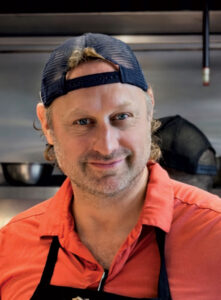
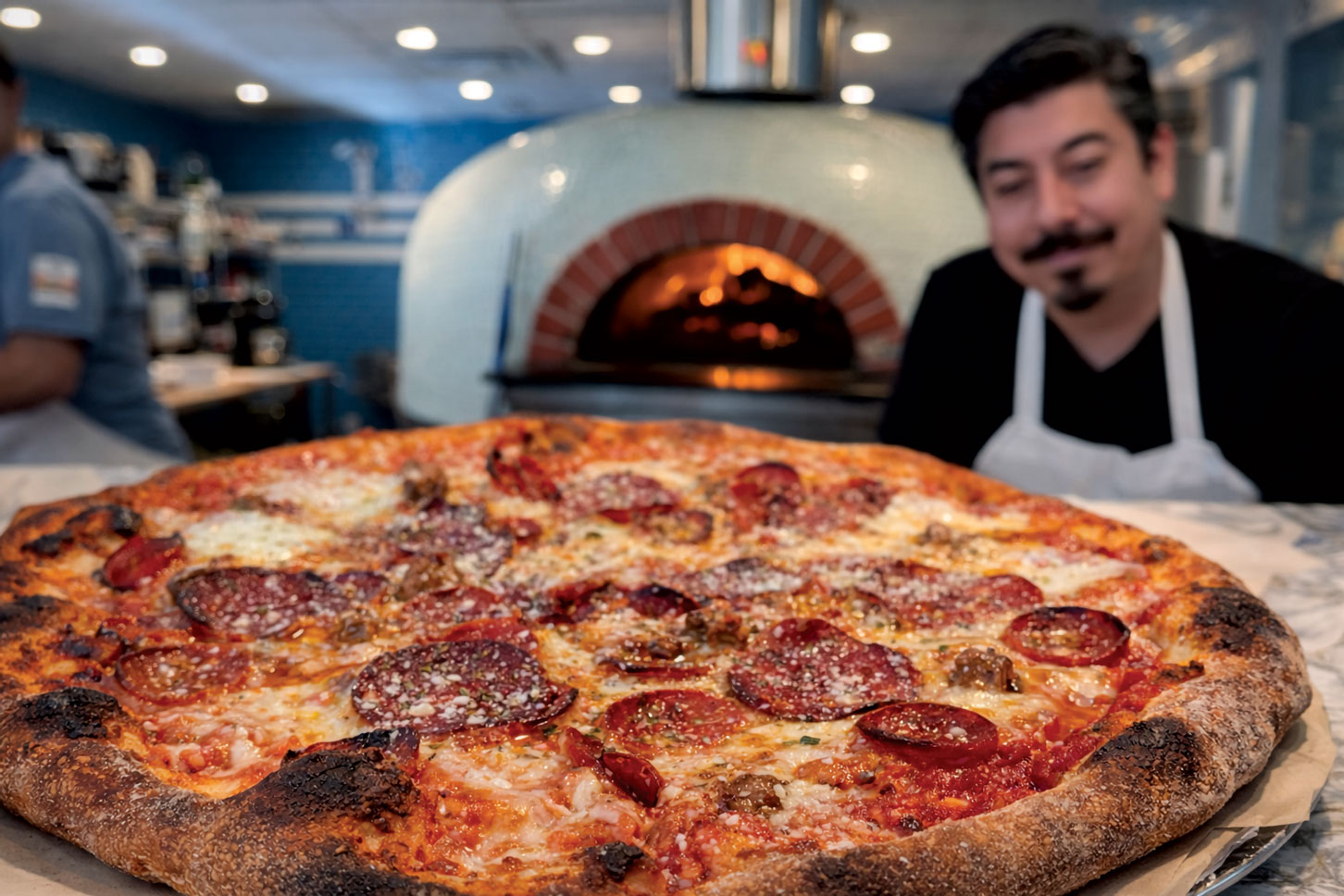
For Chef Stefan Bowers, the decision to open Pumpers wasn’t a calculated market play so much as a return to something elemental. “Cooking hamburgers is the first form of cooking that I took on as a kid,” he shared. “When you don’t have much of a food memory or come from a big food background family-wise, you rely on your own connection to what it is you’re doing and take time to discover what you love to do.”
That instinctive relationship with food that came naturally to Bowers has guided a career that’s included some of San Antonio’s most ambitious restaurants, from Feast and Battalion to Rebelle and Playland. And now, most deliberately, an adult burger store concept he says he’s “locked into for good, until it throws me out.”
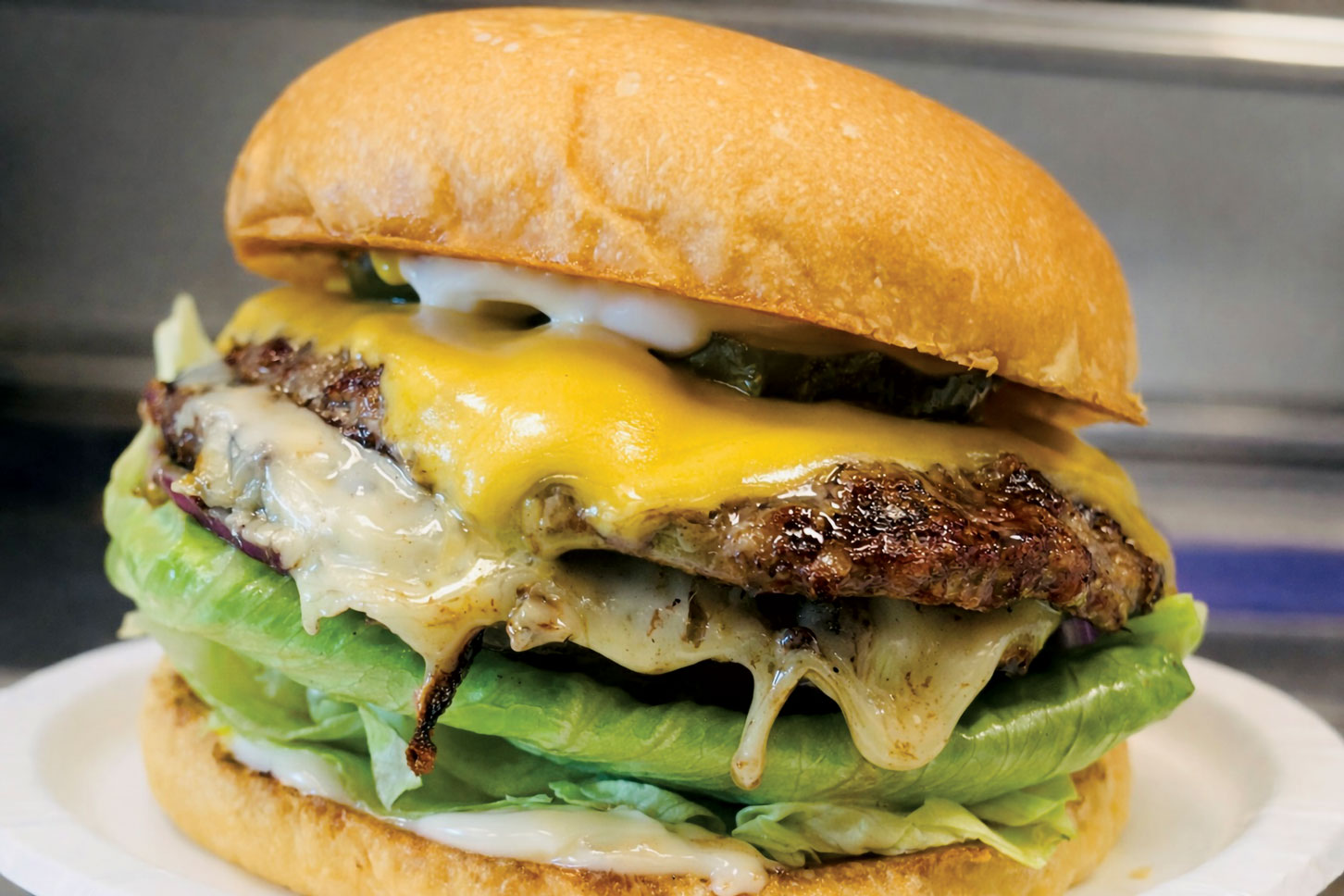
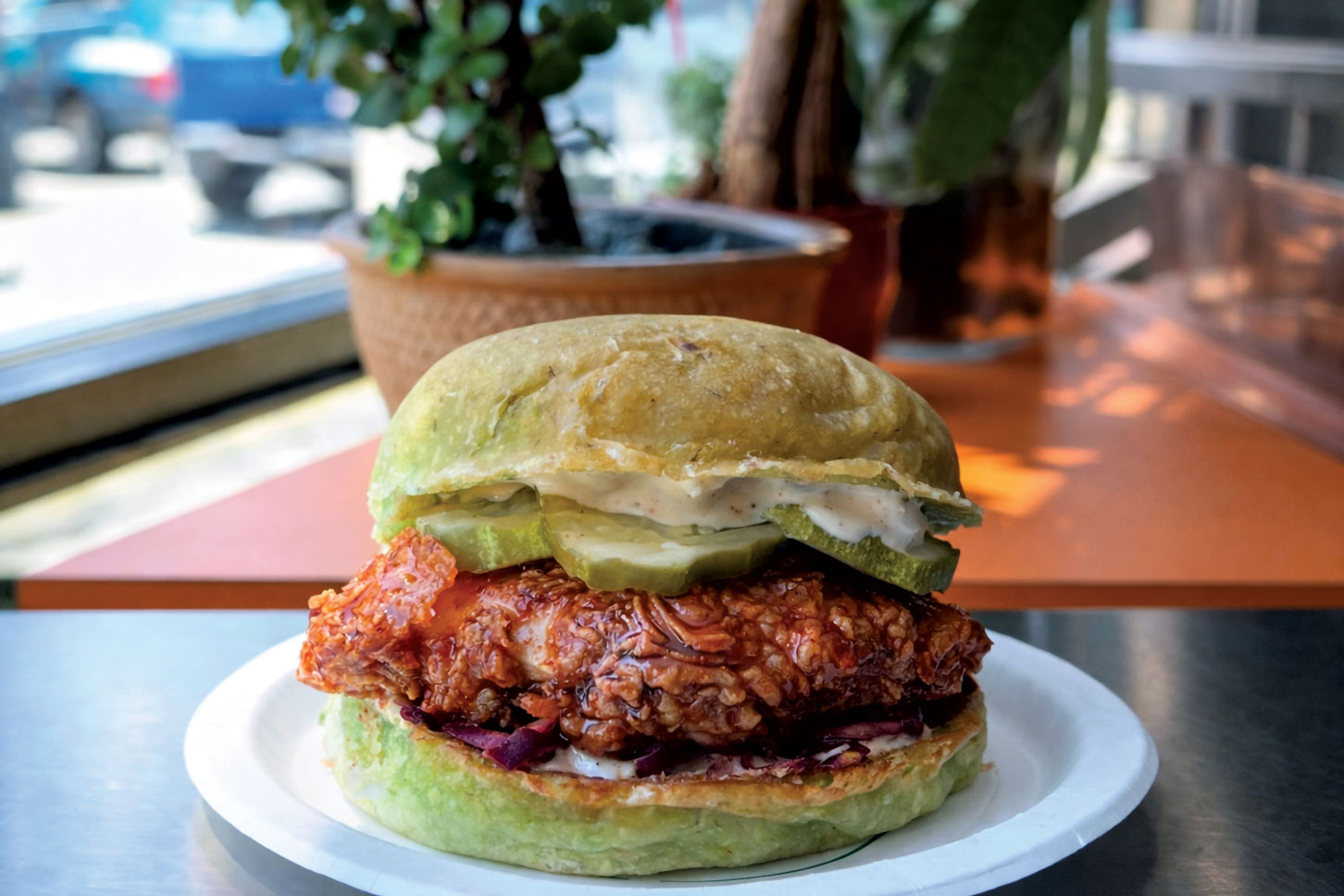
Bowers describes Pumpers as the natural result of both experience and age. A gamble that worked. Pumpers’ char-broiled burgers may be a bit naughty but in all the right ways. If you haven’t tried them yet, it’s become an industry favorite for its craft focus, attention to quality and ingredients like Magic A$$holes (candied jalapeños), candied bacon, house-made milk buns, sexy sauces, tallow-fried French fries and boozy milkshakes.
“Cooking the types of menus we had at Feast, Lodge, Battalion — that’s more of a young person’s game,” he noted. “The stage I’m in is one where I need that direct focus on what I’m doing. With burgers, you’re really overseeing just one specific category of product. The concept just felt natural to who I am as a person.”
Everything about Pumpers unfolded that way, from the name to the grungy punk-rock edge to the early pop-ups. “It was a huge success right out of the gate,” Bowers shared, not only thanks to his own talent but that of his team — including long-time collaborator, Chef Zeke Cavazos, who’s been on the frontline of every restaurant Bowers has opened for the last 20 years. Bowers describes Cavazos as a quiet force and an amazing cook. Together, they’ve created something Bowers sees as an expression, not a formula. “I did one thing true to myself,” he said. “It wasn’t trying to be anything I wasn’t.”
Even the art grew from instinct. He approached artist Michelle Morgan, drawn to work that reminded him of underground illustrator Robert Crumb. “I went to her not knowing anything about her and asked if she’d mind doing some artwork for this concept? And it was exactly right.”
That commitment to authenticity also shapes how he views San Antonio’s dining ecosystem. “You can bitch and moan about what SA is,” he said bluntly. “The question is, are you going to live and try to run a business and not take into consideration the theater you’re in? If you’re going against the grain and expecting a guaranteed result, you’re a fool.”
Bowers is equally candid about the current market. “I agree with the take that you either do upscale dining or you do very fast casual, because the mid-tier restaurant is dying,” he admitted.
Pumpers (by design) lives in the narrow space between what he calls “affordable luxury.” “I use damn good ingredients. And the ethics are very high; the handling of food is high. It’s scratch-made — but you can stay,” said Bowers. Unlike fast-casual concepts designed to turn tables quickly, Pumpers invites people to linger, with alcohol, music that isn’t generic, and a sense of place that feels lived-in rather than transactional.
While Pumpers is undeniably scalable, Bowers is careful not to overstate his ambitions. Expansion is possible — perhaps to other parts of the city or beyond — but always on his terms. In a world where trends shift like Texas weather in winter, and concepts come and go, Pumpers stands as a reminder that sometimes the most effective pivot isn’t forward or sideways, but inward.
Andrew Weissman of Max’s Sister & Mr. Juicy
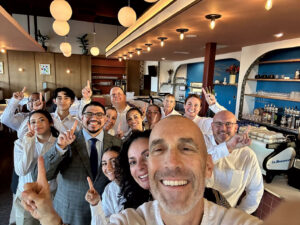
As for Chef Andrew Weissman, intuition has never been a buzzword — it’s been a survival skill. From the earliest days of his career to the demands of running the wildly popular Mr. Juicy’s alongside the newly opened Max’s Sister, his choices have rarely come from spreadsheets or market analyses. “I never did an analysis or anything that would help me,” he said plainly. “I asked, ‘does it feel right?’ And it worked.”
That gut-first approach has carried him through decades of evolution in San Antonio’s dining scene, though not without cost. Two months into opening Max’s Sister, Weissman felt the weight acutely. “When the wheel is in motion, you don’t feel it,” he admitted. “But coming back to it, I didn’t realize how difficult and demanding it was.”
At his core, Weissman is still driven by the same thing that pulled him into kitchens decades ago: the emotional exchange between cook and guest. “I just wanted to cook. I was so passionate — and still am,” he confided. “The fact that I was cooking for people and they were eating it — that was so cool.” But that kind of passion cuts both ways. “I’d be crushed if 99 people loved it and one didn’t. One comment would crush me. It’s always been an extension of who I am — really putting yourself out there.”
That intensity showed up early. Born and raised in San Antonio, Weissman’s first foray into cooking came as a kid making after-school nachos for friends. But the moment it became real happened years later in Mexico City, when a visiting NBC News crew sat down to a meal he cooked. “They said it was one of the better meals they’d ever had,” he remembered. “It clicked inside of me. I decided to leave and cook for a living.”
After culinary school and apprenticeships under master chefs in France and elsewhere, Weissman returned to San Antonio in the late ’90s and opened Le Rêve with the same spirit that continues to define him. “If it fails, I’ll go back to France,” he recalled thinking. “Either way, win or lose, the outcome should be good. I’ve kept that spirit with every restaurant I’ve opened. I just went with the flow.”
That philosophy also explains his pivots — from fine dining to The Luxury, from Mediterranean flavors at Moshe’s to the burger-driven success of Mr. Juicy’s. “It wasn’t thinking about shifting from fine dining to casual,” he explained. “It was more like, ‘this is a cool opportunity.’”
The idea for Mr. Juicy’s came while on vacation in Columbia, after seeing a line wrapped around the block for an American-style burger joint. “A light went off,” he said. “I told my wife, ‘I think I’m going to change Moshe’s into a hamburger place.’”
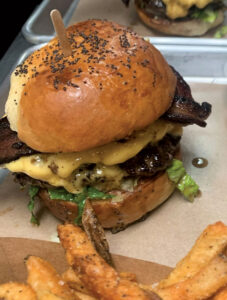 Even now, he still delights in the intoxicating thrill of opening a new restaurant. “The excitement is like a drug. You open it, you’re there for a month, and then it’s like, ‘What’s next?’” But experience — and family — have tempered that urge. Married to his wife, Maureen, for 23 years, he’s more mindful of balance. “I ask my wife for advice,” he said. “But I always go with my first instincts anyway.”
In a moment when restaurants face rising costs, public skepticism and relentless pressure, Weissman remains focused on one essential truth: value. “At any level of dining, there’s a huge desire for people to feel like they got a deal,” he noted. “Whether it’s five dollars or five hundred.” At Max’s Sister, that means obsessive attention to utilization, portion control and returning value to the guest without compromising quality. “You’ve got to keep your eye on the ball constantly,” he said.
Despite the chaos of the industry, Weissman remains a staunch champion of his hometown. “I’m proud of San Antonio. Some great concepts have opened up over the years — they’ve moved the needle,” he said. For him, the path forward remains what it’s always been: trust your instincts, lose sleep over the details and keep trying to be better tomorrow than you were yesterday.
Michael Sohocki of Tucker’s Italian
Chef Michael Sohocki‘s modus operandi for staying on the leading edge doesn’t mean chasing what’s new — it means returning, again and again, to what’s true. At Tucker’s Italian, his recently opened neighborhood restaurant on San Antonio’s Near East Side, Sohocki has distilled decades of cooking, travel and philosophical inquiry into something deeply human and built to last. He also credits his business partner, Chef Jason Garcia, who is responsible for the menu, training and overall operations. Sohocki explains his one major contribution to the menu is the “simplest” pasta there is — what they refer to as “the standard” — homemade spaghetti noodles, a “decent” marinara, Parmigiano Reggiano, extra-virgin olive oil and, of course, basil.
“Italian [food] is perennial,” he pointed out. “I’m not interested in opening innovative restaurants. I don’t want to impress anyone — because when you do something for flash and dazzle, it’s only ever temporary.” Instead, Sohocki’s iteration of the historic restaurant is designed to tug at something older and more enduring. “I’m only looking, in my old age, for things that tug at an emotionally charged string that’s already in people’s hearts — deeply seeded in the person already. I want the feeling to be more like, ‘Awww.’ That’s deeper and more permanent,” he explained.
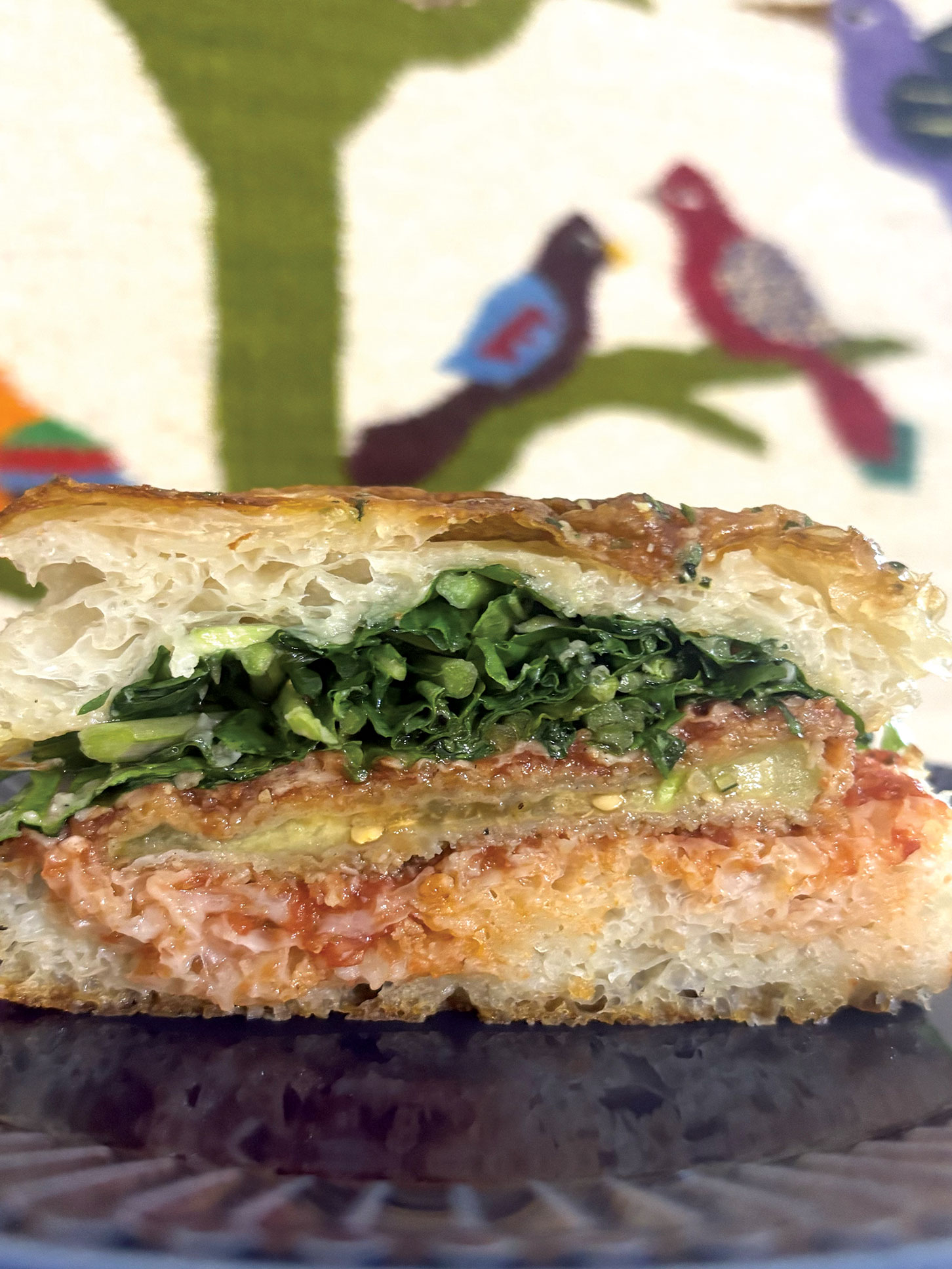
That philosophy shows up immediately in the food. Lunch leans casual and comforting — sandwiches built on bread baked fresh daily, including warm focaccia with rotating toppings and ciabatta filled with meatballs, porchetta, prosciutto and arugula, or eggplant parm. Dinner currently opens at 5:00, shifting toward pasta: some handmade, some dried, thoughtfully mirroring the way Italians actually cook at home.
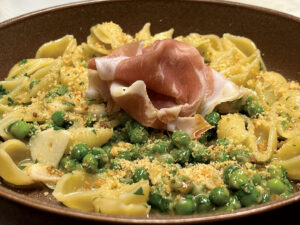
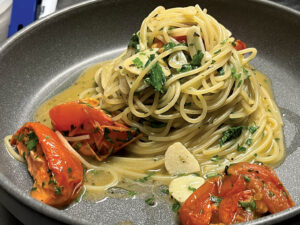 “It was important to me that the cornerstone of the menu is an inexpensive pasta done completely by the book,” said Sohocki, providing an example of a current dish made with dried shell pasta tossed simply with peas, garlic, butter and prosciutto. “That might be my one contribution to the menu,” he added, underscoring that simplicity, not novelty, is the essence.
The space itself functions like what Sohocki calls an “Italian bodega” — a place where guests can grab bread, charcuterie, wine and dessert for the perfect picnic, or linger over a plate of pasta and chocolate mousse (you might recognize it from Il Forno). It’s deliberately non-exclusive. “I think the East Side deserves good quality food. I want this to be a neighborhood cornerstone — setting a standard. This was on purpose. I know where I am,” he said.
That sense of responsibility — to place, to people, to ingredients — has defined Sohocki’s career. Long lauded as one of San Antonio’s most principled chefs, he continues to source pork from Fredericksburg, tomatoes from Wholesome Harvest in Seguin and herbs from his own garden. “I’ve grown the basil and arugula that goes on this menu from day one,” he said humbly. “What comes from our hands tells the story of us. And the more times you take the cheap shot and go for convenience, the more of your identity you’re slicing off.”
Affordability, too, is part of that ethic. “The orders I’m selling right now are cheaper than Whataburger,” he said. To prove his point, he offered a rundown of his usual Whataburger order. For Sohocki, value isn’t about cutting corners — it’s about understanding who you’re feeding. “Plant what sells,” he advised, quoting an old farmer’s wisdom. “You might think kohlrabi is cool, but it won’t sell. You can’t exist in a vacuum. You need to understand the people buying your thing — and don’t ever try to educate a consumer.”
 His resistance to innovation-for-innovation’s-sake is hard-earned. From his formative years working under Andrew Weissman at Le Rêve to leading The Cove to opening ideologically ambitious restaurants like Gwendolyn — what he refers to as his “magnum opus” — Sohocki has seen how fickle markets and trends can be. “Fine dining made sense for that time,” he reflected. “But San Antonio couldn’t sustain it. People with the money were often there to be cool — not to support an ideology.”
At Tucker’s Italian, Sohocki isn’t trying to prove anything to anyone else but himself. “I do everything the hard way,” he noted. “Struggle is necessary to hone the human spirit. Doing things the hard way peels off the outer fluff.”
In a culture obsessed with convenience, Tucker’s Italian seems like a quiet act of defiance — one warm loaf of focaccia, one honest bowl of pasta at a time. For Sohocki, as we have grown to expect — that’s not playing it safe, it’s playing it real.
Ian Lanphear of Isidore
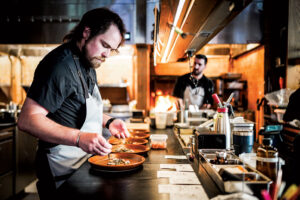
For Ian Lanphear, the path to cooking was never about prestige — it was about survival, curiosity, and ultimately, joy. He started in kitchens to support himself, washing dishes in a fine dining restaurant, unaware that the rhythm of service and the intensity of the kitchen would draw him in completely. “I really just fell in love with it from there,” he shared. “I took that and tried to create my own path, moved up in the ranks and then branched out because I wanted to do food that spoke to me as a chef.”
That voice — distinct, place-driven and deeply woven into the natural world — has now found its clearest expression at Isidore, where Lanphear serves as Chef de Cuisine and leads the restaurant’s ambitious foraging program. The alignment feels inevitable in retrospect, but it was shaped by timing as much as intention. “I’ve always loved being outside and being in nature. I grew up outdoors — my mom would show me things like wood sorrel,” he explained. “Right around the time I was doing dishes and being exposed to fine dining, I was also seeing Noma and the rise of these restaurants using wild ingredients in the kitchen. That really clicked.”
Choosing to lean into foraging in San Antonio might have seemed risky, but to Lanphear, the absence of precedent made it that much more enticing. “To some degree it was concerning,” he admitted. “But on the flip side, it was an open book because no one was quite doing it. That inspired me more than it scared me away. At the end of the day, I wanted to do what made me happy — and hope it would be received well by the market here.”
Before Isidore, that vision took shape through Naibor, a pop-up concept that became a testing ground for his ideas. “I had just left Gwendolyn with the intention to branch out and explore the food I wanted to create — figure out my voice,” he said. Naibor evolved into a celebration of Texas ingredients, hyper-focused on locality and wild foods, and even served as an informal marketplace for farmers. “The idea was to create a way for farmers to sell things they normally couldn’t — like weeds,” he explained. “Things like purslane or curly dock, sedge with its nutty tuber. Stuff that usually gets pulled and thrown into a compost pile.” How many chefs do you know that care about edible weeds?
Lanphear credits his time at Gwendolyn with opening his eyes to the quality of Texas ingredients and introducing him to the farmers who still shape his sourcing today. That foundation carried through long stints of farming, pop-ups and stops at places like Silo and Magpie, before Isidore finally emerged as the right home. “I feel like I’ve always known the food I wanted to cook,” he said. “It’s just been about finding the right place to do it — and with Isidore, I feel like that finally happened.”
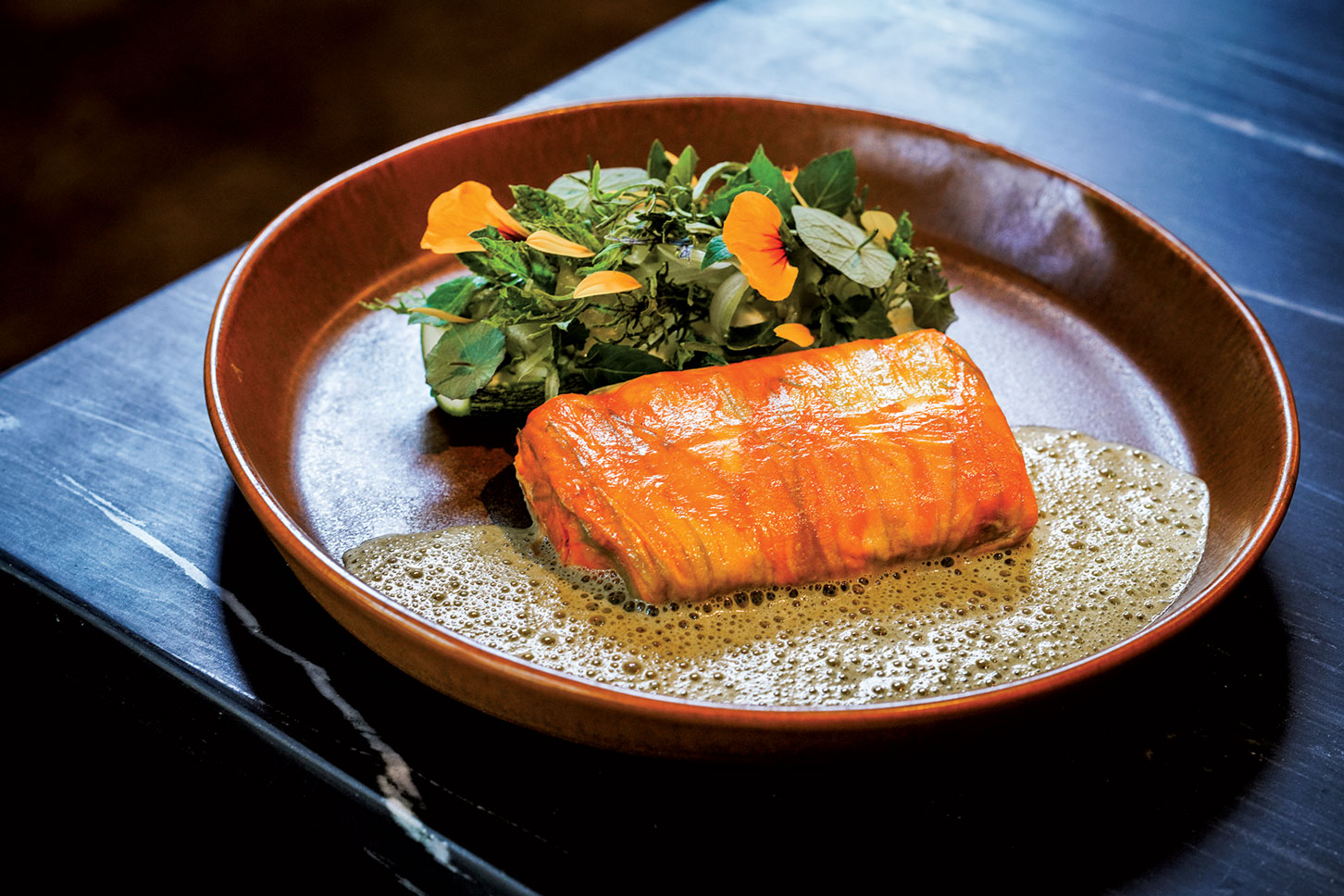
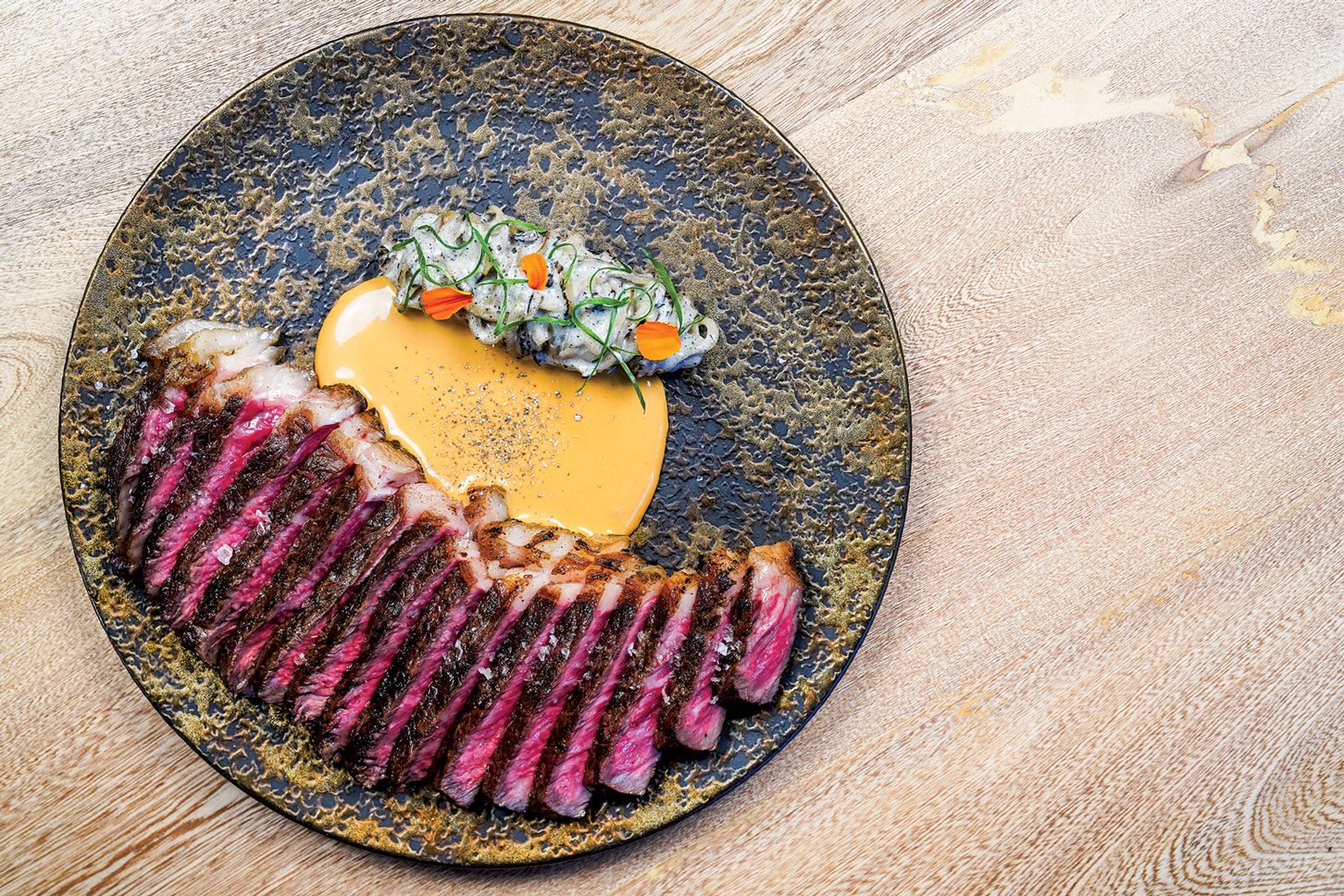
At Isidore, freshness isn’t a strategy — it’s unavoidable. “Luckily, I don’t really have an option,” Lanphear explained. “With the seasons, ingredients are always coming in and out. That drives the menu forward and forces us to change it frequently.” And Isidore’s guests have embraced the philosophy. “People are super excited,” he said, recounting moments when Texans recognized ingredients like mesquite beans they remembered from their childhood. “We use them as stone-milled flour, oil or syrup, and guests are excited to see these things used in ways they didn’t know were possible.”
Recognition soon followed — first from the New York Times, then with Isidore earning one Michelin Star and a Michelin Green Star — but Lanphear remains focused on the work ahead rather than the accolades. “It was very surreal,” he admitted. “Some of it’s luck, but some of it’s sticking to it.”
His advice to other chefs: “Stick to your guns. Do your research, consider the market — but don’t rule out your vision just because no one else is doing it.”
He may not be finished refining Isidore, and he’s not ruling out owning his own restaurant one day, but for now, he’s exactly where he needs to be — listening closely to the land, trusting his intuition and letting the seasons write the menu.
Kristina Zhao of Sichuan House and Ivy Hall

For Kristina Zhao, the force behind Sichuan House and, most recently, the evolving Southtown Garden/Ivy Hall Events space, longevity in the restaurant world has never been about chasing trends — it’s about listening. To the community. To the market. And, increasingly, to herself.
Sichuan House recently marked its 10-year anniversary, a milestone Zhao doesn’t take lightly. “We’re very fortunate to have built rapport and friendships over the years,” she shared. “For the most part, the menu is very consistent — we have our staples — but every so often we introduce specials that are seasonal, depending on how people enjoy them.”
That consistency, paired with gradual evolution, has paid off — especially as San Antonio diners have grown more adventurous. “Compared to 10 years ago, people seem generally more open-minded and have more diverse palates,” said Zhao. “Guests used to be reluctant to try some of our seasonal specialties. Now, they’re curious to taste — only to find that they love it.”
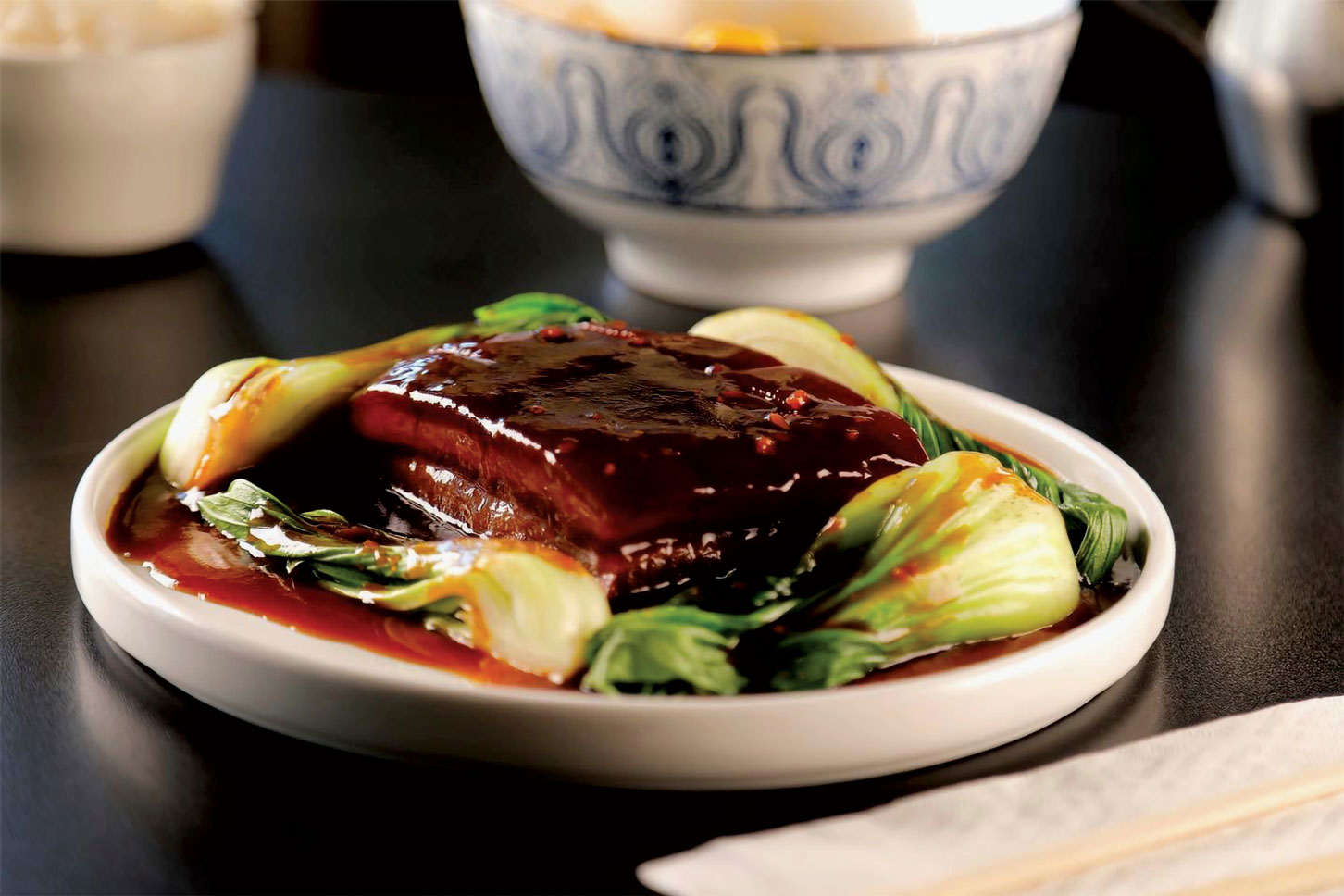
At the heart of Sichuan House is Zhao’s uncompromising approach to quality and integrity. “We don’t use additives or food coloring. You won’t find bright red sweet-and-sour sauce,” she said with a laugh. “For me, it’s important that it’s food I actually want to eat. You can never stop caring about it. Even if you’ve made a recipe 500 times, mishaps can still happen — especially in our kitchen where sauces and spice blends are not made in advance and come together in the wok fire for each individual dish.”
That philosophy carried into Dashi, and now into a Southtown garden property — an expansive, energy-filled space that Zhao describes as something she stepped into organically. “It just kind of happened,” she reflected. “The vibes here are very magical. Tim put a lot of heart into this space, and I want to honor that legacy.”
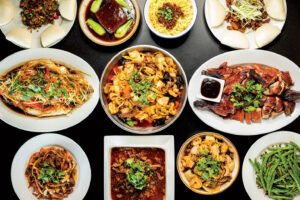 For now, the venue continues to operate as Ivy Hall Events, hosting weddings, private events and corporate gatherings. Meanwhile, Zhao is quietly developing a smaller, front-facing food concept — one that reflects the realities of today’s industry. “Our kitchen space is small and unable to accommodate our wok equipment,” she said. “So, the offerings won’t be the same, but there’s so much of Chinese and Sichuan food to explore. It’s about focusing on what our community needs and what we can consistently create without compromising quality.”
The last several years have forced constant adaptation. “You have to be ready to pivot because things are always changing,” said Zhao. “Since 2020, it feels like you’re making micro-pivots every minute of every day.” That relentless pace has reshaped how she defines sustainability — not just environmentally, but personally. “We talk about whether a plate is sustainable, but what about the sustainability of the operator? You can’t pour from an empty pot.”
Today, Zhao is focused on balance. “Part of sustainability is finding peace,” she offered. “If you’re not taking care of yourself, it makes it difficult to take care of others.” The next chapter, she explains, must be manageable, resilient and aligned with the life she wants to build, notably with her husband and business partner, Brandon La Lanne. “I am consciously choosing longevity over burnout. Are we nourished by our work or being depleted by it? That’s the question I’m asking now.”
Despite the challenges, Zhao remains grounded in gratitude and community. “I’m very blessed to be surrounded by amazing people who have done this way longer than me,” she said. And her advice to fellow restaurateurs is this: “Get to know people. Don’t be afraid to ask questions. This industry is still very open-hearted and kind.”
After a decade of feeding San Antonio — and a future rooted in intention rather than excess — Kristina Zhao isn’t chasing what’s next. She’s building something that lasts.