This is Día de los Muertos, or Day of the Dead, a very intimate yet increasingly popular celebration with ancient origins. And in San Antonio, where Mexican heritage is woven deeply into the cultural fabric of the city, it has become one of the largest and most celebrated Día de los Muertos observances in the United States. The scale is impressive, but for Chef Johnny Hernandez, one of the people most responsible for bringing the beloved holiday to the forefront of San Antonio’s cultural calendar, its meaning has always been much more personal.
Chef Johnny, founder of Grupo La Gloria and a longtime advocate for Mexican culinary traditions, first became fascinated with the history and beauty of Día de los Muertos during a trip to Mexico nearly two decades ago. Visiting Michoacán, his mother’s ancestral homeland, he witnessed families gathering in cemeteries to honor relatives who had been gone for generations. Gravesites were cleaned and thoughtfully decorated with flowers and candles, while families brought food, music and offerings placed on ofrendas (altars) and spent time together remembering those they had lost. What struck Chef Johnny most was the level of commitment involved. “The sacrifice, the journey, the tradition, the participation — everyone’s a part of it,” he recalled.
In Mexico, Chef Johnny discovered Día de los Muertos was far more than a holiday or festival. It was a rich cultural practice that brought families back to their communities and encouraged them to preserve connections with the generations who came before them — traditions that are both public and private. Some families traveled long distances to return to ancestral cemeteries, while others celebrated in their homes, creating ofrendas filled with photographs, favorite foods and personal objects belonging to deceased relatives. “It’s breathtaking,” said Chef Johnny of the cemetery celebrations he experienced, which prompted him to consider his own family history in a new way.
A Tradition Thousands of Years in the Making
Día de los Muertos in Mexico received global acclaim in the late 20th century, culminating in 2008 when UNESCO honored it as a Masterpiece of the Oral and Intangible Cultural Heritage of Humanity. But the roots of Día de los Muertos extend back thousands of years, long before Mexico existed as a nation. Indigenous peoples throughout Mesoamerica developed traditions centered on death, ancestors and the belief that death was part of the natural cycle of life. The Aztecs were among the many Indigenous cultures that observed elaborate rituals honoring the deceased.
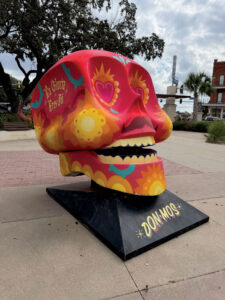
Scholars have gained some knowledge of Aztec funerary rituals through pre-Hispanic Codices and archeological evidence. The Aztecs had a rich spiritual world filled with gods and festivals dedicated to each, one of whom was Mictēcacihuātl, the goddess of death and the underworld, and sometimes referred to as the Lady of the Dead. She is portrayed in Aztec cosmology as a skeletal figure adorned with bones and flowers. Mictēcacihuātl was honored during the ninth month of the Aztec calendar, a 20-day stretch that roughly lines up with late July and early August. Though archeologists and historians don’t have the full picture of Mictēcacihuātl’s month-long celebration, they believe it involved incense, food, music, dancing and blood sacrifice — rituals that were deeply woven into Aztec tradition.
When Spanish colonization brought Catholicism to Mexico in the 16th century, Indigenous traditions merged over time with Catholic observances. Whether forced coercion or through an eventual compromise is unknown, but Mictēcacihuātl’s celebration was shifted from summer to early November to align with the Catholic observances of All Saints’ Day and All Souls’ Day. And just like that, ancient rituals found a new home on the calendar — keeping the spirit of the tradition alive to this day.
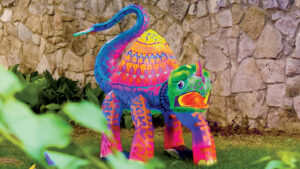 Some Mesoamerican customs were documented but, interestingly, scholars have discovered that the Catholic Spaniards actually brought many customs with them and this is where some of the traditions and rituals blur together. Anthropologists call this a syncretic holiday — an amalgamation of different religions and cultures. Scholars have also discovered that ritual elements and cultural practices are similar around the world, and what parts of celebrations go back to different traditions is hard to determine. But as a whole, each of these culture’s traditions relate to honoring our larger family tree — our deep ancestry that ties us back to our ancestors and history.
The Commercialization of Día de los Muertos
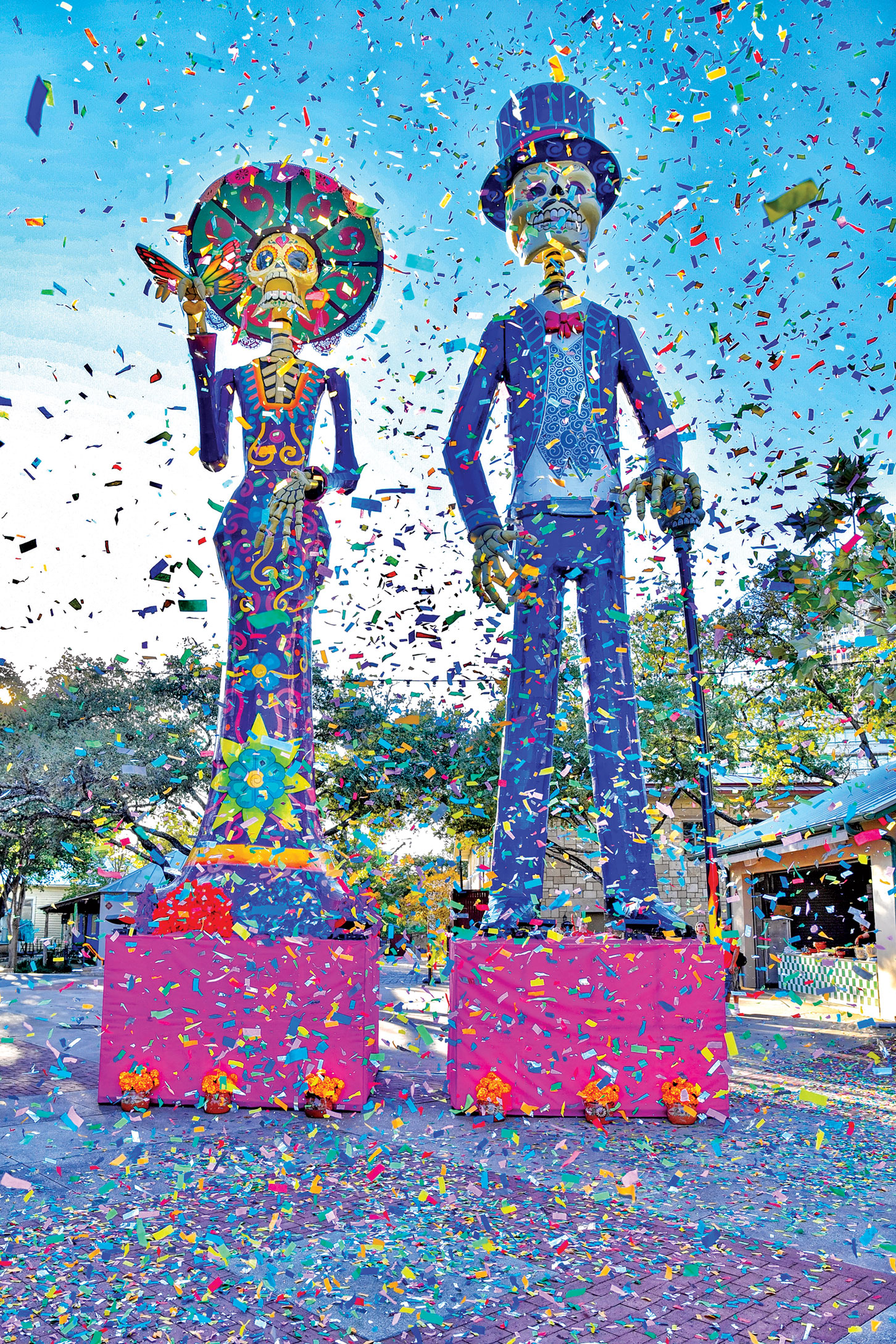
The holiday’s vivid visual language also has its own fascinating history. La Catrina, now one of Día de los Muertos’ most recognizable symbols, is credited to Mexican printmaker José Guadalupe Posada in the early 20th century. His elegant skeleton satirized Mexican elites who embraced European fashions and customs while rejecting their Indigenous roots. Over time, Catrina evolved into an enduring symbol of the holiday.
Hollywood even helped bring Día de los Muertos to a wider American audience in 2015, when the James Bond film, Spectre, opened with a spectacular Día de los Muertos parade through Mexico City — a fictional procession so visually captivating that it helped inspire the city to create an actual annual parade of its own. Younger audiences were captivated by Coco, with the movie now being screened in Mexican cities, and even alebrijes are more popular as part of Día de los Muertos celebrations.
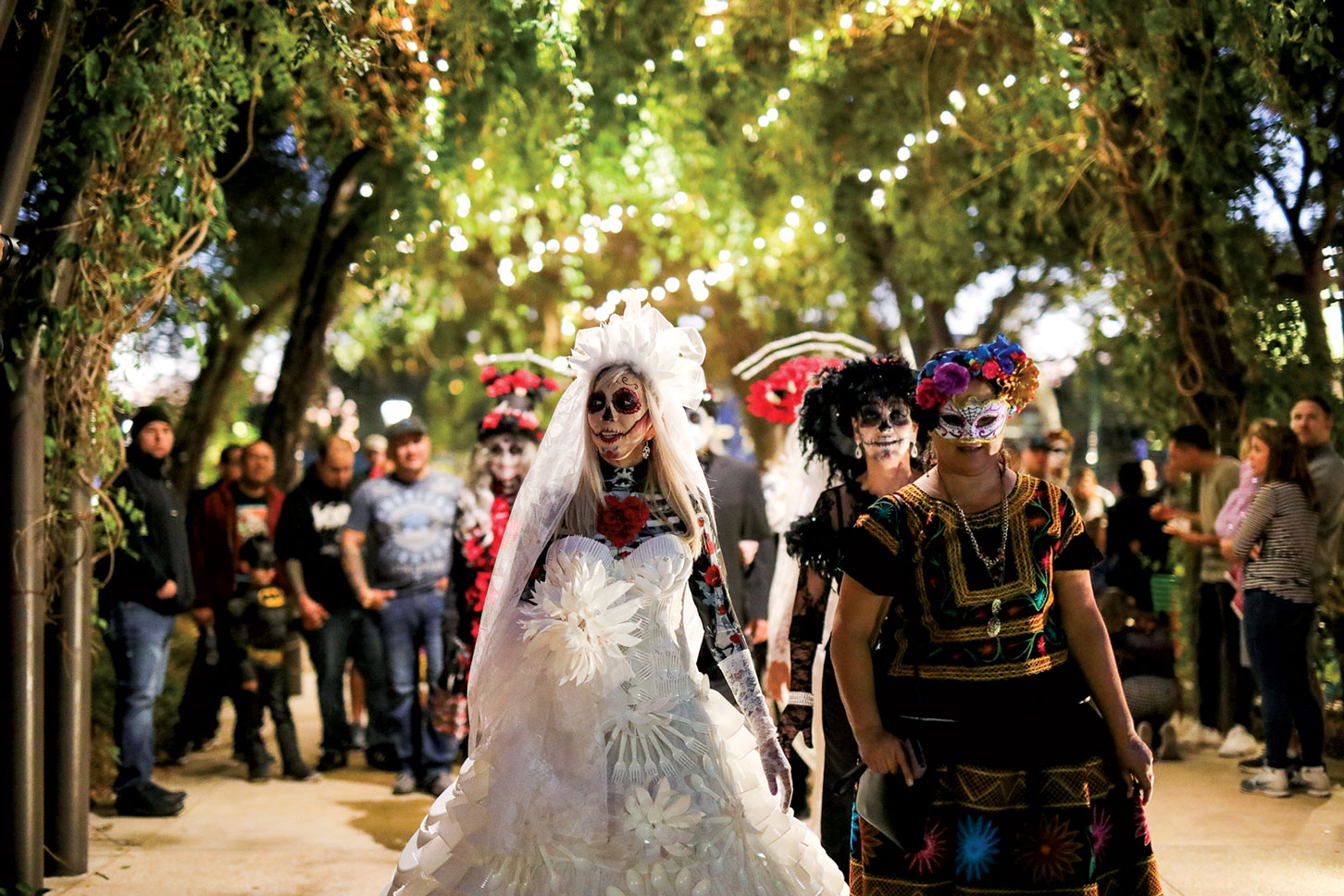
Día de los Muertos has never been a static tradition. It continues to change as it travels across borders and generations. In the United States, Mexican American communities have celebrated it for generations, and Chicano artists and activists played a particularly important role in transforming private and religious observances into the vibrant public celebrations seen throughout the country today.
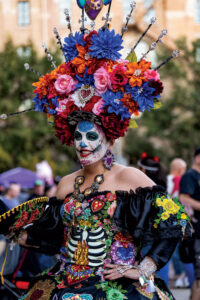
Photo courtesy of Pearl
Bringing Día de los Muertos Home
The connection to the holiday became even more meaningful to Chef Johnny when he discovered his mother’s hometown in Michoacán. While traveling through the region, he recognized the name of the small community, called Pátzcuaro, on a road sign and realized he was only a few miles away from the place where his mother had been born.
He began asking questions, talking with people in the community and searching for family connections. He discovered that his family name was still prevalent there, and perhaps even more serendipitously, the town’s patron saint was San Antonio — the same saint for whom his hometown in Texas is named.
The discovery broadened Chef Johnny’s understanding of the relationship between his family’s history in Mexico and the city where his grandparents eventually settled. It also reinforced his belief that food and cultural traditions are immensely powerful ways to preserve those connections. “I think I learned that early on when I opened La Gloria because we’re always trying to celebrate and preserve food traditions,” he explained. “The food and cultural traditions of Mexico are just so closely intertwined.”
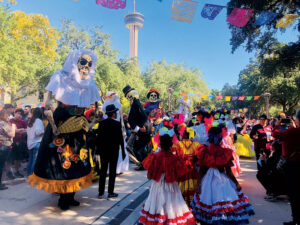
That philosophy has been central to Chef Johnny’s career. Through Grupo La Gloria, he’s built a reputation for introducing diners to the diverse regional cuisines of Mexico while honoring the traditions behind them. But his interest in Día de los Muertos eventually grew, and he envisioned a celebration that would allow San Antonians to experience the holiday in a meaningful and authentic way. “I wanted to own it for the community — be the place in the U.S. to celebrate Día de los Muertos,” he shared.
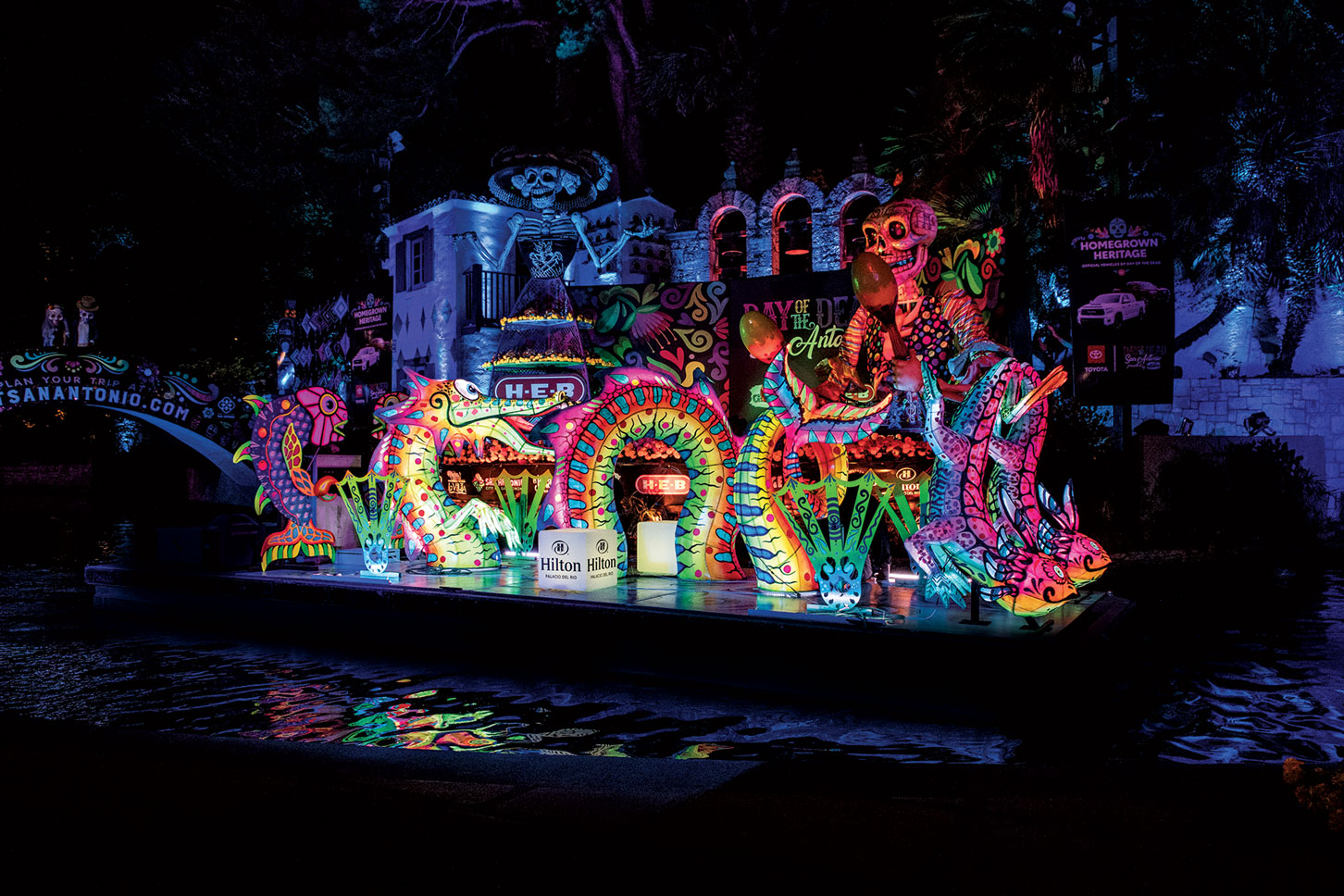
That vision became a reality in 2019, when Chef Johnny and his partners launched a major Día de los Muertos celebration featuring a river parade and events throughout the city. The effort was not without its challenges. He had to persuade community leaders that the River Walk could be the ideal setting for a large-scale celebration of a tradition that is, at its heart, extremely personal.
Authenticity was equally important. Rather than simply borrowing the holiday’s colorful imagery, Chef Johnny worked to bring artists and cultural traditions from Mexico into the celebration, helping San Antonio audiences better understand the meaning behind what they were seeing. “Part of the magic is bringing us closer to our ancestors,” he mused. “Día de los Muertos gives us permission to focus on family and the great memories that we’ve shared with family we’ve lost.”
More Than a Festival
Yet the success of San Antonio’s Día de los Muertos celebration cannot be measured simply by attendance or spectacle. At its heart, the holiday remains about remembrance.
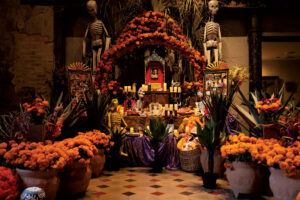
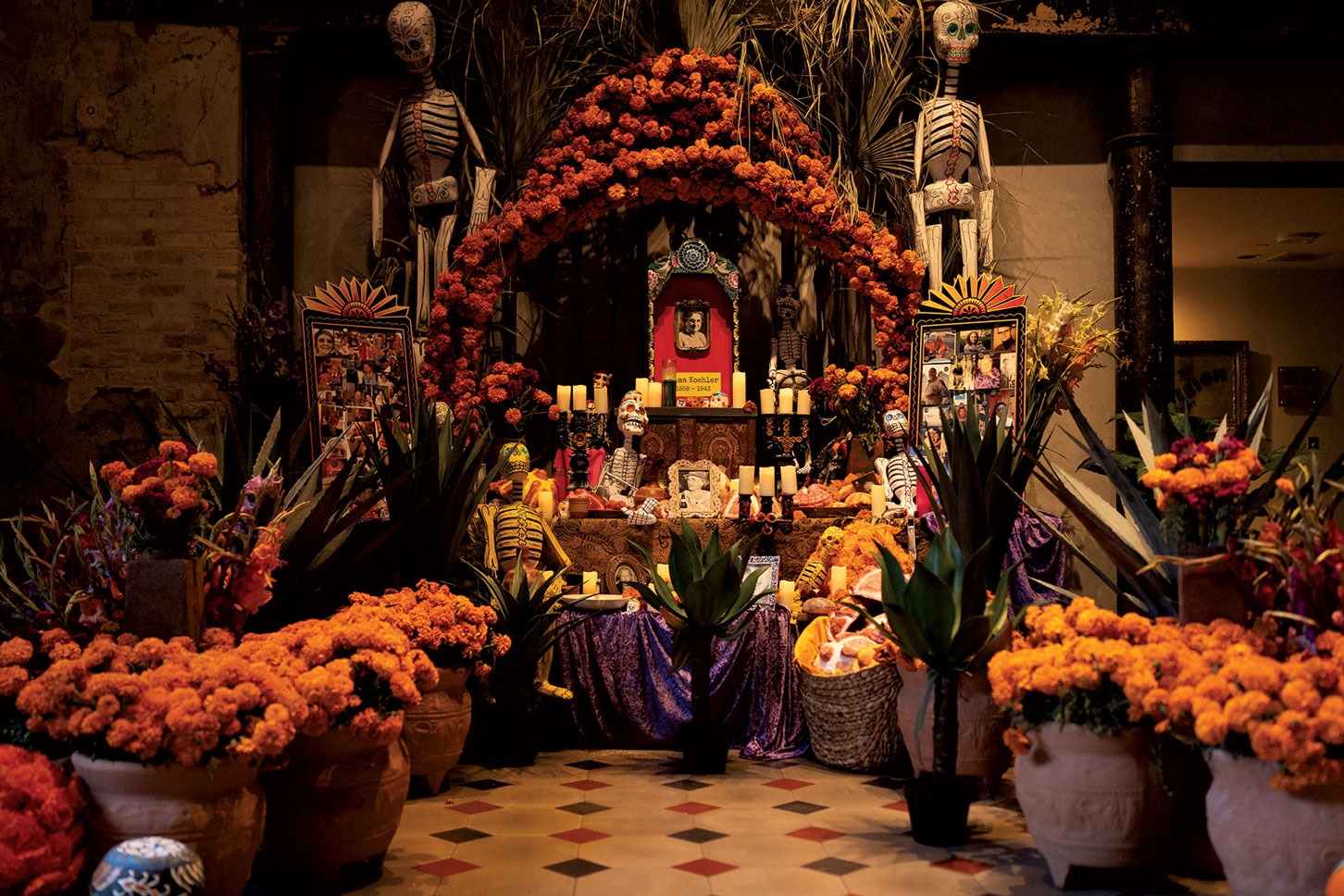
An ofrenda might feature a grandmother’s photograph, a father’s favorite tequila or a child’s favorite candy. Marigolds, or cempasúchil, add their distinctive color and fragrance, traditionally believed to help guide spirits home. Candles illuminate the altar, the intricate cut-outs on papel picado provide a path for spirits to travel through, and calaveras (sugar skulls), believed to be remnants from Aztec traditions, now represent the sweetness of life.
Food, in particular, has an extraordinary ability to transport us. A recipe can summon a grandmother’s kitchen. A familiar aroma can bring back a childhood memory. A single bite can connect someone to a place they haven’t seen in years. That relationship between food and memory is something Chef Johnny instinctively understands. “One of the reasons why I feel Día de los Muertos is a powerful tool for teaching is because it’s very colorful. It incorporates art, food, aroma… it touches all the senses, and it’s a very good reminder that we have to honor and remember everyone we’ve lost,” he described.
For a chef who has spent his career preserving and sharing Mexican food traditions, the connection is undeniable. The city has embraced the holiday on a grand scale without losing sight of what makes it meaningful in the first place. Chef Johnny is careful to emphasize that the celebration belongs to the community. “Our success all ties back to our willingness to promote everyone who’s part of this,” he noted. “It’s about participation.”
And perhaps that is precisely why Día de los Muertos feels so at home in San Antonio. This is an old city influenced by generations of people who brought their histories, recipes, faiths, languages and traditions with them, creating something new without leaving the past behind. Each fall, those stories return in the form of marigolds and candles, music and art, moles and pan de muerto (bread of the dead), photographs and family recipes. Some are thousands of years old. Others belong to people who passed only recently. Together, they form a living history. For Chef Johnny, that’s the legacy he hopes will continue long after his own role in the celebration has come to an end.