A Canvas Along the Current

By:

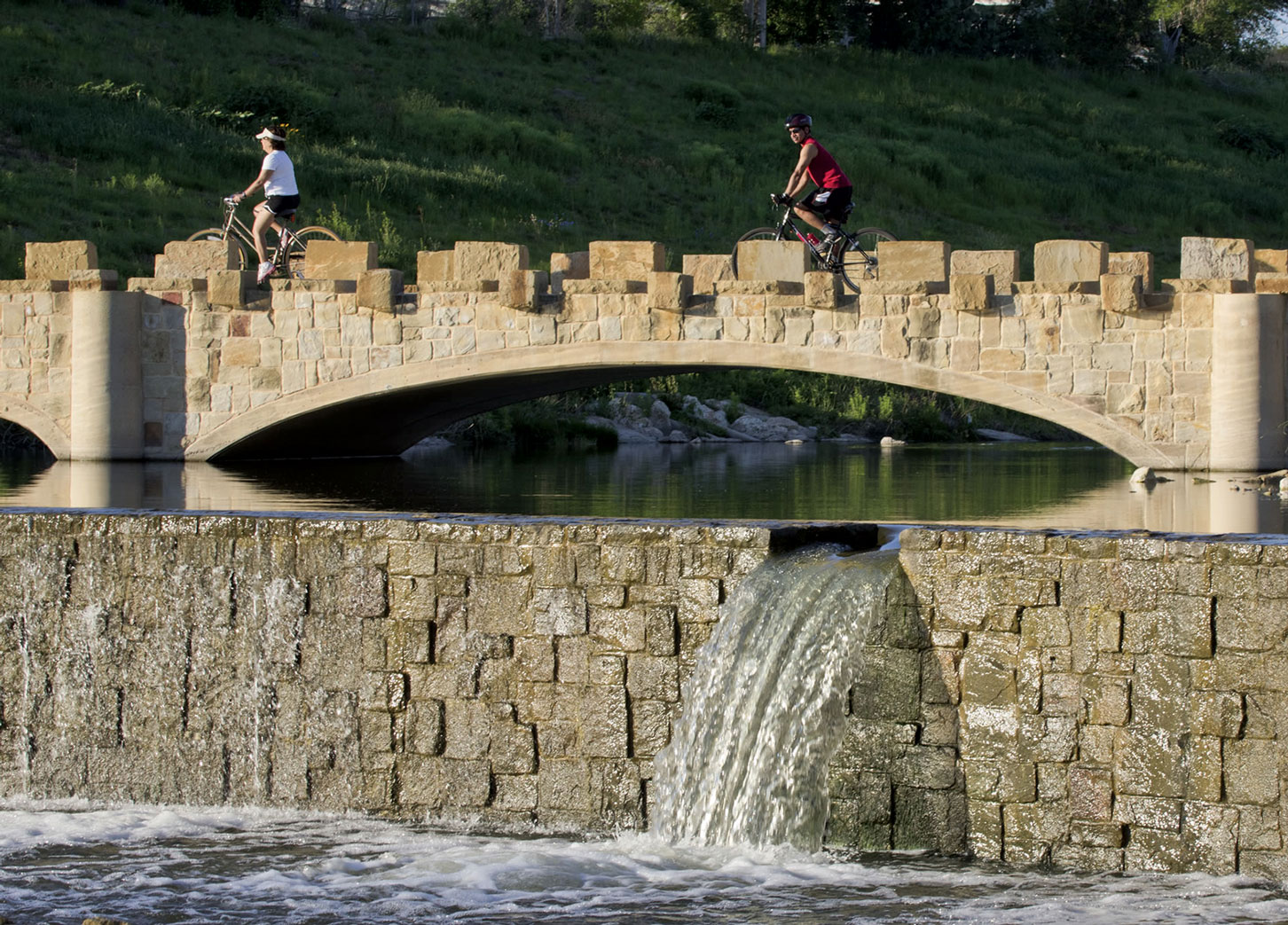
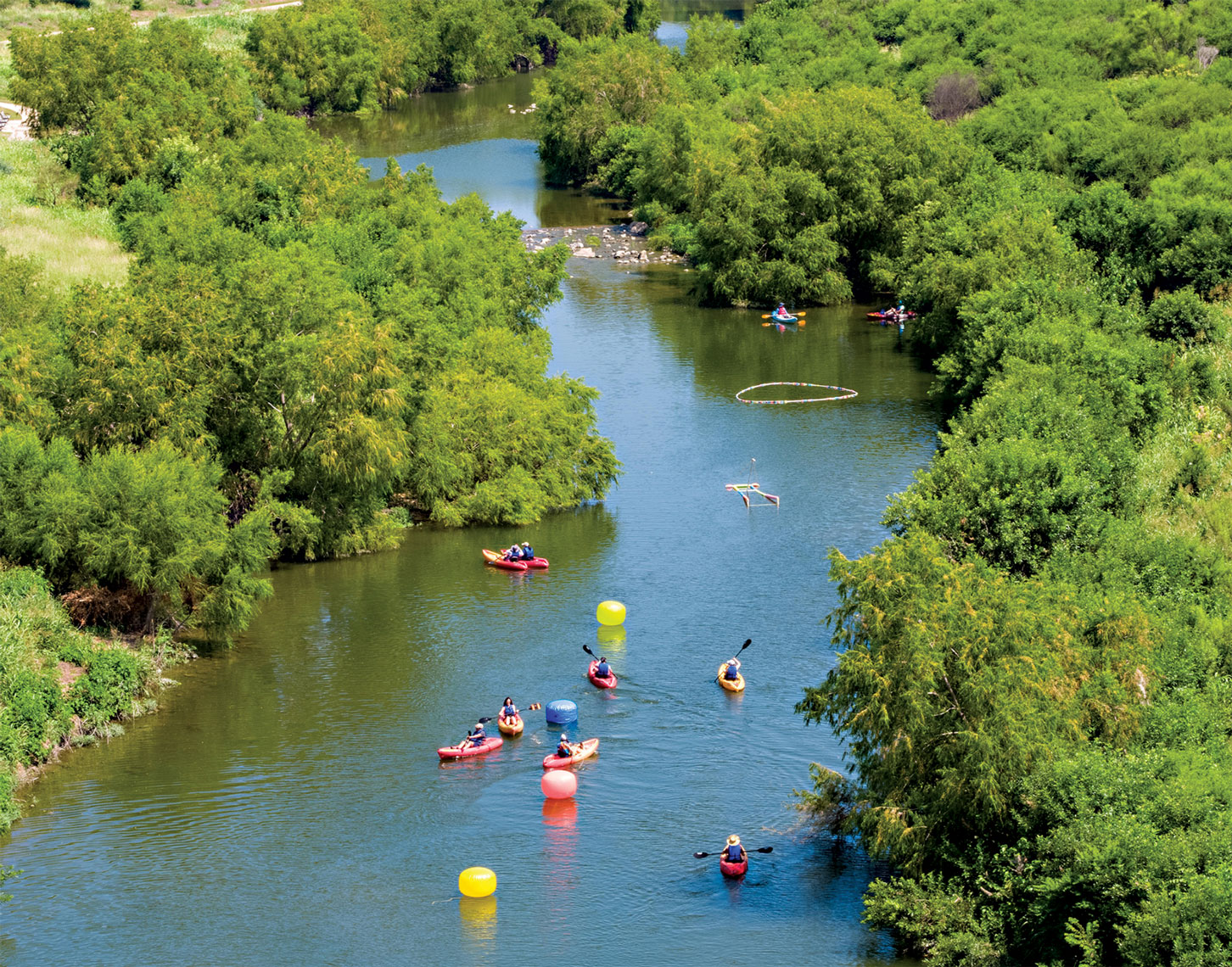
Stretching eight miles from downtown to Mission Espada, the Mission Reach of the San Antonio River Walk is celebrated for its miles of trails, native landscapes and historic connections to four of the five Spanish Colonial missions, inviting visitors to slow down and experience the river through conservation, art and community engagement. “The Mission Reach is unique in that it is one of the first large-scale public projects which incorporates all three, while still fulfilling its primary task of flood control. Historically, projects were thought of as being just for flood control, or environmental mitigation, or public green space. The Mission Reach proved that we can have all three successfully incorporated in one larger project,” said Frates Seeligson, Executive Director of the San Antonio River Foundation.

Partnership for Preservation

Both the San Antonio River Authority and the San Antonio River Foundation share a common vision of inspiring stewardship of the San Antonio River and the native ecology it supports, but each plays a distinct role. The River Authority is responsible for the day-to-day maintenance and management of the Mission Reach, ensuring that its restored ecosystem, trails and public spaces are protected and maintained. The River Foundation complements those efforts by connecting people to the river through arts and culture, education, ecology and recreation initiatives. 

The two organizations work closely together to support conservation and community engagement along the river. The River Foundation helps secure private donations and grant funding to enhance projects and programs when appropriate, while also partnering with the River Authority on volunteer and educational programs. Together, they lead the River Warriors volunteer corps and host events that encourage hands-on stewardship, including trash cleanups, citizen science observations and invasive species removal projects. Through their collaborative efforts, the River Authority and River Foundation are able to preserve the Mission Reach’s ecological health while creating meaningful opportunities for the community to experience and care for one of San Antonio’s most treasured natural resources.

Where Art Tells the Story

Yet one of its most distinctive features is something visitors may not expect to find along a restored ecosystem — a curated collection of public art installations that tell the story of San Antonio’s river, culture and community. “The Foundation feels public art is integral to its efforts of engaging the community with the river,” said Seeligson. “Just as in nature, art attracts people down to the Mission Reach, where then there is the opportunity for better understanding of the river ecology and hopefully a chance to inspire stewardship.”

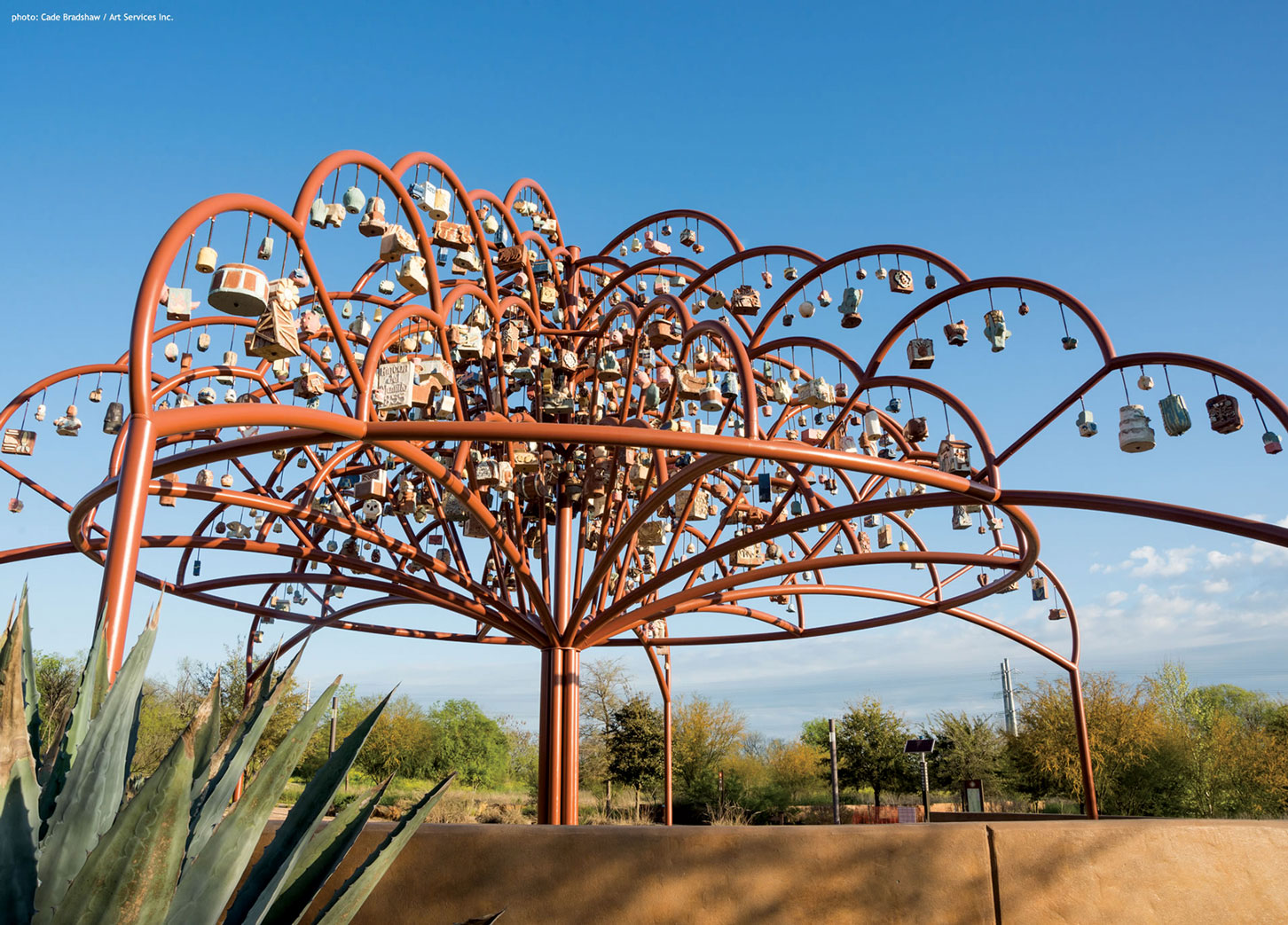
Whether exploring by bicycle, walking the trails or paddling along the river, the public art provides a unique way to connect with both the natural environment and the people who have shaped it for generations. Seeligson explained, “Art is an incredible way to start a conversation, and a tool to reflect the different cultures and traditions making up a community. The ‘Arbol de la Vida,’ for example, is public art where the public actually made the art. Each of the more than 700 pieces reflects a family’s history or traditions that make them a part of the greater San Antonio story. ‘Whispers’ heralds the vibrant colors of spring, but also heavy tones of industry on the reverse side. All of the public art is presented in a way to help people understand the role that the river and its habitat have played, and still continue to, on our community.” Rather than functioning as standalone sculptures, the artworks are woven into the experience of exploring the Mission Reach itself.

Installations from north to south:

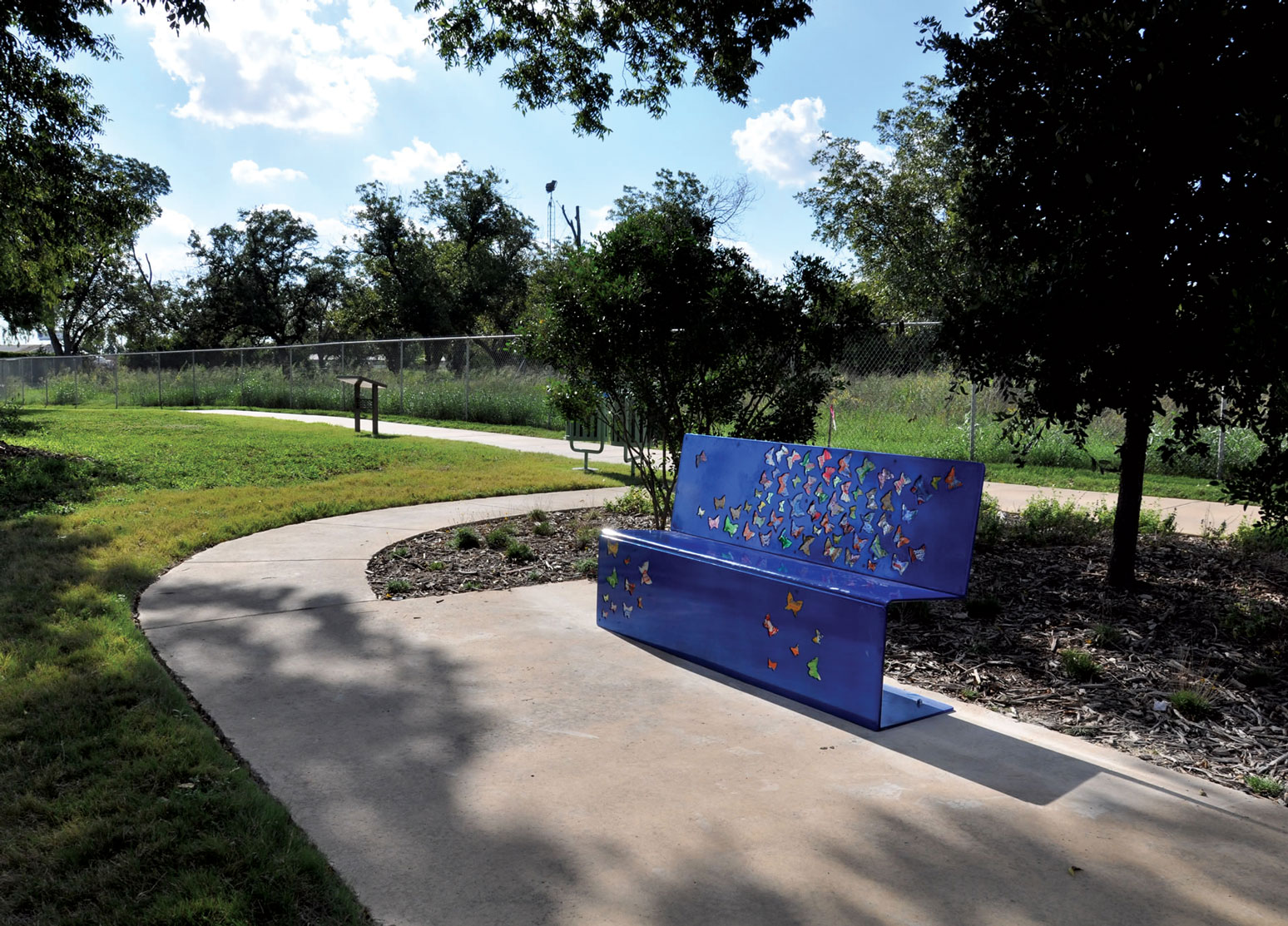
Butterflies, by Anita Valencia: This brightly colored, recycled aluminum bench serves as a reminder of the critical role pollinators play in supporting healthy habitats and biodiversity.

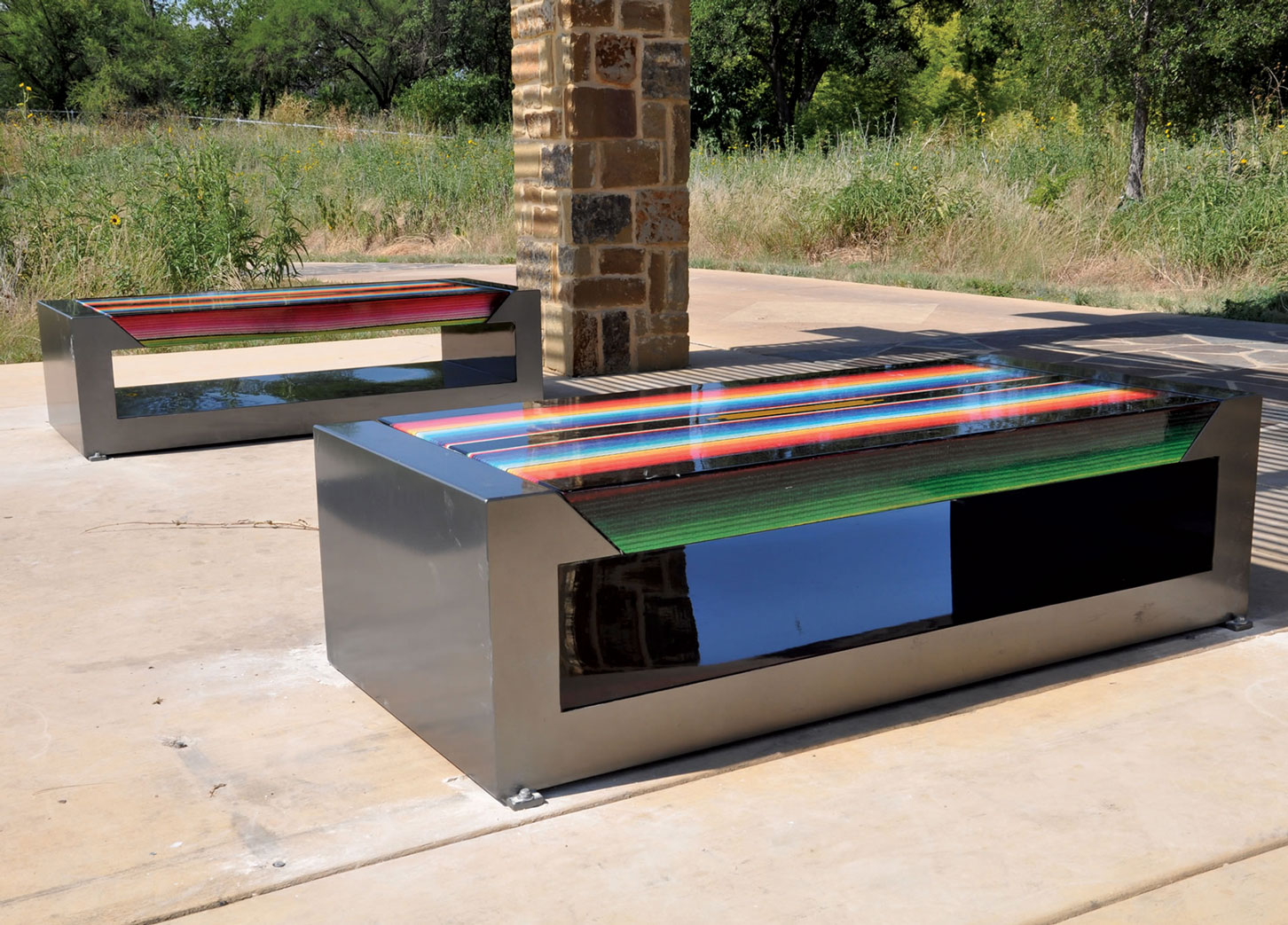
Serapes, by Vincent Valdez: Inspired by vintage serapes from the artist’s grandmother, represented by automotive pinstripe detailing, and the movie 2001: A Space Odyssey, which reminds him of how rapid change replaces the old with the new, Valdez said the Mission Reach project reflects an inspiring convergence of old and new.

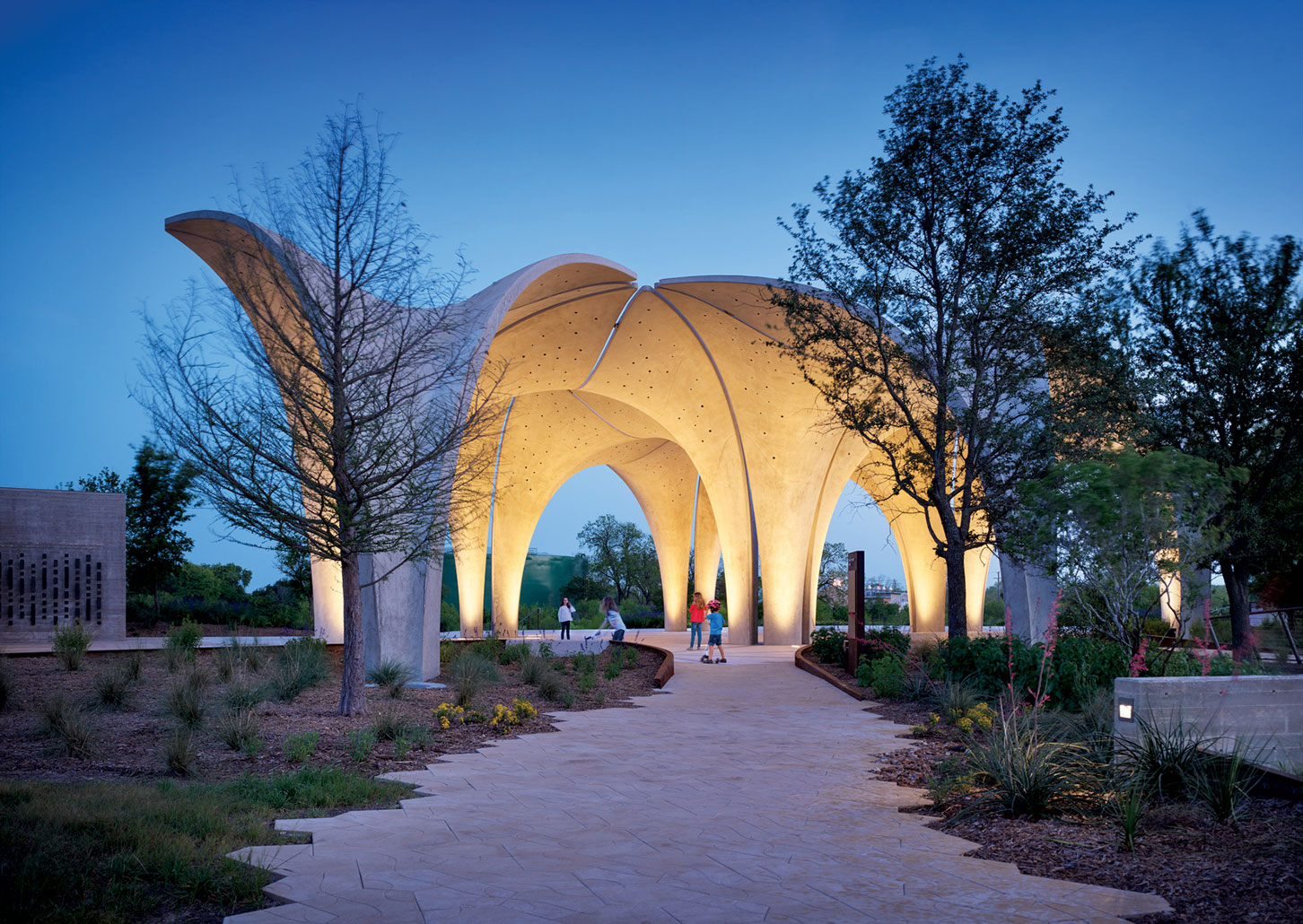
Confluence Park, by architects Lake Flato and Matsys Design: While not a traditional art installation, Confluence Park is widely considered one of the Mission Reach’s architectural masterpieces, having won several international awards. Designed to demonstrate the relationship between water, sustainability and the built environment, its iconic concrete petal structures harvest rainwater and an adjacent photovoltaic array provides energy to the park. The park is offered free of charge to school systems as an outdoor classroom, and there is public programming year-round. Or, friends and families can simply visit the park on their own to connect with nature.

The Once and Future River, by Anne Wallace: Etched with flora and fauna that is thriving once again thanks to Mission Reach restoration efforts, this pedestrian bridge can be found near Concepción Park.

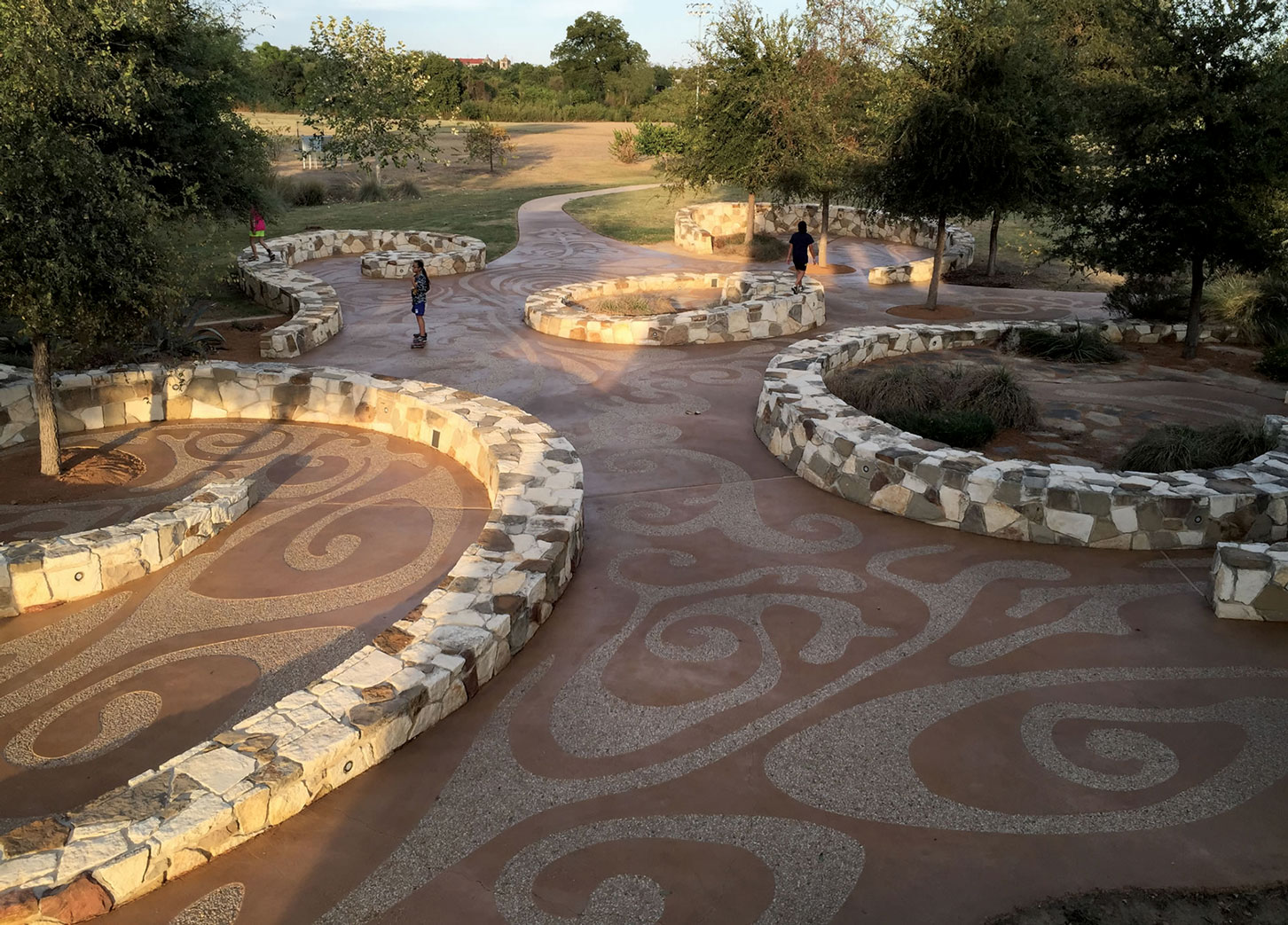
River Return, by Stacy Levy: Designed as a portal to Mission Concepción, stone walls mimic the flow of water and lead visitors to the lower plaza towards the mission.

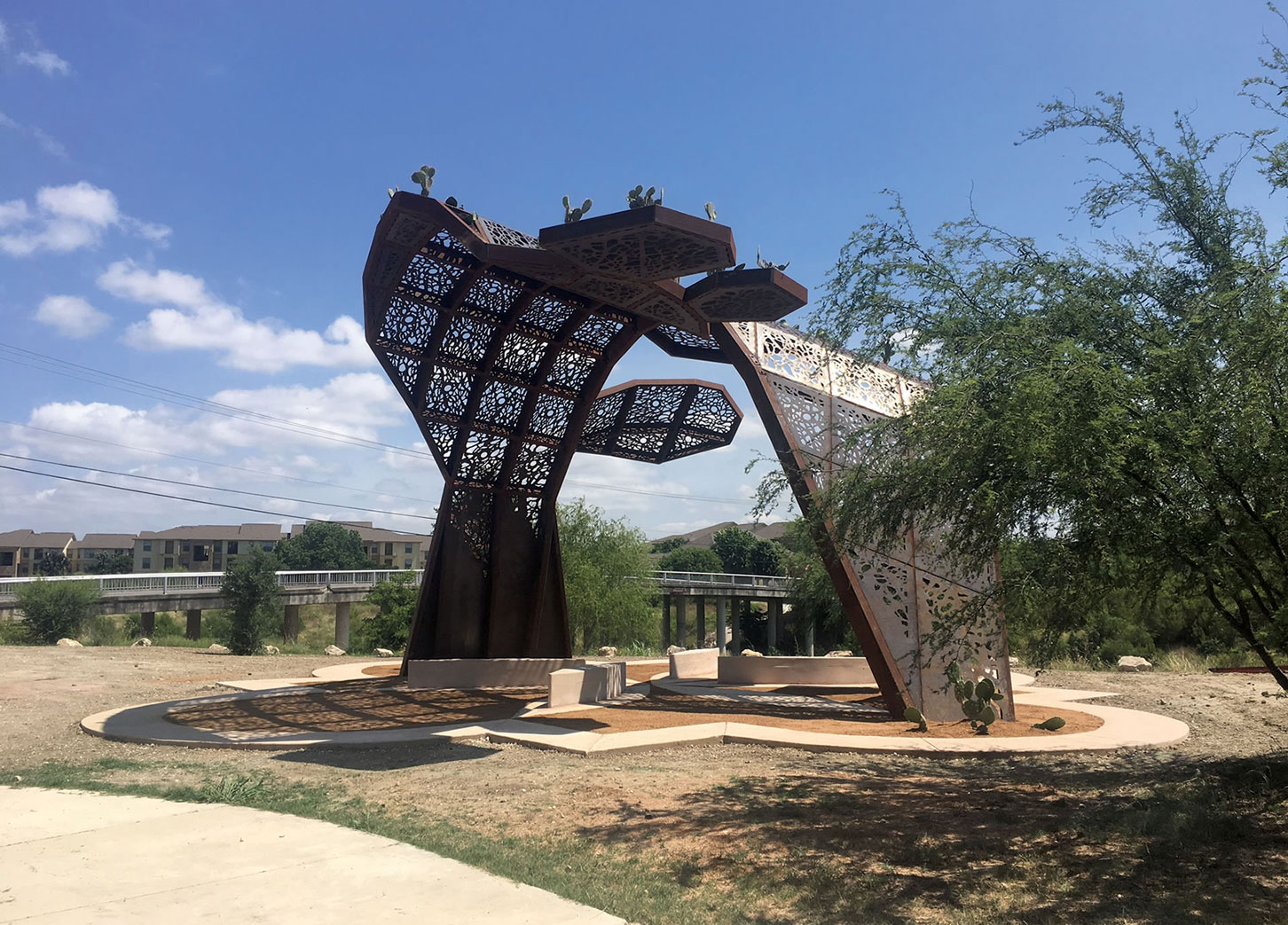
CoCobijos, by Mel Chin: A name invented by the artist and meaning “co-shelters,” the design features prickly pear cactus paddles arcing to create a shade structure. Live prickly pears are also planted on the roof, inspired by those growing on the roof of Mission San José.

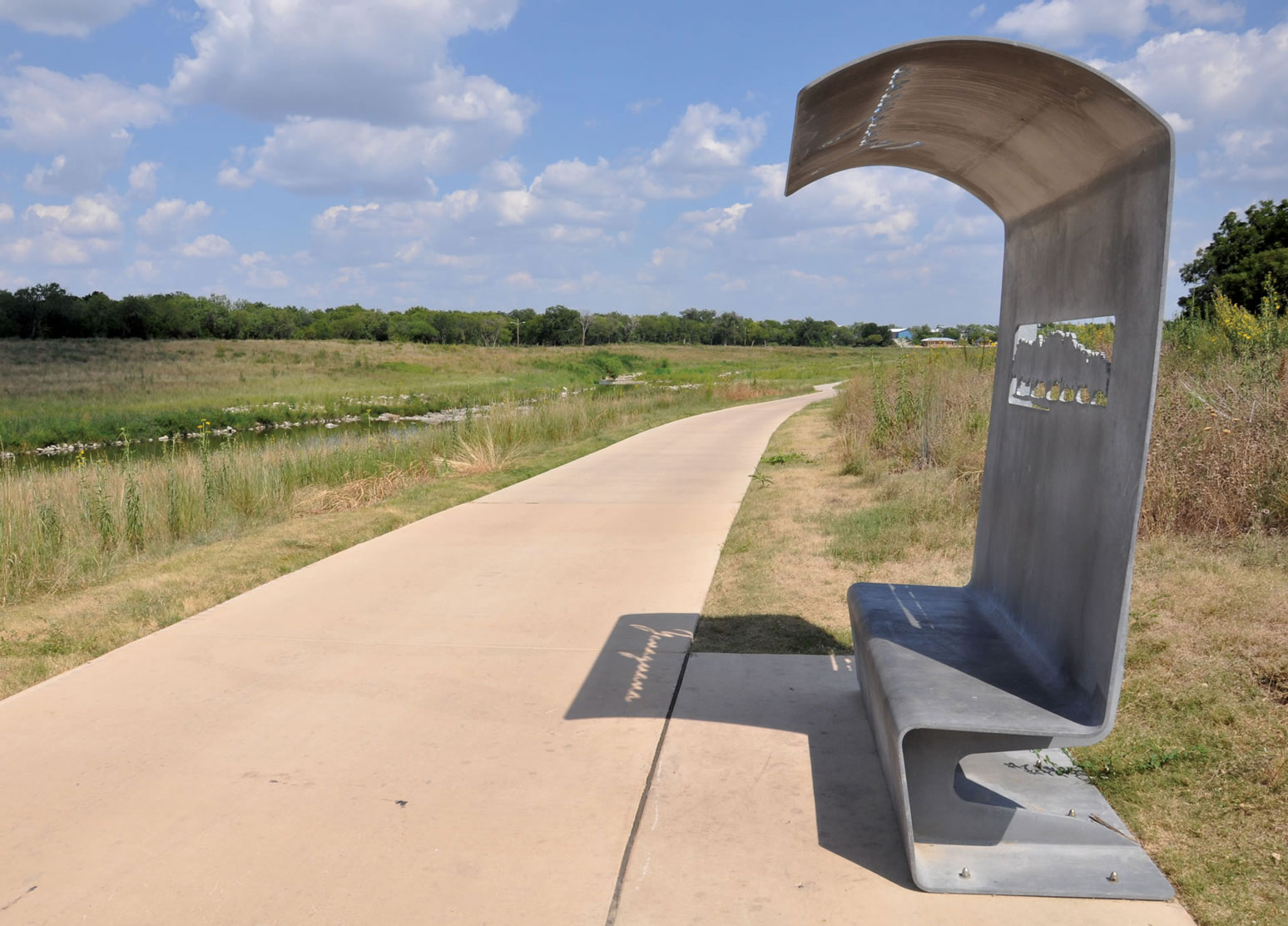
Yanaguana, by Riley Robinson: Located south of Espada Dam and named after the Indigenous Payaya word often interpreted as “Land of the Spirit Waters,” the galvanized steel art bench provides a place to rest while the images cast shadows across the path.

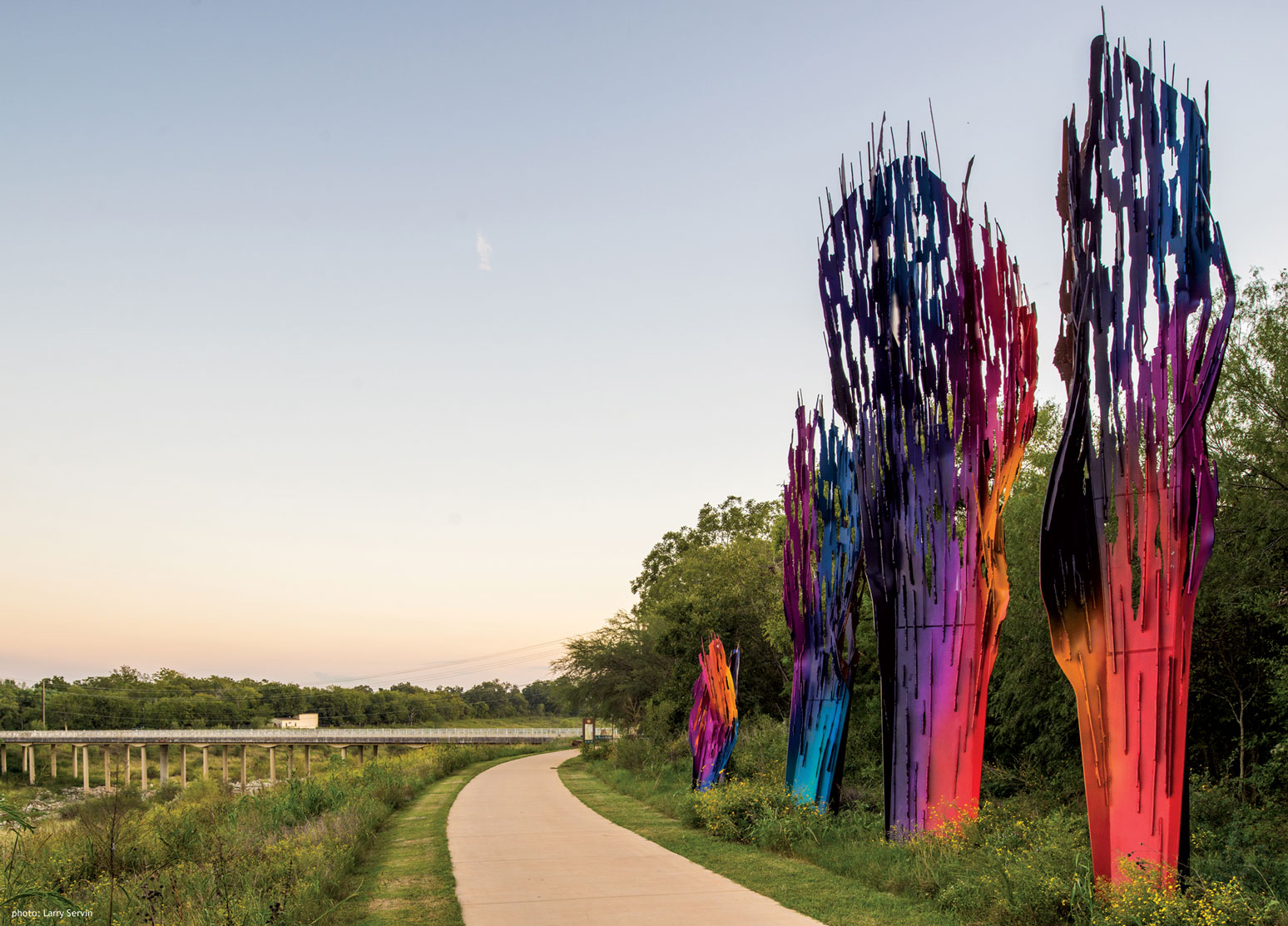
Whispers, by Arne Quinze: Serving as a portal to Mission San Juan, this colorful installation celebrates both the natural beauty of the Mission Reach and its industrial history. Its vibrant exterior evokes the colors of spring and native landscapes, while its reverse side acknowledges the area’s industrial heritage.

Árbol de la Vida: Memorias y Voces de la Tierra (Tree of Life), by Margarita Cabrera: As the portal to Mission Espada, this community-centered work incorporates more than 700 individually created ceramic pieces made by local residents, under the guidance of Cabrera, adorning a steel tree-like structure. The objects are inspired by the ranching heritage of the region.

Restoring the River Ecosystem

The Mission Reach restoration project transformed what was once a heavily engineered flood channel into a thriving riparian ecosystem. According to Seeligson, before restoration efforts began, the river corridor had become a mowed trapezoidal drainage ditch that supported very little native plant or animal life. The comprehensive restoration project reintroduced native habitats and recreated the natural functions of the river.

Key components of the project focused on reconstructing the river channel to enhance ecological function while maintaining flood protection. It also included planting hundreds of thousands of native trees, shrubs and grasses, creating wetlands and aquatic habitats for wildlife, constructing miles of hike-and-bike trails and recreational access points, incorporating public art and educational features, and improving connections to the historic missions and surrounding neighborhoods.

Since its completion, the Mission Reach has experienced remarkable ecological success. Seeligson noted the project’s effectiveness: “For me, it is the avian study that has documented more than 200 species of birds that have returned to the Mission Reach since completion in 2013,” he said. “We also were able to release freshwater mussels, which are a filter species, so really a win-win for our river.”

While there are currently no plans for additional public art installations along the Mission Reach, opportunities are continually evaluated as the river system evolves. One of the most exciting developments is the West Side Creeks Restoration Project. Once complete, visitors will be able to travel from Elmendorf Lake or Woodlawn Lake to the Mission Reach via restored creek corridors, significantly expanding San Antonio’s connected network of riparian habitats and recreational trails.

Planning Your Visit

While it’s possible to bike, hike and kayak your way through the Mission Reach, for first-time visitors, Seeligson recommends experiencing it by bicycle. “I would suggest people start at Confluence Park (there is a BCycle Bikeshare Station) and bike all the way down to Mission Espada, enjoying the serenity, the public art and historic missions,” he said.

The route offers an immersive look at the restored landscape while providing easy access to many of the area’s artistic and cultural highlights. Visitors are often surprised by how rural the Mission Reach feels despite being located within one of the nation’s largest cities. “Sometimes you actually hear more chickens than cars,” Seeligson said. “But yet you are still in a city of 1.7 million people.”

Whether you’re visiting for the public art, native wildlife, historic missions or simply a peaceful ride along the river, the Mission Reach demonstrates how conservation, culture and community can coexist — creating a space that continues to inspire stewardship for generations to come.

 

Fun

Inside San Antonio’s Arciniega District

In May of this year, following the completion of the long-running construction along South Alamo Street, neighboring hotels Kimpton Santo San Antonio – Riverwalk and Plaza San Antonio Hotel & Spa officially debuted the Arciniega District, a new lifestyle and dining destination that connects downtown and Southtown.

Read More »
Fun

Holiday Forecast: Ice! in the Hill Country

If you’re looking for a cool holiday outing, add this to your calendar. ice!™, JW Marriott San Antonio Hill Country Resort & Spa’s immersive Christmas experience, returns for its third season, bringing one of the most unique holiday attractions in Texas. This year’s theme is Rudolph the Red-Nosed Reindeer™, a classic that kids love and adults know by heart.

Read More »
Culture

Super Heroes Take Over the San Antonio River Walk

Calling all super heroes, sidekicks and comic book fans: it’s time to don your cape and head to the San Antonio River Walk. The annual Rey Feo Super Hero River Parade for Education is returning on September 26 with a colorful lineup of costumed characters, decorated floats, live entertainment and a special tribute to the local heroes who keep San Antonio safe.

Read More »
Culture

The Marigold Magic

Every fall, San Antonio bursts into color as marigolds bloom, candles illuminate elaborate ofrendas and calaveras, Catrinas and fantastical alebrijes appear throughout the city. Music fills the streets, families gather and food becomes a way to connect generations — both living and departed.

Read More »
Culture

Gothic Guardians of San Antonio

Perched on the eastern edge of Alamo Plaza, the Emily Morgan Hotel — with its soaring copper roof, stone gargoyles and gothic silhouette — stands out as one of San Antonio’s most iconic landmarks. While millions photograph the Alamo each year, many overlook the impressive Neo-Gothic tower directly across Houston Street. This building’s rich history includes medicine, architecture, preservation, tourism and tales of the supernatural.

Read More »
Culture

Fore! Fun! Hit the Alamo City Golf Trail

Almost every city has a municipal golf course or two. Some have more. But almost none of them have a golf trail. San Antonio’s Alamo City Golf Trail is a national standout — eight courses under one name, one reservation system and one nonprofit mission: keep public golf excellent, keep it affordable, and keep the money in the courses instead of in a shareholder’s pocket. Since 2007, when the Golf Trail was put together under the management of the new, nonprofit Municipal Golf Association of San Antonio (MGASA), it has reinvested nearly $44 million in the city’s courses, according to Andrew Peterson, the Association’s President and CEO. Another $40 million in improvements is planned over the next 20 years.

Read More »

Culinary Arts Listings