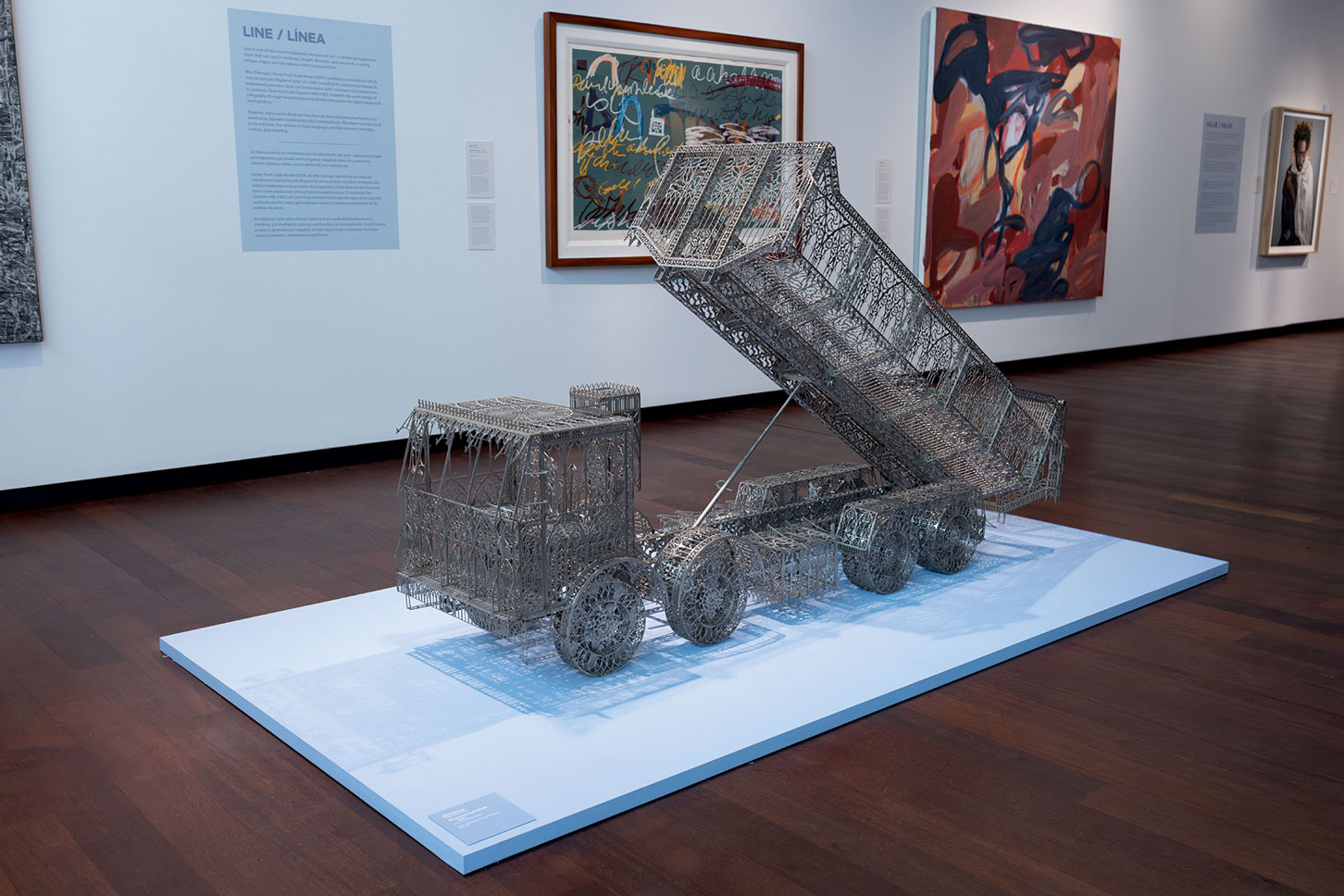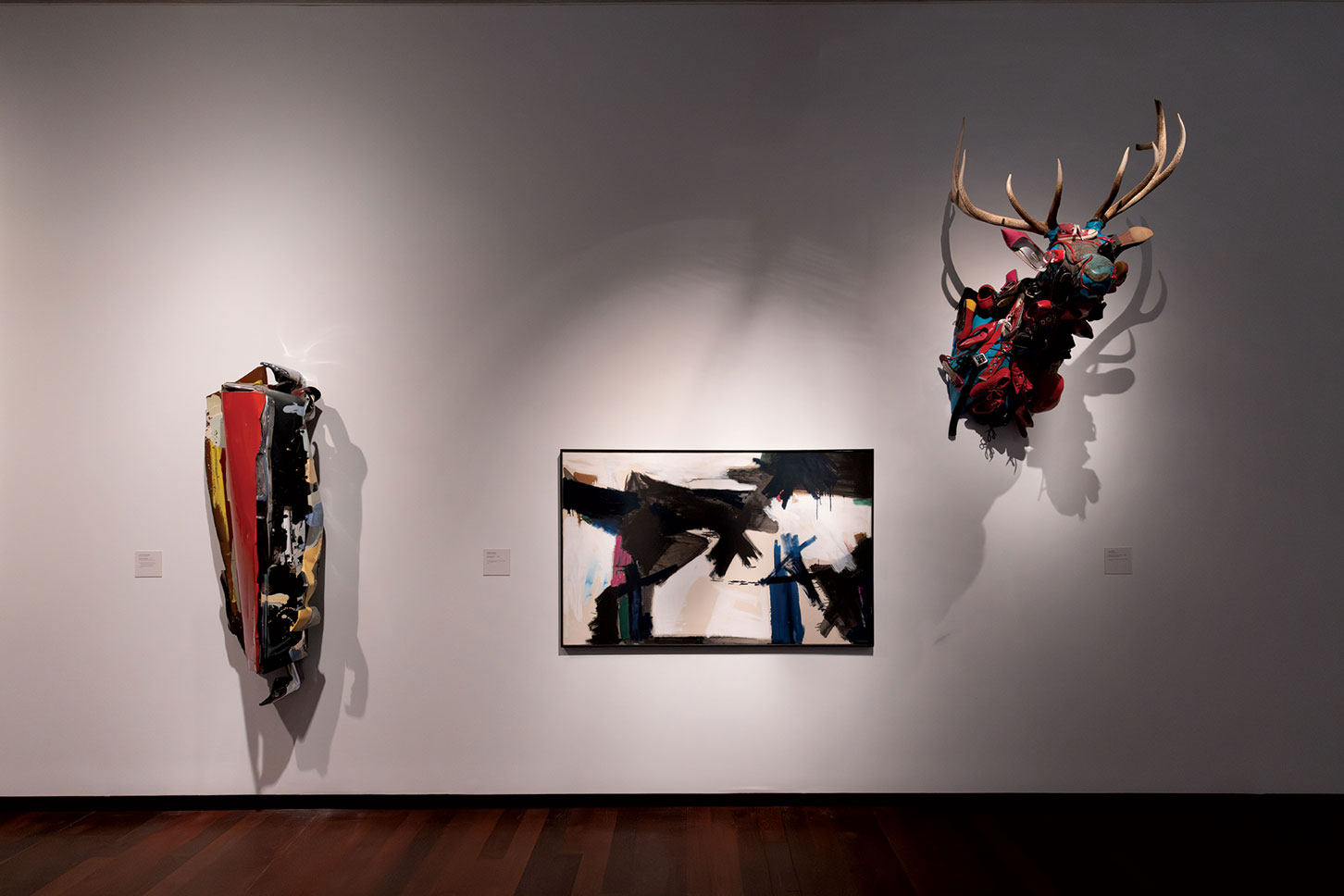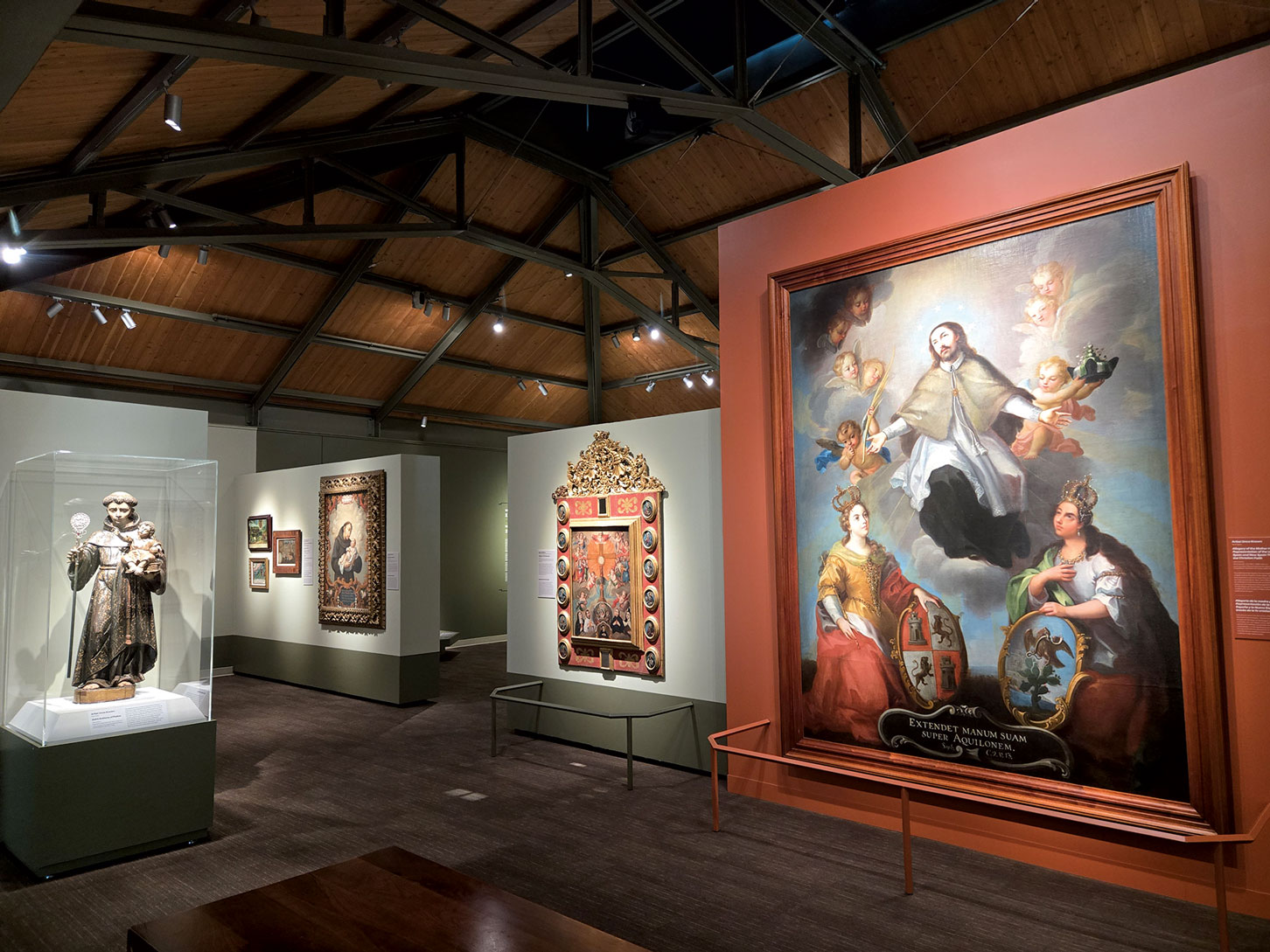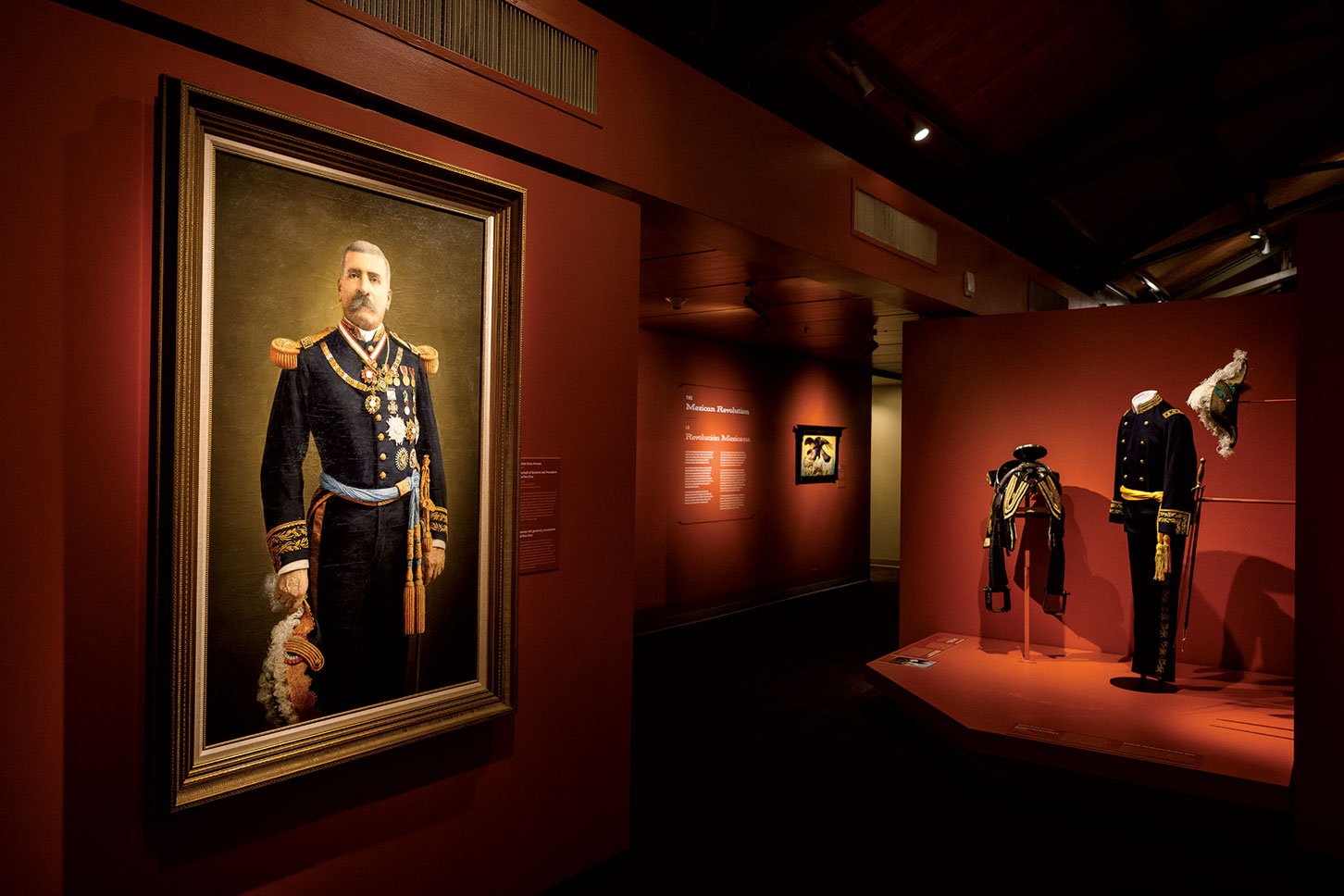
When we visit art galleries and museums, we tend to enjoy the art without thinking about the process and dedicated work it takes to display it, when there’s a lot of thought that goes into designing an exhibit, whether for a world-renowned museum or a local art gallery. Even temporary exhibits require extensive planning.
San Antonio Museum of Art
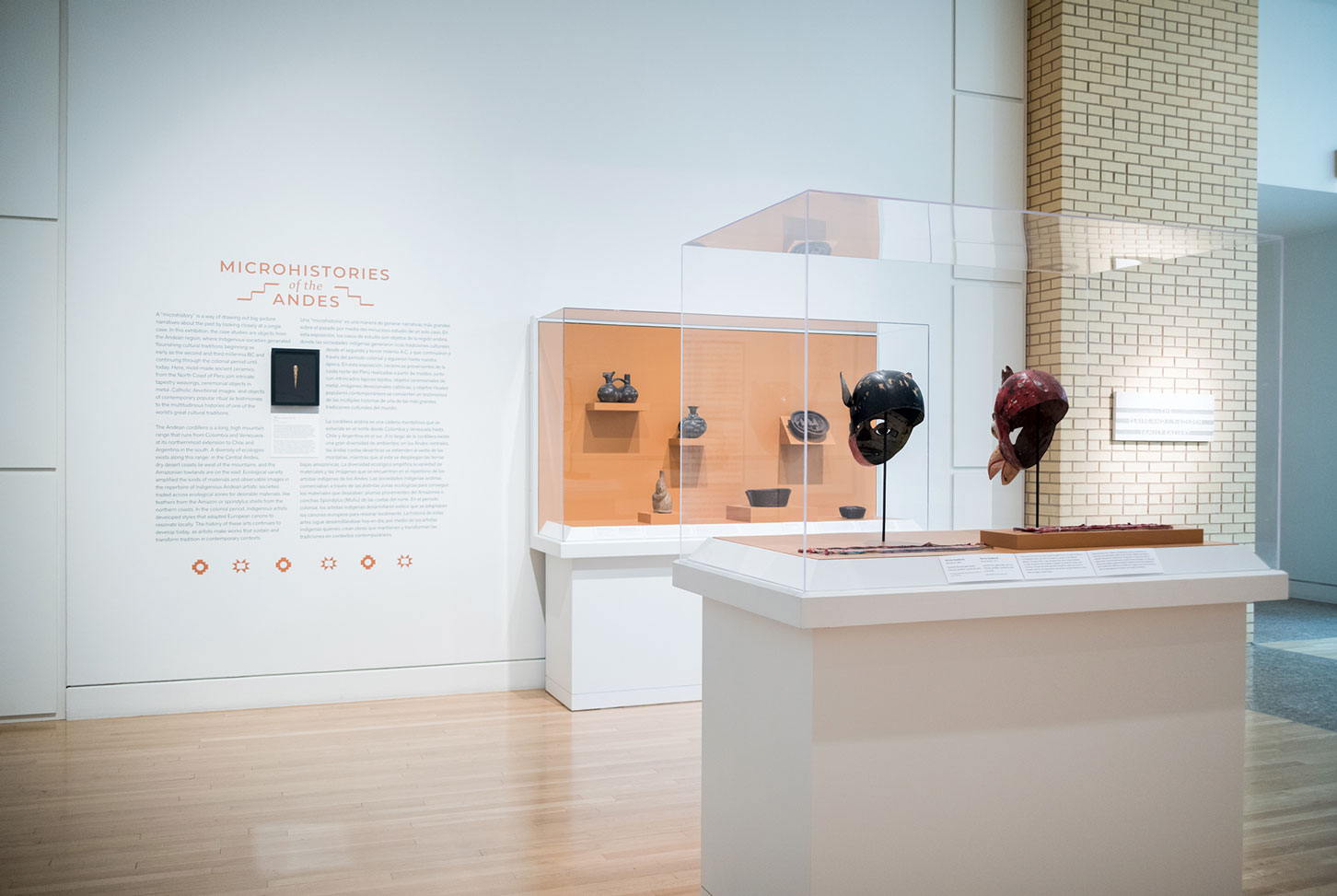
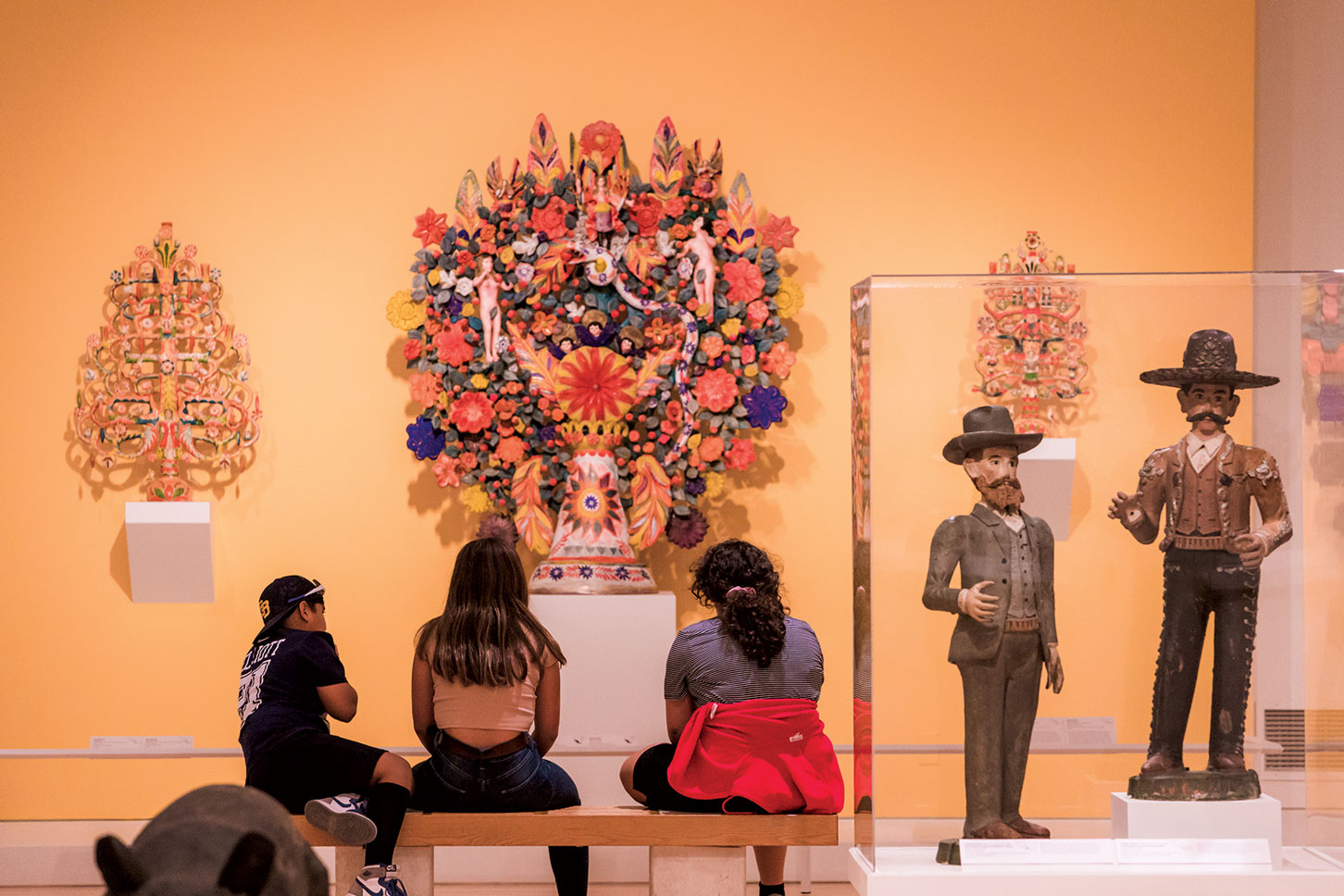
When you’re a world-renowned museum with an incredibly large collection of fantastic objects in a limited space, how do you choose what, when and how to best display them? In the context of hanging paintings or setting up sculpture, there are a couple of different reasons a permanent gallery may need to switch around its artworks, and it can be one or a combination of things, explains Erika Dahl-Stamnes, Curatorial and Exhibitions Coordinator at the San Antonio Museum of Art.
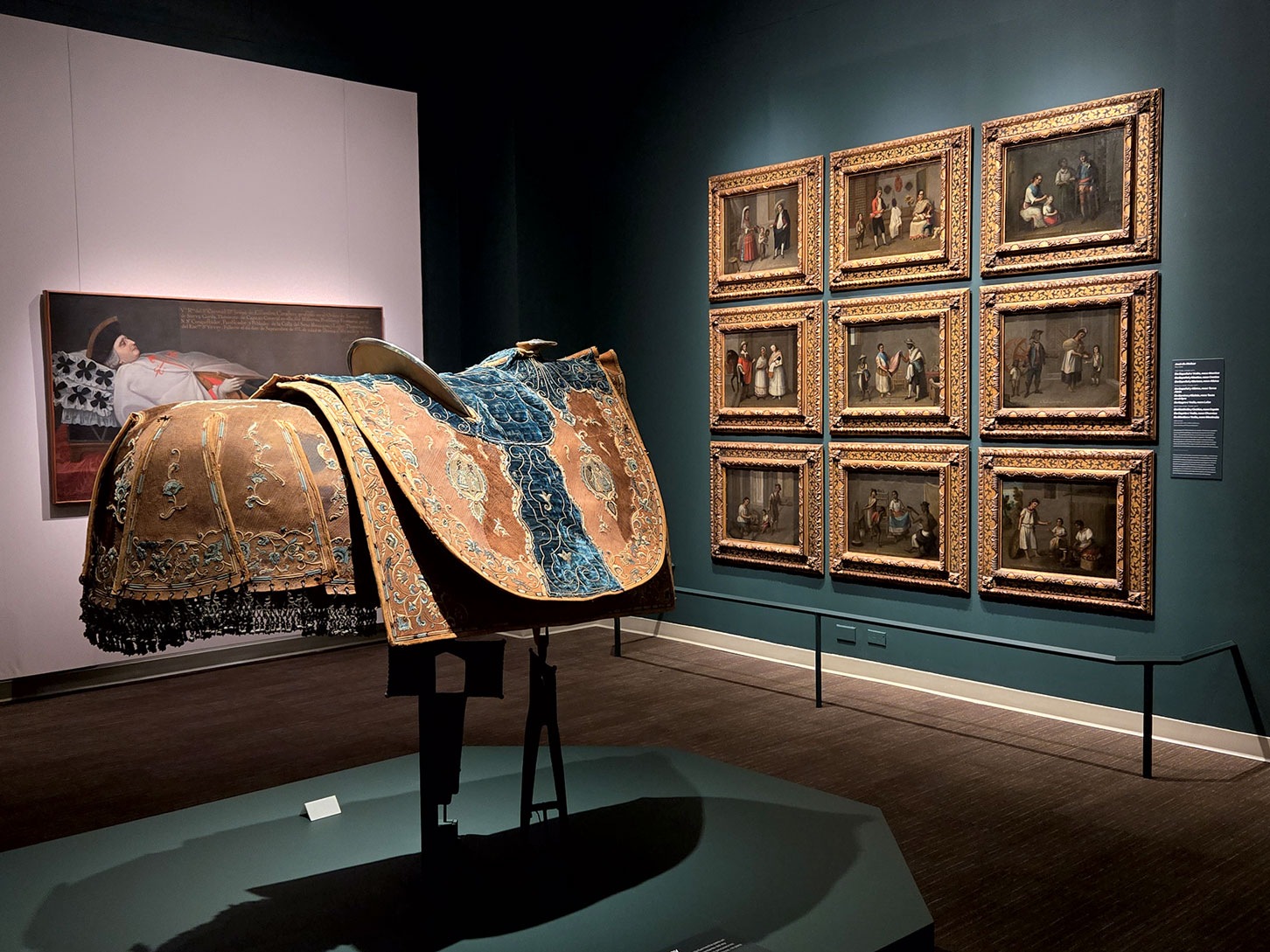
“Artworks have a limited time they can remain on view, especially if they are light-sensitive, such as works on paper and textiles,” she said. “In galleries with many light-sensitive works, there are regular rotations based on their materials.” Sometimes, these objects move when they find a permanent gallery home. And as SAMA continuously acquires new works, space is needed to display them. “Maybe an object has just been out for years, and it’s time for a refresh,” said Dahl-Stamnes. “SAMA has over 30,000 objects from six continents. As with most museums, many are in storage, not on view. We simply don’t have enough space to display everything at once.”
Another instance in which objects may be swapped is if they’re coming in or going out on loan; depending on the size, it could require a shift in the gallery, which brings new opportunities for curators to rotate objects. On rare occasions, conservation is needed to continue to care for an object’s life. “After decisions are made based on these reasons, a curator will select which works to install and deinstall,” said Dahl-Stamnes. “Before installation, we use a variety of tools to mockup digital and physical life-size versions of objects on their cases and wall coverage, in a layout, to understand how it would look, whether things would fit, and whether it is compliant with ADA. Sometimes we get it right on the dot, and it’s easy to swap one thing for another; other times we need to work on how and where things should go. After, our team of Registrars and Art Preparators install the rotation.”
When it comes to exhibition ideas, Dahl-Stamnes says they come from all over. They could range from large, packaged traveling exhibitions from well-known art institutions exhibiting famous artists to exploring relationships between SAMA’s global collection’s cultures past and present; bringing in loans from other museums to support the museum’s works in a themed exhibition; or bringing it right back home to San Antonio’s history and community. “We look at what’s needed in the community, what’s receptive and what hasn’t been done,” she said. “Our curators research the collection’s objects and artists, new artists and art, and explore themes, techniques, mediums and interpretations across works. For example, a popular theme for both curators and visitors, is bringing the new and old together through contemporary reflections on past art. And if there is a way to display our permanent collection in an external, temporary exhibition, we do it.”
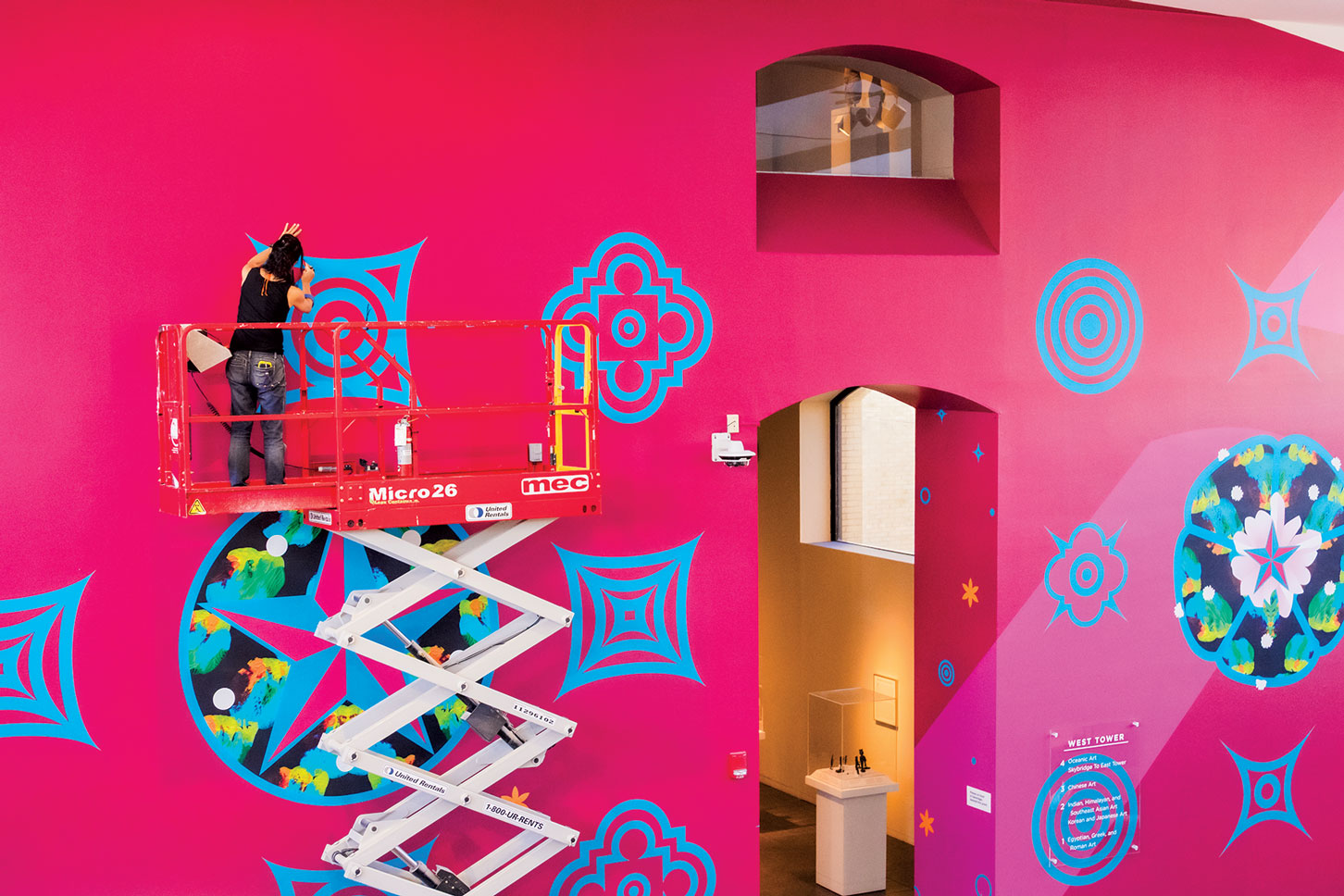
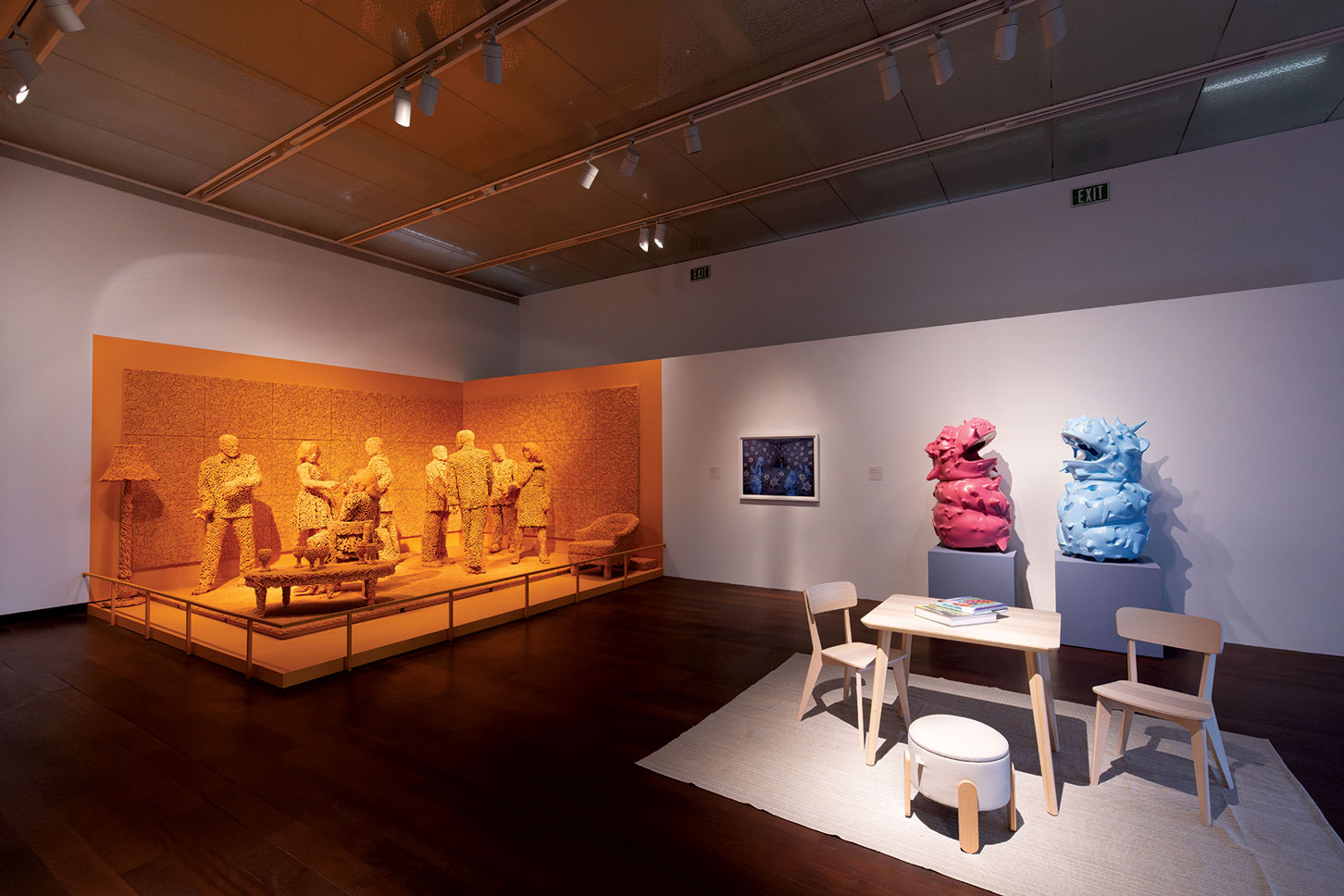
The SAMA team holds meetings to discuss every aspect of an exhibition’s look and feel. Things like paint colors and graphics can be a large part of setting an exhibition. “Sometimes objects speak for themselves, but sometimes you want to get creative and include other elements of the exhibition as supporting details, such as unifying vinyl motifs, photo murals, use of sound, videos of the making of objects, educational interpretation, responses to the exhibition, and even an in-gallery gift shop,” she added. “For whatever is chosen to add to an exhibition, we examine its relationship to the rest of the exhibition and the artwork in the layout.”
Frost Bank Currency Collection
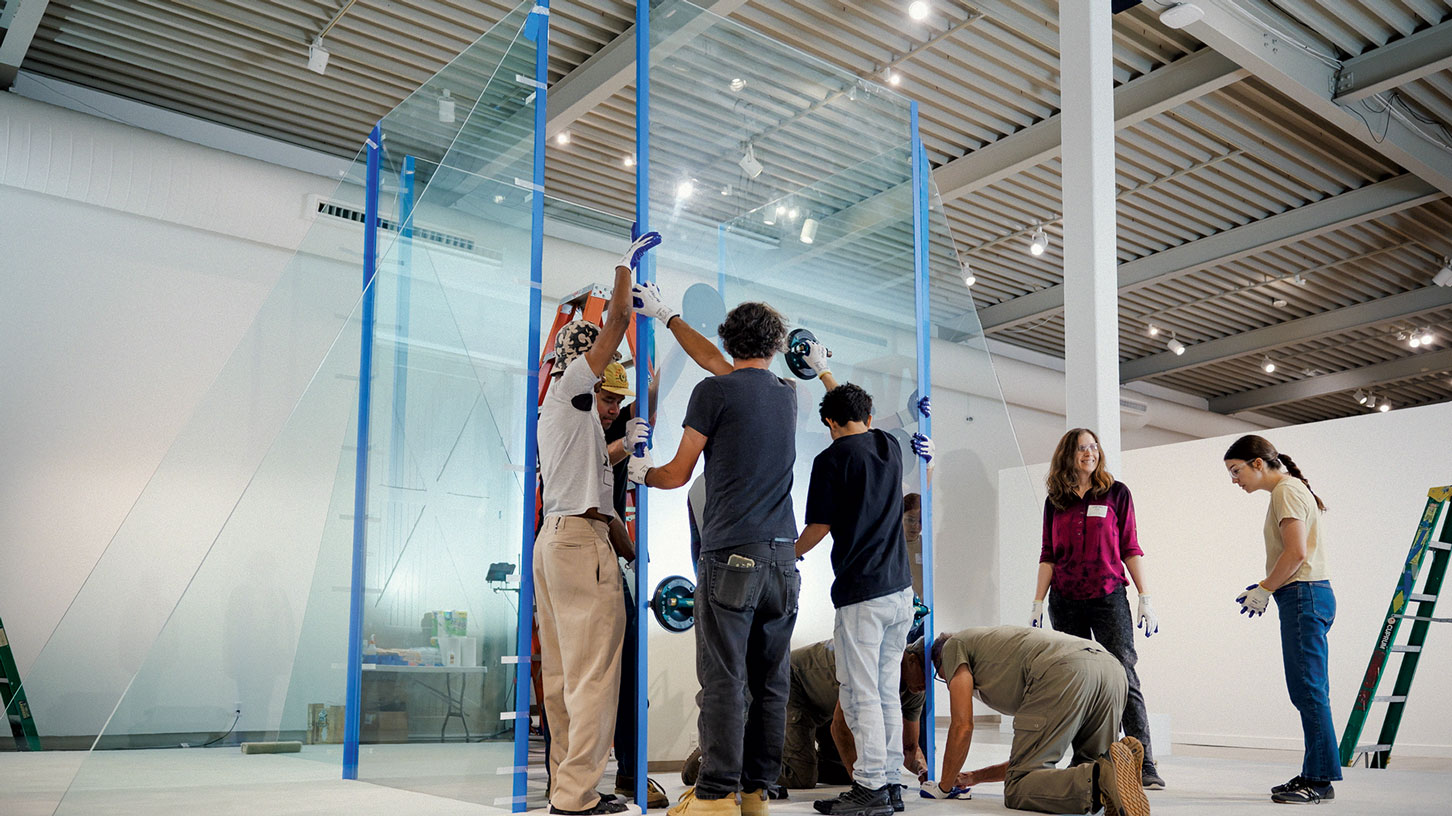
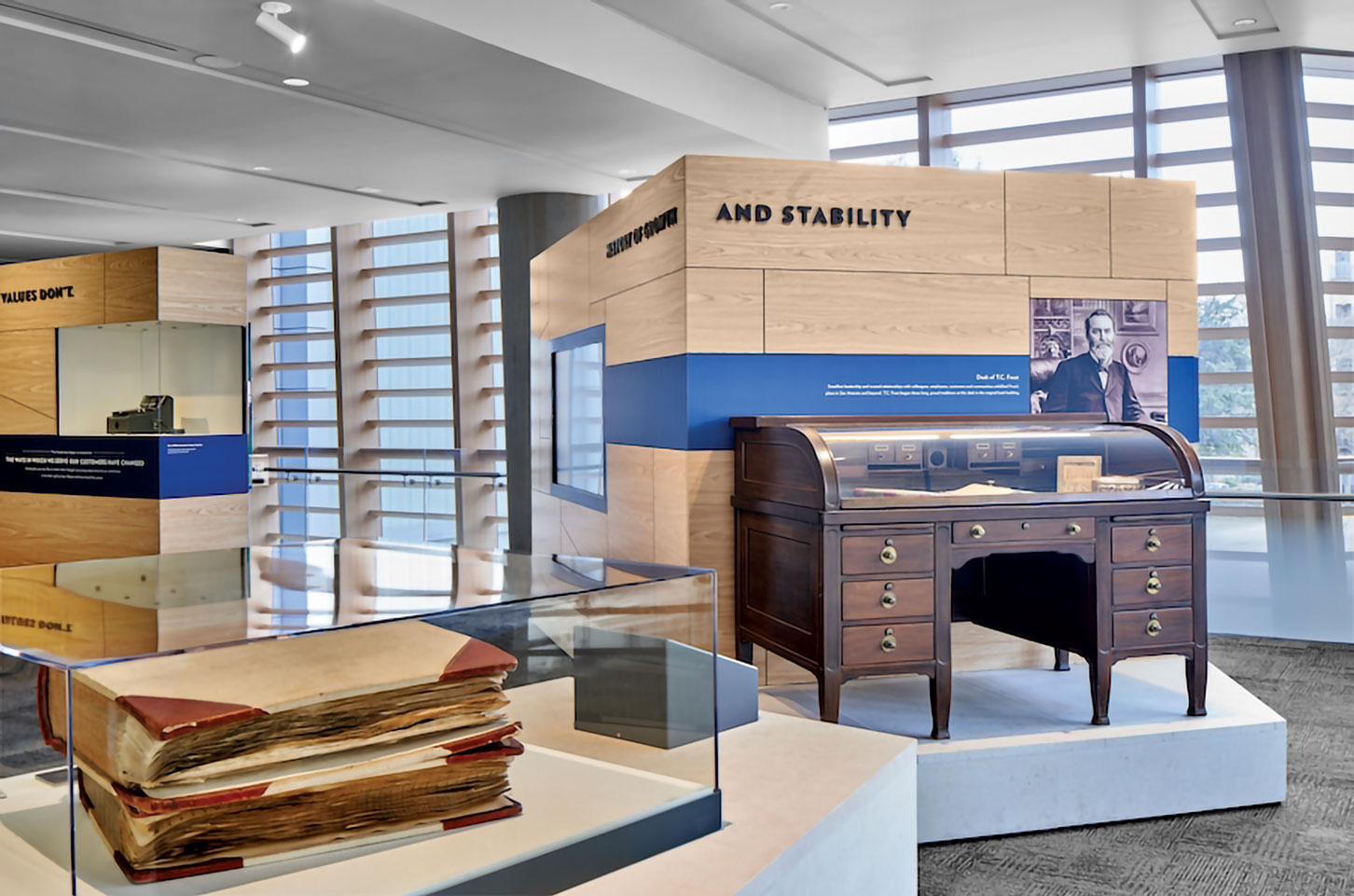
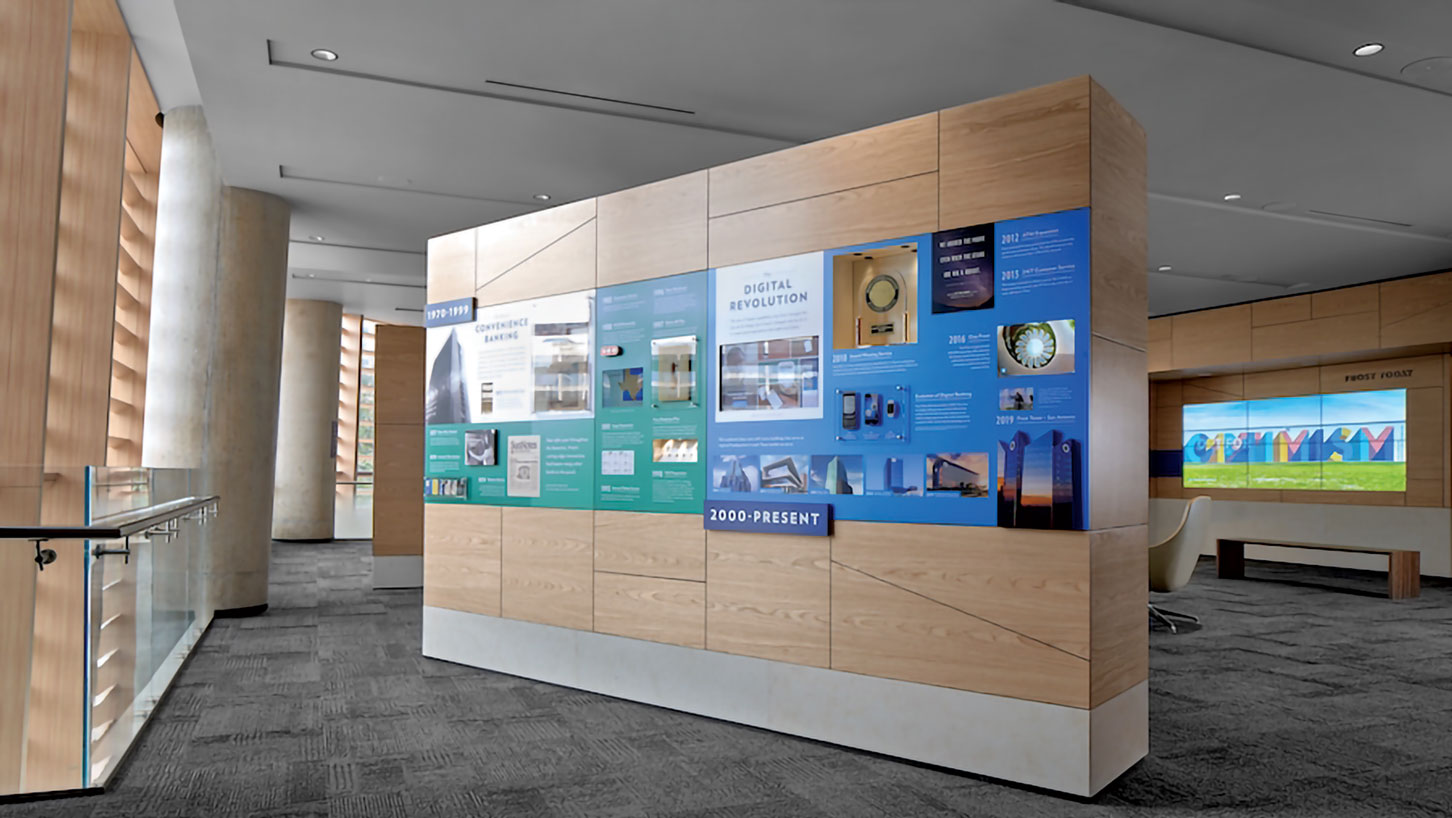
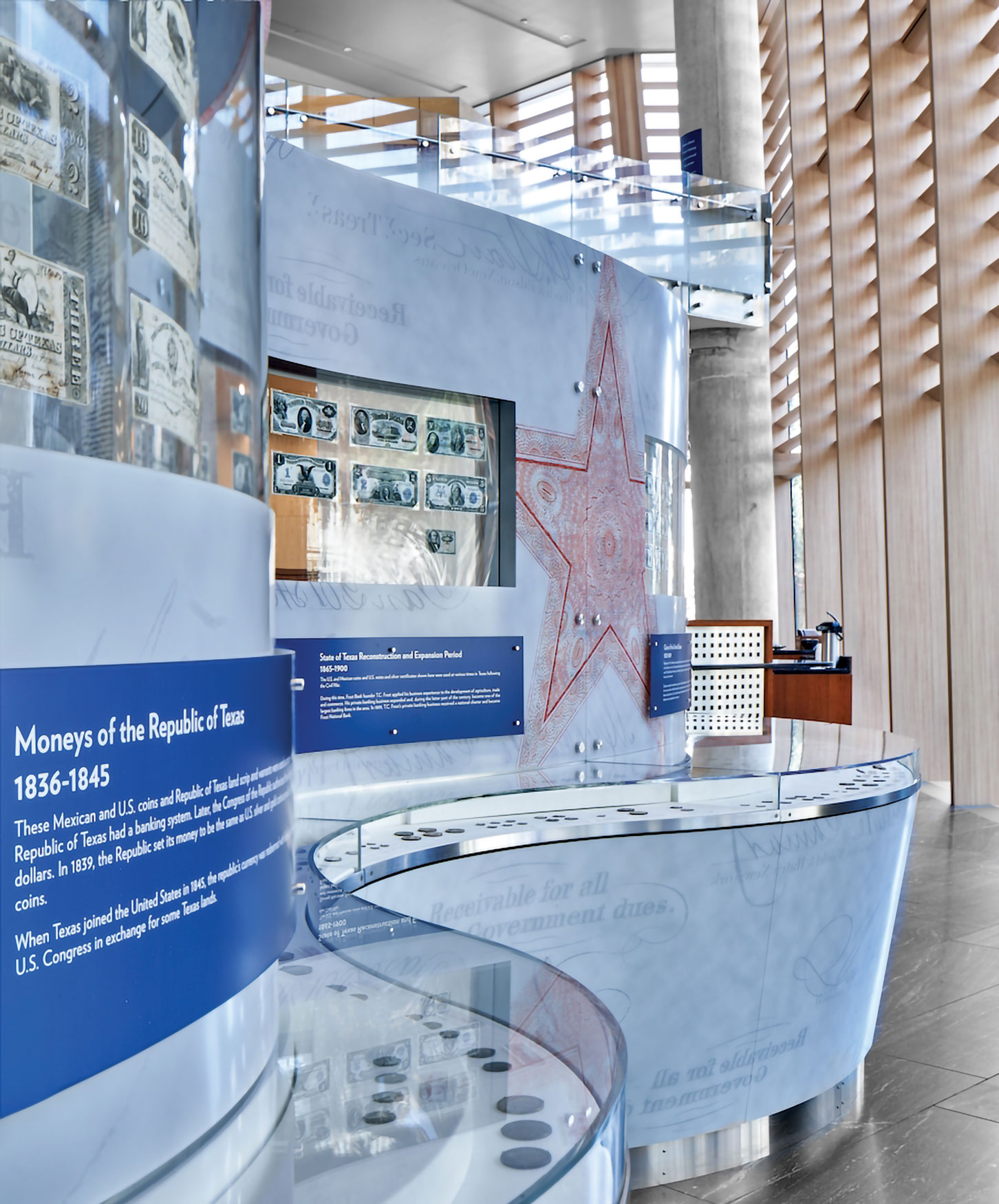
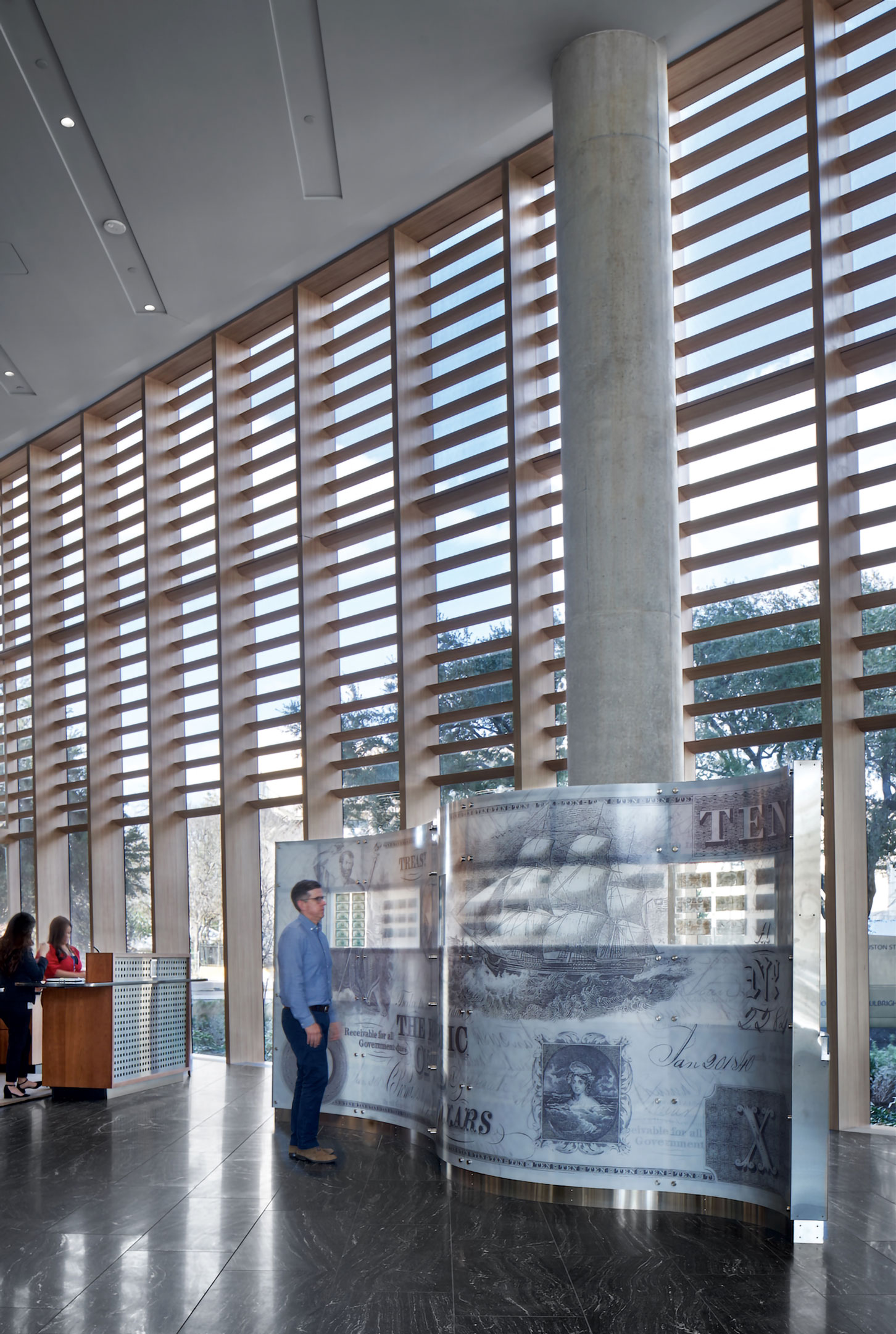
Displaying objects in a non-traditional space, meaning a building not constructed specifically for the purpose of displaying art, has its own set of challenges. That’s what the team at McKinney York Architects had to navigate when designing the Frost Bank Currency Collection exhibit. Housed in the lobby of the Frost Tower, the exhibit showcases rare Texas and American monetary history and features a sculptural display case draped in graphics from a Republic of Texas ten-dollar note.
“When displaying art in a non-traditional venue like the Frost building, we as architects consider how the artwork will relate to both the architecture and the visitor experience,” said Brian Carlson, AIA, LEED AP BD+C, Principal at McKinney York Architects. “In this case, scale was one of our primary design considerations — both the scale of the exhibit within its architectural setting and the scale of the individual artifacts themselves.”
Previously, the collection was displayed in the bank’s former lobby, in traditional framed displays along a corridor. “We knew it was one of the bank’s most beloved features and something customers looked forward to seeing,” he added. “As we designed the new headquarters, we felt it was important not only to provide the collection with a new home, but to elevate the experience.”
The team carefully considered how the collection could be both celebrated and easily discovered within the scale of the new headquarters lobby, a grand, light-filled space defined by expansive floor-to-ceiling windows. While the abundance of natural light creates an impressive and welcoming environment, it also means there are very few traditional walls available for displaying artwork. “Rather than competing with the architecture, the exhibit needed to complement it while establishing a strong visual presence,” said Carlson. “At the same time, the currency and coins are inherently small and intricate, inviting close inspection. The currency is also double-sided, so we wanted to create an opportunity to see both sides.”
This created an interesting design challenge: how do you make a collection of small artifacts command attention in such a large space? “By carefully considering the exhibit’s size, form, placement and presentation, we created a display that commands attention and encourages visitors to engage with the remarkable details of the collection up close. Our responsibility was to transform that collection into a meaningful visitor experience. We considered how people would encounter the exhibit, how the coins and currency could be viewed most effectively, and how the display could take advantage of the dramatic, light-filled architecture of the new lobby,” explained Carlson.
Lighting was another important consideration for Carlson. “The natural light in the lobby is one of its defining features, so we wanted to use that light to enhance the exhibit rather than compete with it. The use of natural light informed the translucent materiality of the exhibit and its ability to capture and reflect light. At the same time, we carefully considered glare, reflections and viewing angles, to ensure the currency could be seen clearly and comfortably.”
Instead of simply relocating the display, Carlson and team designed an exhibit that celebrates the collection, draws visitors into the space, and creates a memorable moment within the grand lobby of the bank.
McNay Art Museum
Audience engagement is another aspect that designers consider when planning new exhibits. “Over the years, watching how museum visitors look at artworks, it seemed that viewers spent less time and were less engaged when all works were presented in ‘classical’ museum form. By that I mean all works are on the same centerline and generally equidistant apart,” said Rene Paul Barilleaux, former Head of Curatorial Affairs at the McNay. “Younger visitors, the next generations of museum patrons, were particularly disengaged.”
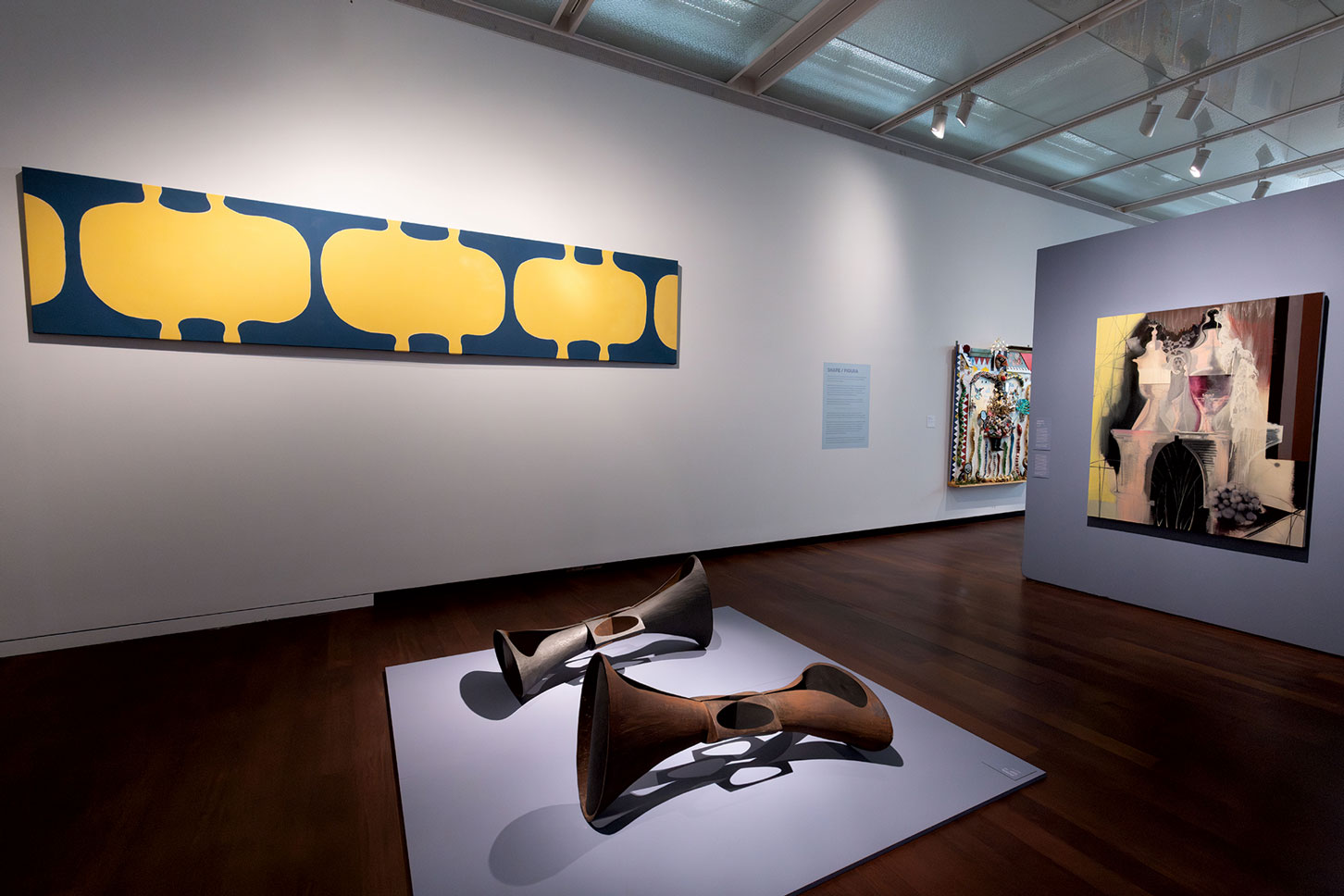
Barilleaux explains that when employing installation techniques that are unexpected or surprising, such as using different hanging heights or asymmetrical grouping, visitors often focus more closely on individual works. Other elements — wall placement, wall color, sight lines — also enhance the experience, as well as audio and video components.
“In creating an environment for presenting artworks, I often look outside of traditional museum and gallery models to find both fresh and familiar design concepts,” he said. “I’ve used a range of ‘real-world’ models, especially for grouping objects, such as our image of the solar system, the old-school way of diagraming a sentence or the organic sprawling of a garden in bloom. These models allow for innovation along with structure.”
For instance, the model for the McNay’s current exhibition, untitled: 20 Years of Collecting Contemporary Art, was a simple ice cube tray, with rectangular galleries side-by-side, proceeding along a central axis. Finding inspiration doesn’t have to be complicated, as everyday objects and shapes can offer ideas for those who know where to look.
Briscoe Western Art Museum
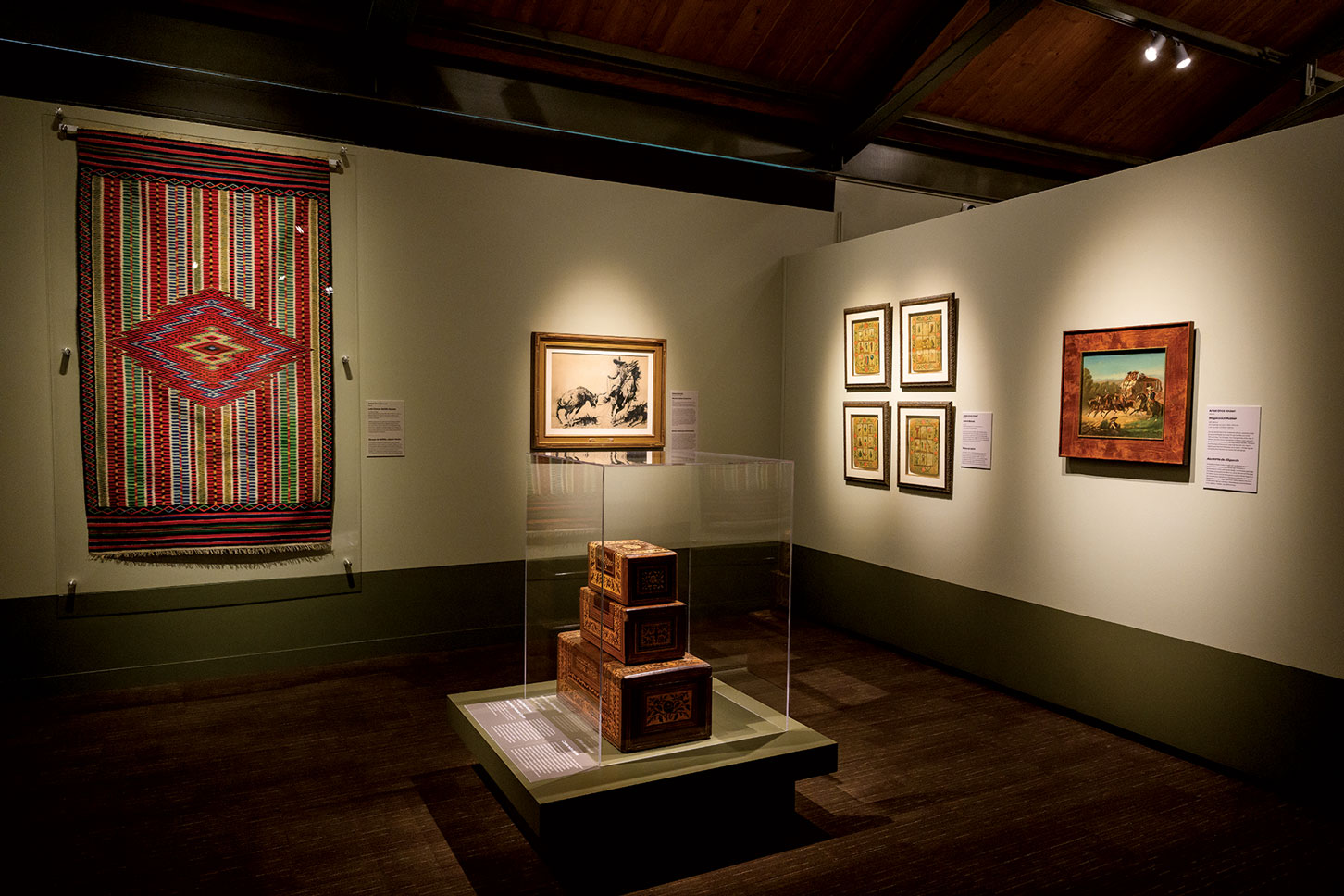
Of course, there are other considerations beyond the shape of the exhibit and placement of the art, and at the top is public engagement. “When we’re putting together a new exhibition, a few things always rise to the top: making it accessible, making it beautiful, and making it interactive,” said Jason Kirkland, Director of Curatorial Affairs, Collections & Exhibitions at the Briscoe Museum of Western Art.
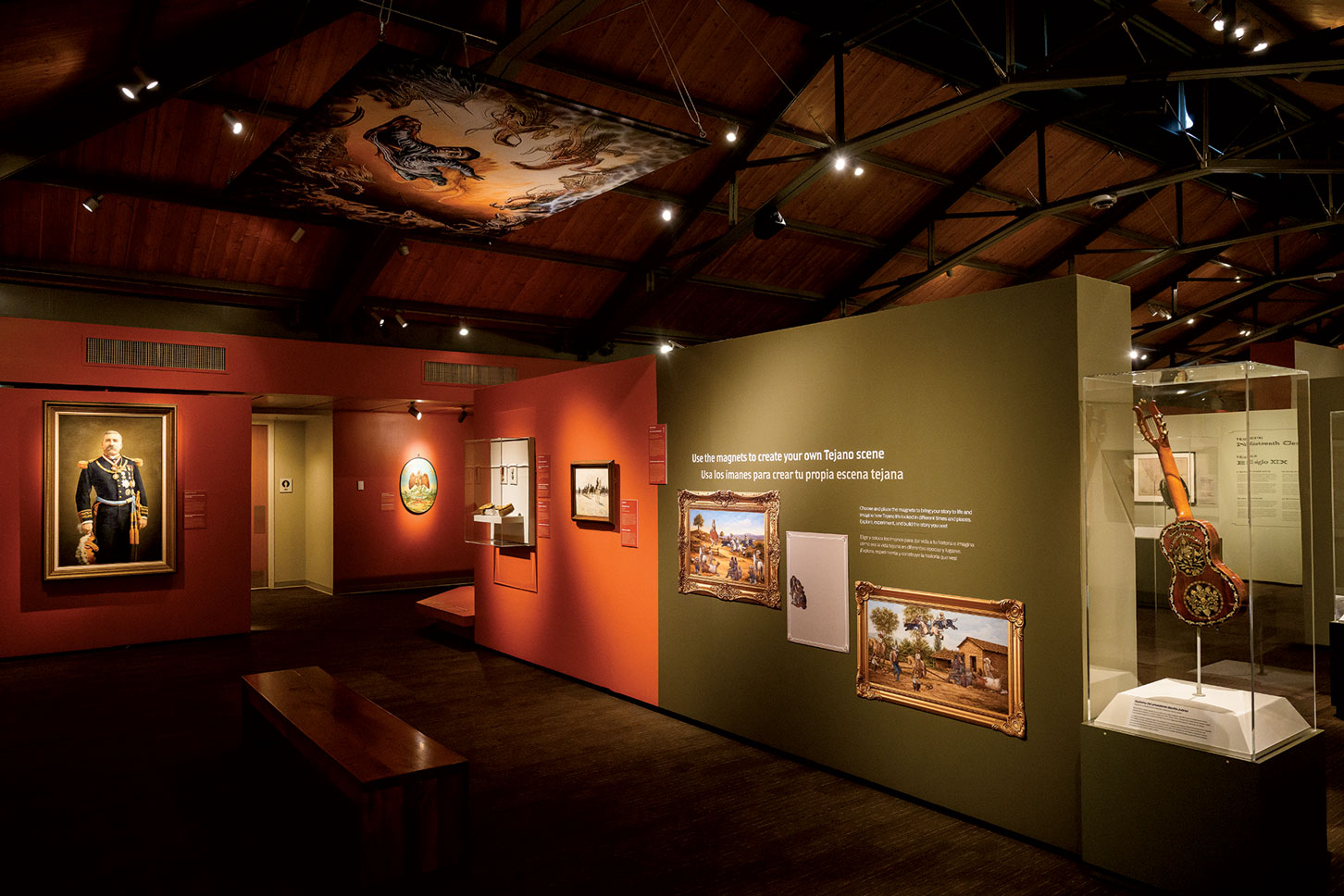
“For me, it all starts with knowing who’s going to walk through the door. We want the story to feel relevant and welcoming to as many people as possible. That means writing the labels and text in a way that’s easy to read and understand, but still meaningful. Because we’re in San Antonio, we’ve also made a big push to present our exhibitions bilingually because it just makes sense for our community.”
Kirkland explains that once the story is set, the focus shifts to the visitor’s journey. “We use a consistent color palette, strong graphics and a layout that feels natural because you shouldn’t have to work hard to figure out where to go next. The goal is for everything to look good and flow smoothly so you can enjoy the experience.”
An important part of the experience are the interactive pieces, which Kirkland says make a big difference in the perception of the story. “We want people to do more than just look; we want them to participate. In our new show, Tejano Legacy: Another American Origin Story, for instance, we have a spot where visitors can sit down and write their own family migration story. It’s simple, but it always sparks personal moments. People start thinking about their own family’s journey and how it connects to the bigger Tejano story on the walls.”
Kirkland also points to lighting as an aspect that most people don’t consciously notice but can completely change how they experience an exhibition. He explains how the right lighting makes artwork come alive. It can make colors vibrant, reveal textures you’d otherwise miss, and create real drama. On the flip side, bad lighting can flatten everything and leave a piece feeling dull. “To me, lighting can truly make or break a show,” he said. “When we design an exhibition, we’re always thinking about angles and positioning. With sculptures, for example, we play with light to gently reduce harsh shadows while keeping enough contrast, so the piece feels three dimensional and lifelike. A well-placed spotlight can highlight the curve of a face or the folds in clothing in a way that suddenly makes the figure feel alive and present.”
At the Briscoe, lighting is also used as a storytelling tool. “A focused beam can quietly draw your eye to a small but important detail, like perhaps an intricate stitching pattern on a historic saddle or a subtle expression in a portrait that you might have walked right past otherwise. It’s like gently saying, ‘Hey, look closer at this’,” said Kirkland.
A side that visitors don’t usually think about is preservation of the objects. Bronze or stone sculptures can handle stronger lighting, but paintings need a softer touch, and delicate works on paper or old textiles must be kept at even lower levels. “We have to be careful with light levels,” said Kirkland. The goal is to let you enjoy these treasures today without harming them for tomorrow.”
When it comes to traveling exhibitions, the approach is a bit different at the Briscoe. “We like to make it our own, so it feels more personal and connected to San Antonio audiences,” said Kirkland. “We often add pieces from our permanent collection, bring in local loans, or incorporate special elements that help visitors feel a stronger connection to the story and to our museum.”
Next time you walk into a museum, Kirkland encourages you to pay attention to those little things. How the colors and lighting make you feel, how easy (or hard) it is to move through the space, and whether there’s something that invites you to do more than just look. And take a second to notice how the lighting works on the pieces. You might be surprised how much it shapes what catches your attention, and how the art makes you feel.
Those design choices are what turn a good exhibition into a memorable one.