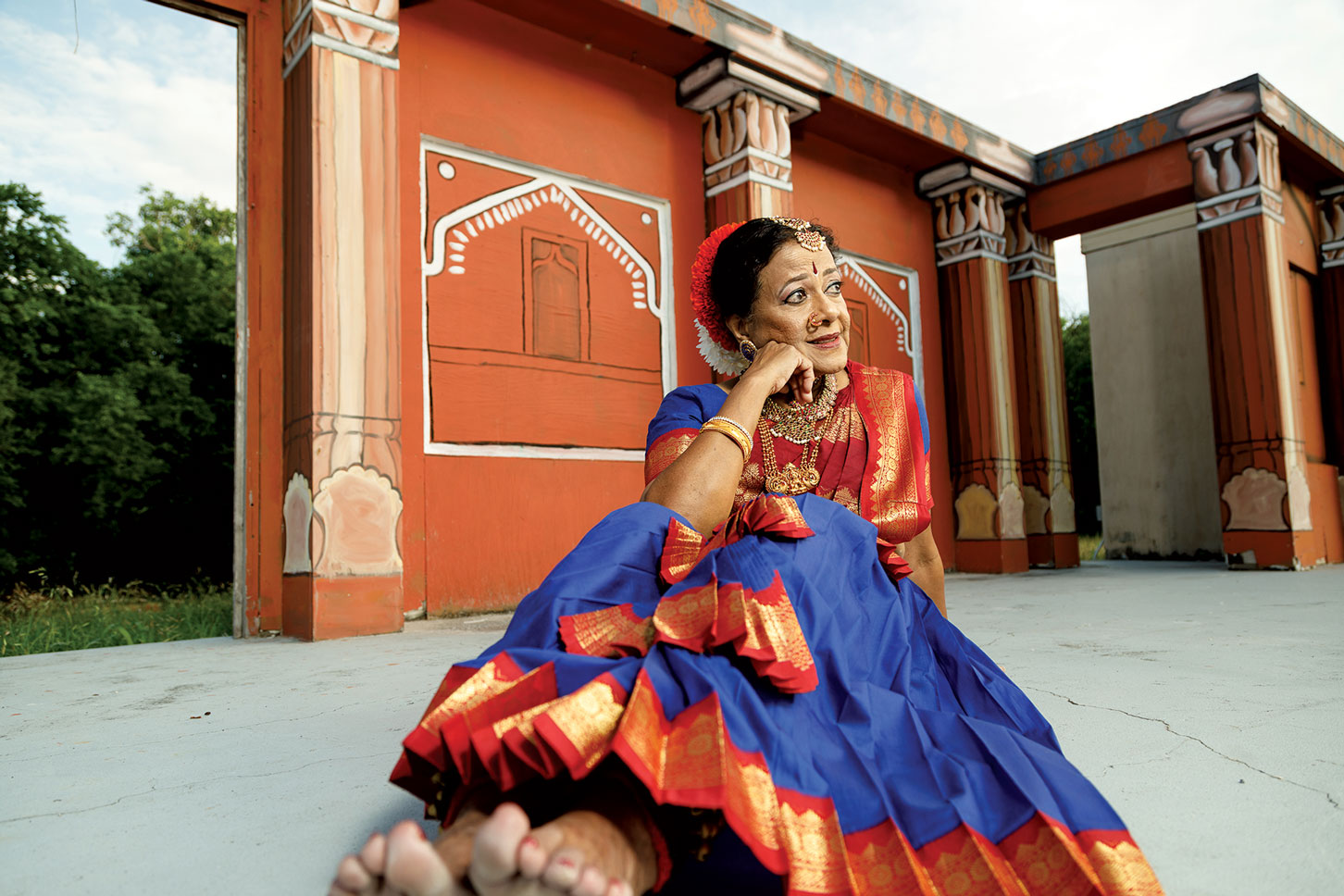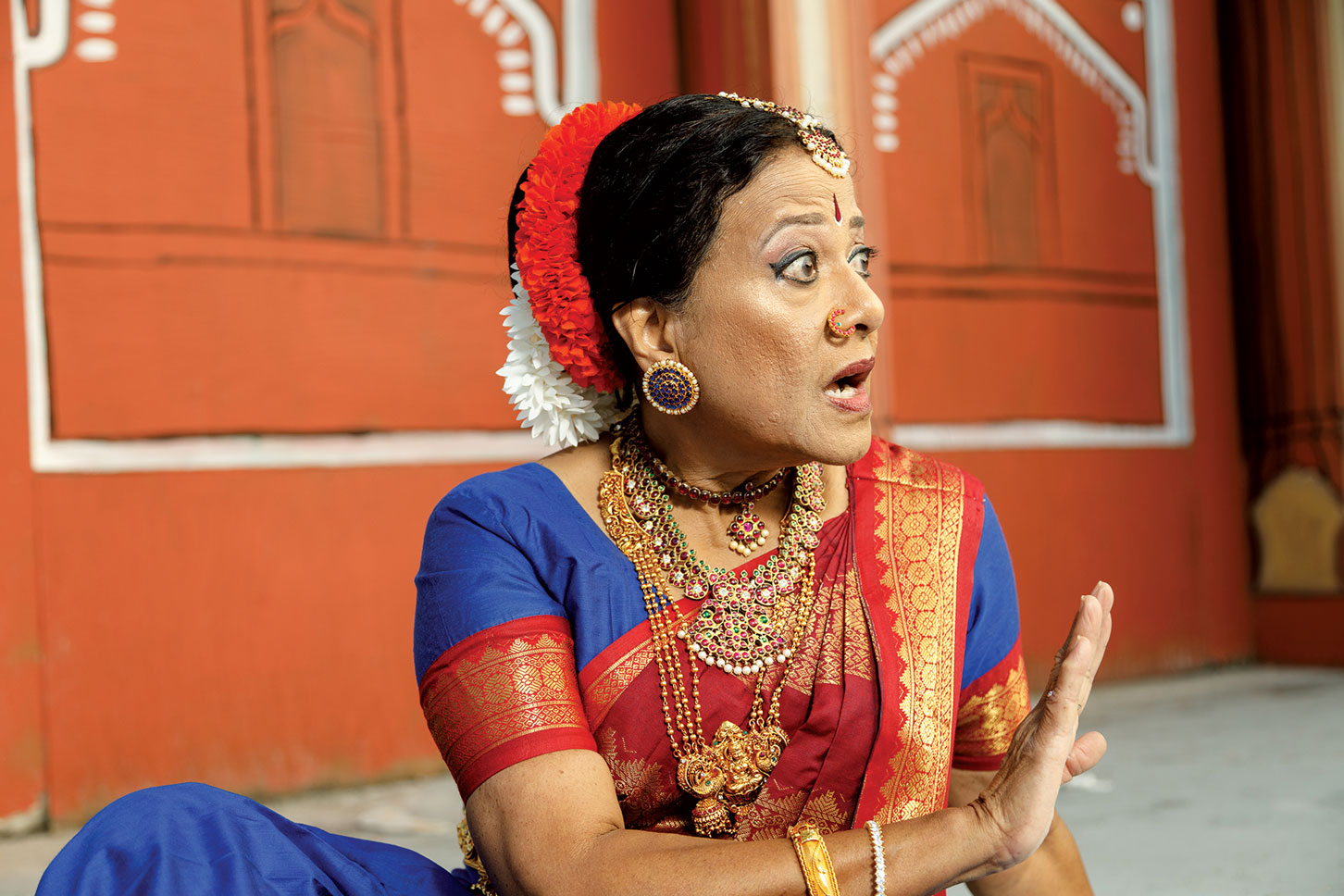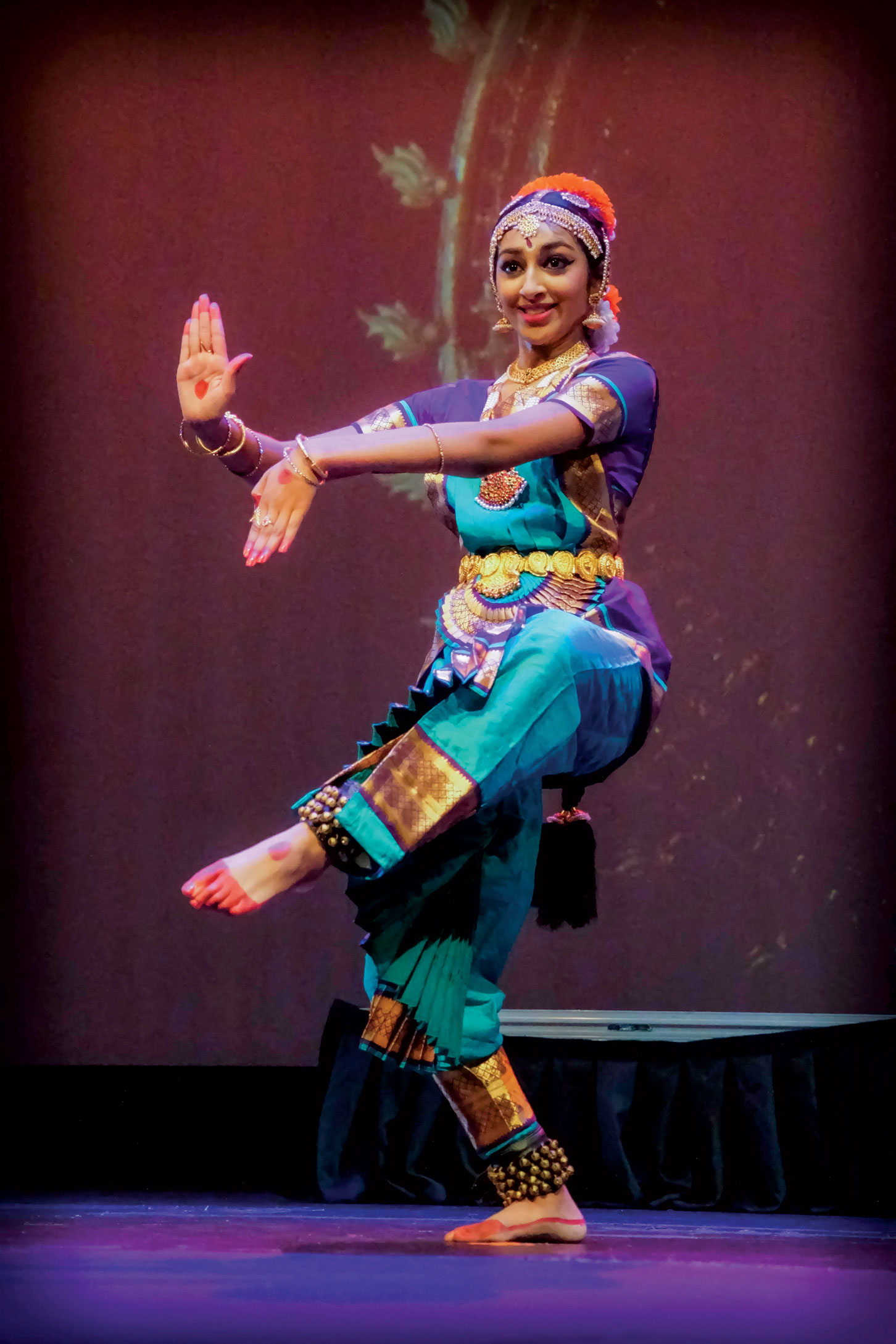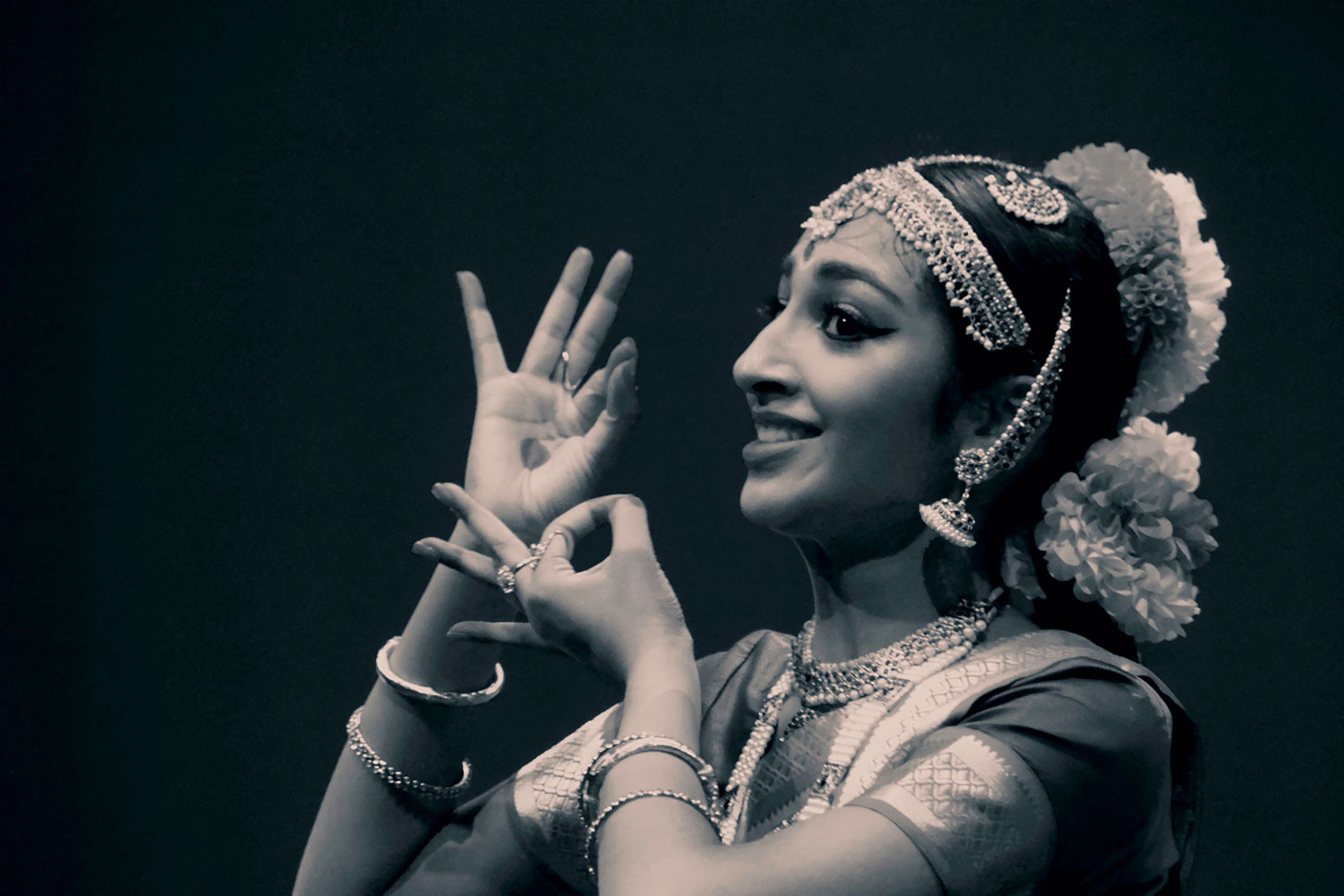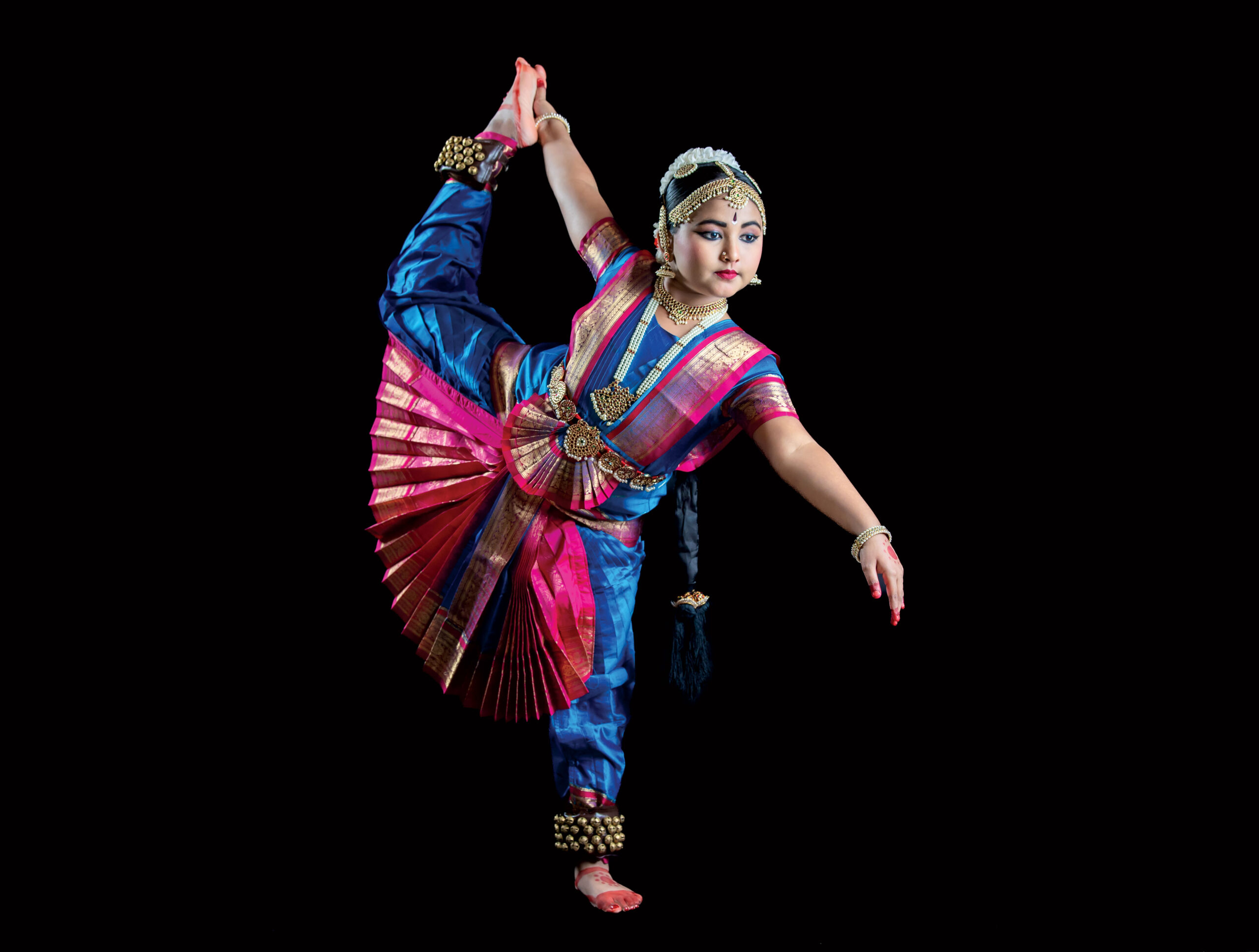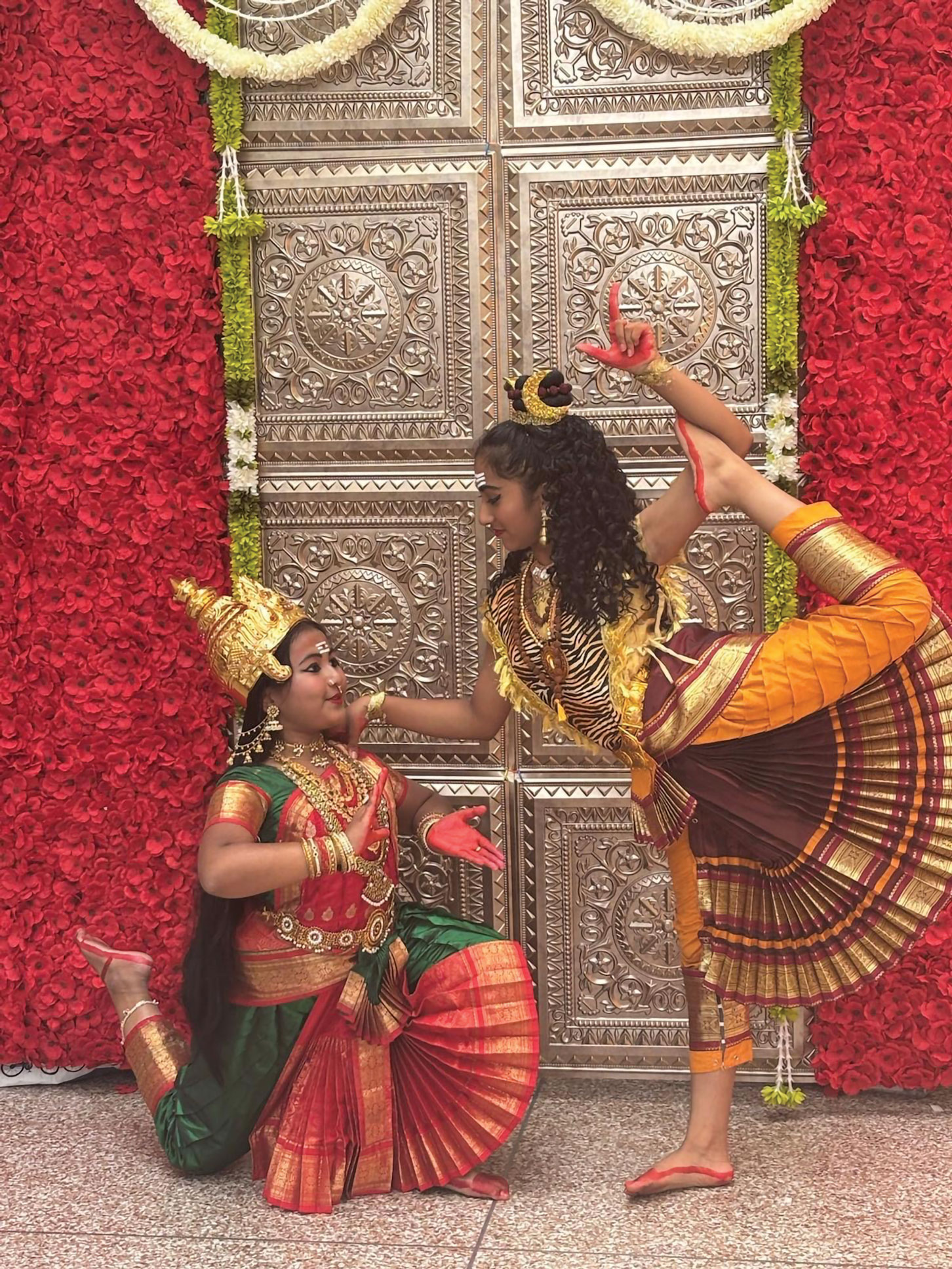
The colors flash before you first; the sound and movement follow. Jewel-bright reds, greens and blues shimmer across the stage. Gold-trimmed silk flasheas under the lights, along with elaborate jewelry at dancers’ wrists, necks and foreheads. Then comes the sound: rows of tiny bells wrapped around the dancers’ ankles turn stamping feet into percussion, keeping intricate rhythms with the exotic sounds of percussion, flute, violin and voice. Now watch the dancers’ faces. Eyes dart and widen. Eyebrows lift. A head tilts. A hand unfurls. Fingers form precise shapes. Expressions flash from anger to tenderness, sorrow to surprise to joy. Eyes, hands, faces and bodies work together until movement becomes language. The dancers are telling stories. This is Bharatanatyam, the ancient classical dance tradition of South India, an art form that traveled thousands of miles and across generations to put down deep roots in San Antonio.
For Rajam Ramamurthy, MD, those roots stretch back to a childhood in India, when the dance she loved had fallen far from favor. Dr. Ramamurthy, a retired neonatologist and professor emeritus of the Department of Pediatrics/Neonatology in the Joe R and Teresa Lozano Long School of Medicine at The University of Texas at San Antonio, grew up in a small town in southern India with what she remembers as an almost irresistible desire to dance. “I had this compelling desire to move, to narrate stories,” she recalled.
Long associated with temples and royal courts, traditional Indian dance was stigmatized during British colonial rule. Even when Ramamurthy was young, she recalled, respectable families were reluctant to let their daughters study dance. She found ways to dance anyway — at school, college and later medical school, learning songs and putting together dances whenever she had the chance.
After independence, Bharatanatyam underwent a remarkable revival as Indians reclaimed indigenous arts and cultural pride.
Years later, after marrying, moving to San Antonio and having children, she and a few other Indian mothers found they all wanted to give their daughters the opportunity they never had — to bring them closer to their culture through their native dances.
One problem: there were no Bharatanatyam teachers in San Antonio. Finally, they found dance guru Revathi Sathyu’s Arathi dance school in Dallas and persuaded Sathyu to spend one weekend a month teaching in San Antonio. But occasional lessons weren’t enough for small children, so the mothers devised a solution: Sathyu would teach them one weekend a month, and between her visits, they would teach their daughters. “We had to be both students and teachers,” Ramamurthy said, “and in the process we all were learning.”
They scribbled notes and Ramamurthy drew stick figures to remember exactly where arms and legs belonged. There were no cellphone videos or YouTube tutorials to consult afterward. “In 1981, we started the Arathi School in San Antonio with four physicians, one computer engineer and six young students,” Ramamurthy said. It grew fast.
Bharatanatyam is a highly ritualized art form with roots stretching back centuries. While many dances tell traditional Hindu stories, Ramamurthy, who is Christian, has created dances based on Biblical themes, including the life of the Virgin Mary and the story of the Virgin of Guadalupe. She has used Urdu poetry to create dances for Muslim students. “Dance should tell a story, and religion should be no bar,” she said.
It takes years to build the vocabulary to dance the story. There are 28 single-hand gestures, or mudras, and 24 double-hand positions, along with precise instructions for positioning the body, literally from head to toe.
Even the costumes connect dancers to India. Saris are selected there and a Bangalore tailor makes each costume to the student’s exact measurements. Music is recorded in India, too.
After years of study, dancers make their arangetram — a series of eight specific solo dances lasting two to three grueling hours — to graduate as full-fledged performers, qualified to teach others. Ramamurthy’s daughter was the first Arathi student to make her arangetram, the first of many. Now another generation of her family has embraced the tradition: her granddaughter (whose dad is actor Sendhil Ramamurthy) has studied Bharatanatyam for years and recently performed her own arangetram.
Anilina Gnalian, a 17-year-old student at Johnson High School, has studied with Ramamurthy since she was 4 or 5. She completed her arangetram two years ago. “I love how intricate the art is,” she said. “There is the detail — eye, head, neck movement, hand gestures, how your body is positioned, following the beat.” As dancers mature, she said, the emphasis turns toward “telling stories, showing emotion and transferring it to the audience.”
Another outstanding Arathi graduate was Kausi Subramaniam, who began studying Bharatanatyam at age 10. A degreed chemical engineer, she found her niche in teaching and choreography, as co-owner and dance director at Kalalaya Indian Performing Arts. Today, the school is one of San Antonio’s largest centers for classical Indian music and dance.
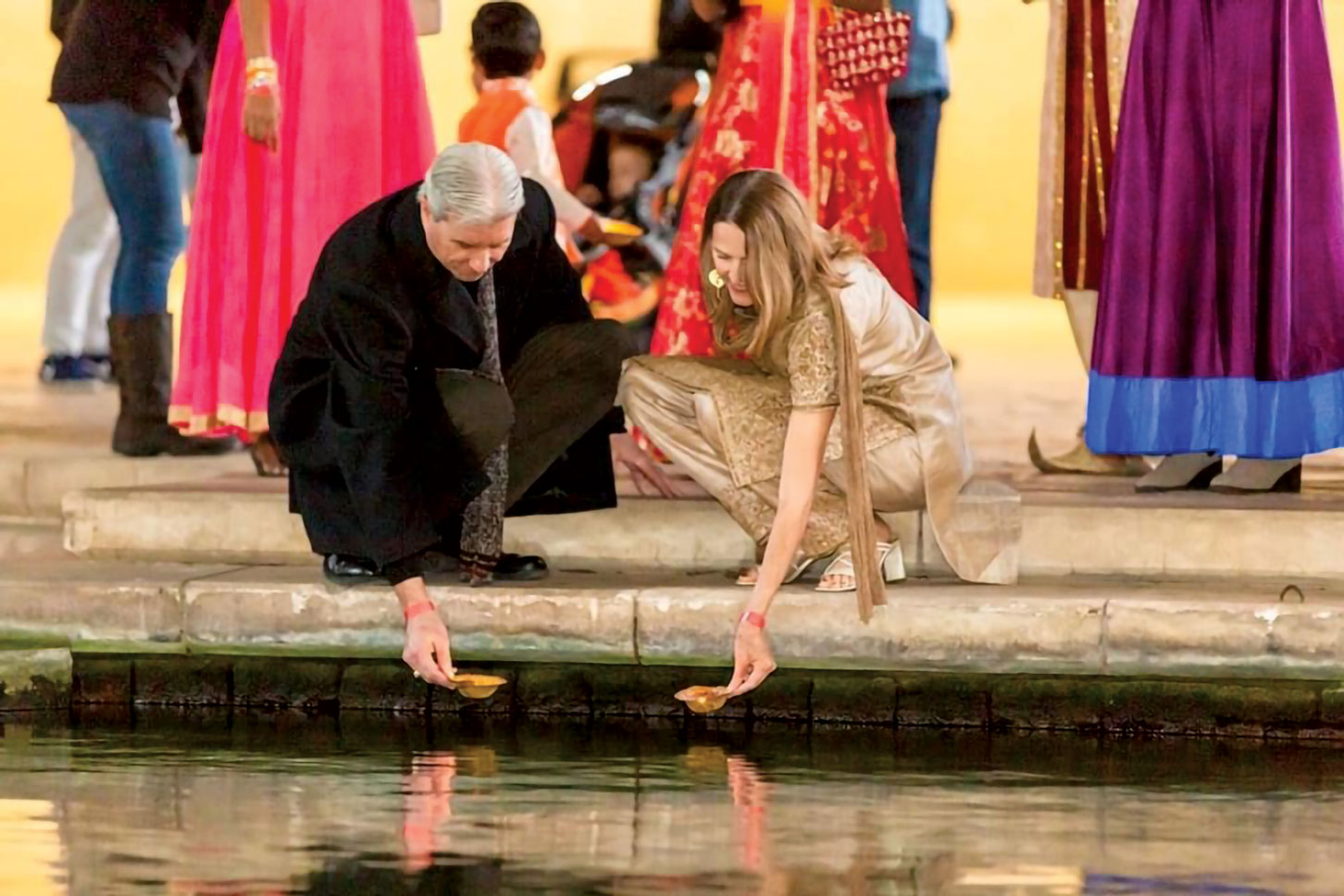
Subramaniam’s role in preserving and sharing Indian culture goes far beyond the dance studio. As founding president of Anuja, she led San Antonio to its Sister City relationship with Chennai, India, in 2008. To publicly celebrate San Antonio’s Indian Sister City, she helped create Diwali SA, bringing India’s famous “Festival of Lights” here as an official city-sponsored event for the first time in 2009.
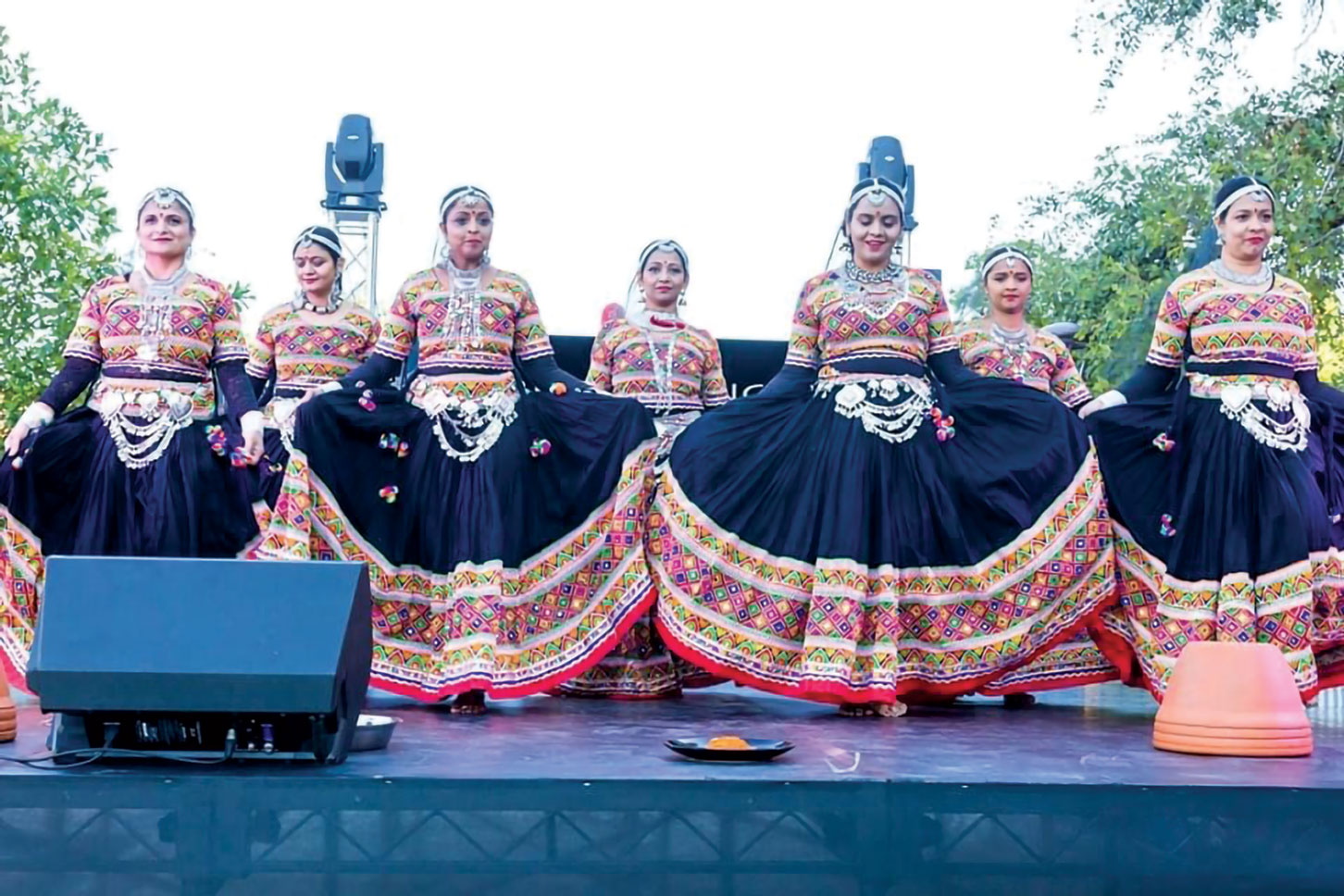
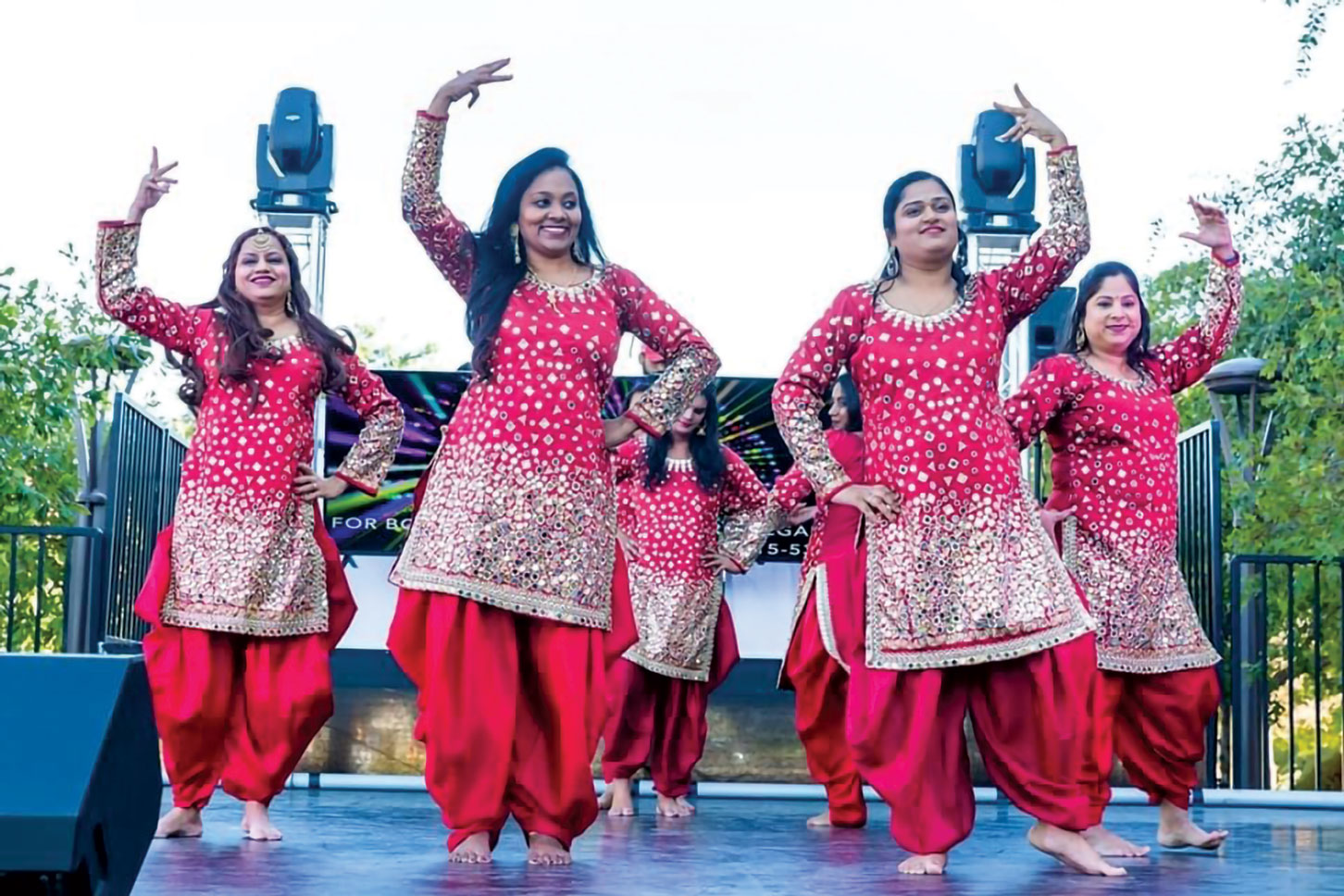
This year on November 7, Diwali SA will fill downtown, from Hemisfair to the Arneson River Theatre, with color and light. A crowd of 20,000 to 40,000 is expected. Classical Indian dance will be one of the featured events, showing thousands of San Antonians an ancient art form that is flourishing here today.
little dancers, big talent
Don’t let their ages fool you.
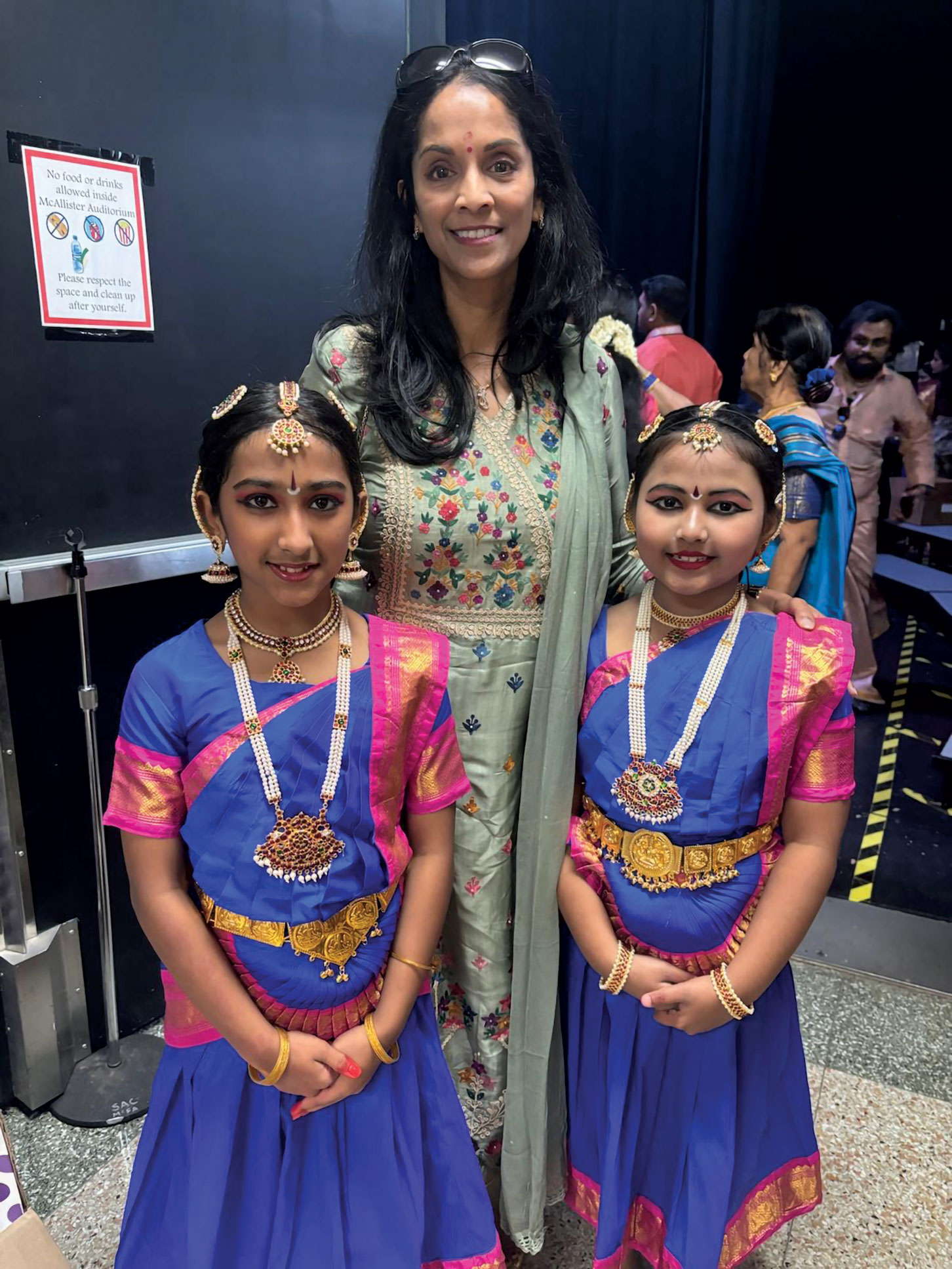
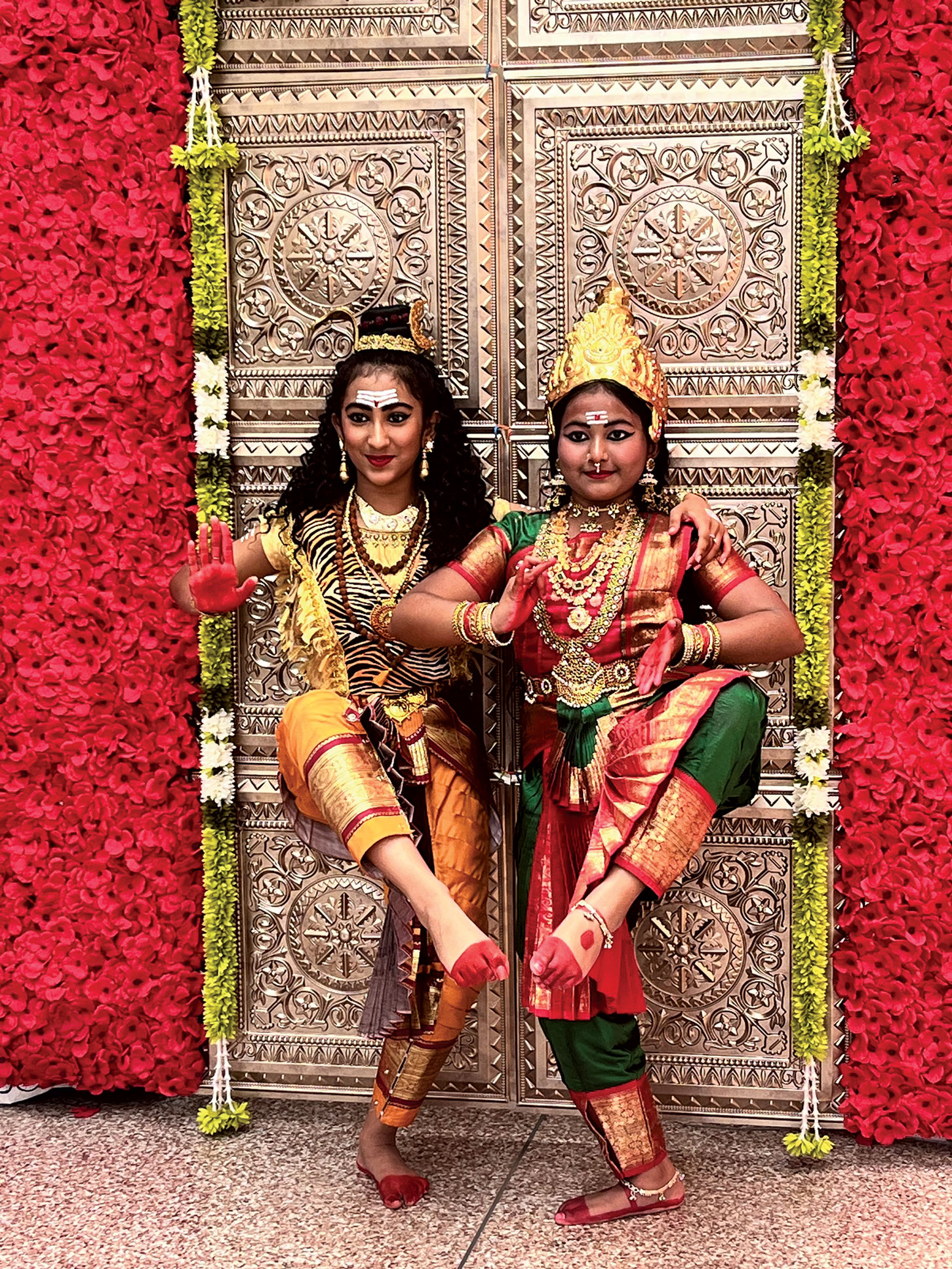
At 12 and 13, Divyasri Thanigachalam and Ahana Biju Kuppadakkath are already accomplished Bharatanatyam dancers, veterans of years of demanding training with Kausi Subramaniam at Kalalaya Indian Performing Arts. And when the music starts, these best friends often dance side by side.
Both started early — Divyasri at 3, Ahana at 5. But they didn’t meet until a few years ago, when they were the youngest in a Bollywood group filled with much older kids. “We automatically started partnering,” Divyasri said. They’ve been dancing together ever since.
Divyasri, 12, completed her arangetram — the demanding solo performance marking a major milestone in a Bharatanatyam dancer’s training — at just 10 — a remarkable achievement. Her growing collection of honors includes the 2025 Cleveland Thyagaraja Festival Dance Competition, national championships at FETNA and America Natya Idol, and three consecutive CRY America Superstar titles.
Ahana, 13, performed her arangetram shortly after turning 12, at the Carver Community Cultural Center. In her first competition this year, she took second place in her age division at the Houston regional American Natya Idol, advancing to the national competition in St. Louis, where she placed fifth with honorable mention among 48 dancers from across the country.
Both girls have moved into Kalalaya’s senior class, dancing alongside high school and college students. “They’re both among the very best,” Subramaniam said.
They also manage demanding schoolwork at BASIS campuses — and both say they want to become doctors. But ask what dance means to them and the serious looks vanish. “It’s very exciting,” Ahana said. “It’s very passionate, very happy.” For Divyasri, it has become something even more personal. “As I grew, I felt that dance was, like, sort of my thing,” she said.
It seems these two young dancers, already performing well beyond their years, have found their thing together.