The Psychology of Space

Why Restaurant Design Defines the Dining Experience

By:

Rumi, the 13th century Persian poet, famously wrote, “Where there is ruin, there is hope for a treasure.” It’s a sentiment that feels especially resonant in a city like San Antonio, where the past isn’t simply preserved — it’s reimagined. While the spaces we’re about to explore are far from ruins, they share that same spirit of transformation. Through adaptive reuse, former functional and commercial spaces have been given new life.

Before a plate ever reaches the table, the experience has already begun. It’s in the way a space greets you — the light, the materials, the sense of story embedded in the walls. Architecture and design subtly, sometimes boldly, shape our perception, influencing mood, movement and even how we experience flavor itself. Whether it’s the authenticity of a restored industrial space, the romance of a Parisian-inspired dining room glimpsed from the walkway, or the layered energy of a communal market, these elements work together to create something deeper than ambiance. They create emotion — and that feeling lingers long after the meal is over, whether you realize it or not.

Southerleigh Fine Food & Brewery

Photography courtesy of Southerleigh Fine Food & Brewery
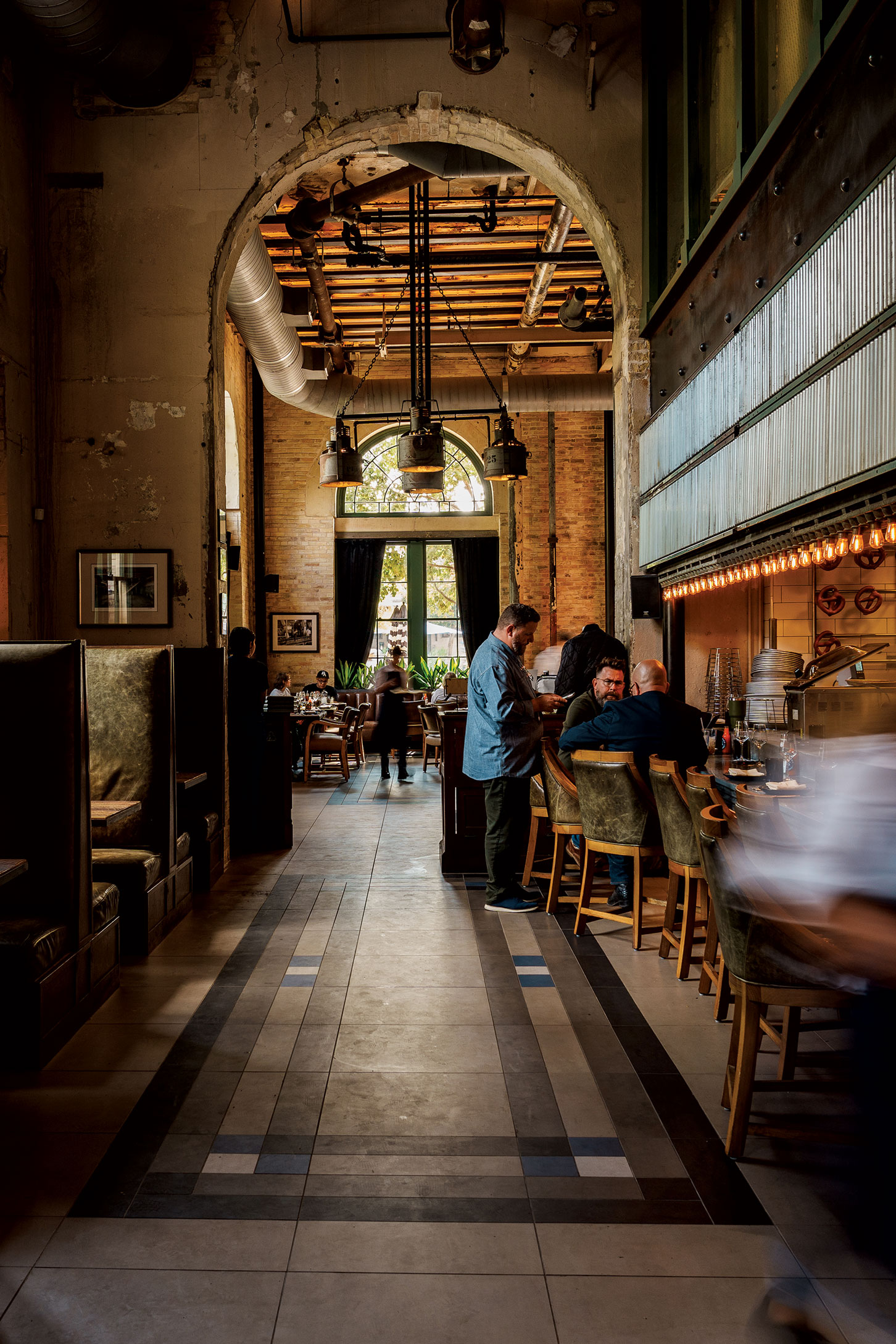
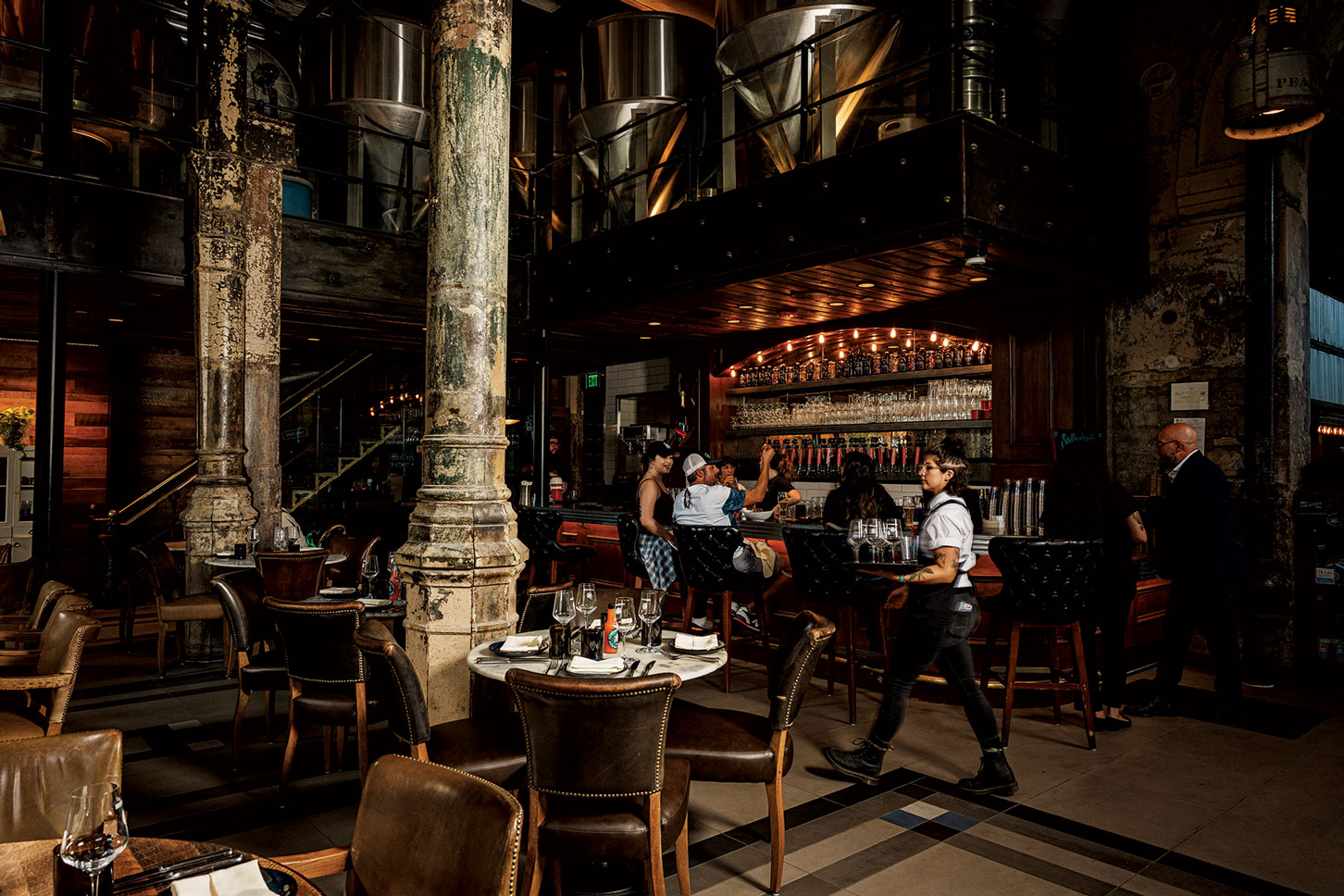
Housed within the historic brewhouse at the Pearl, Southerleigh Fine Food & Brewery is as much a study in preservation as it is a restaurant. Opened in 2015 as one of the first culinary anchors of the Pearl redevelopment, the concept is rooted in Chef Jeff Balfour’s interpretation of Texas coastal cuisine — an approach that balances nostalgia with refined technique. That same duality is echoed in the space itself, a late-1800s brewery building that has been artfully restored rather than simply reimagined.

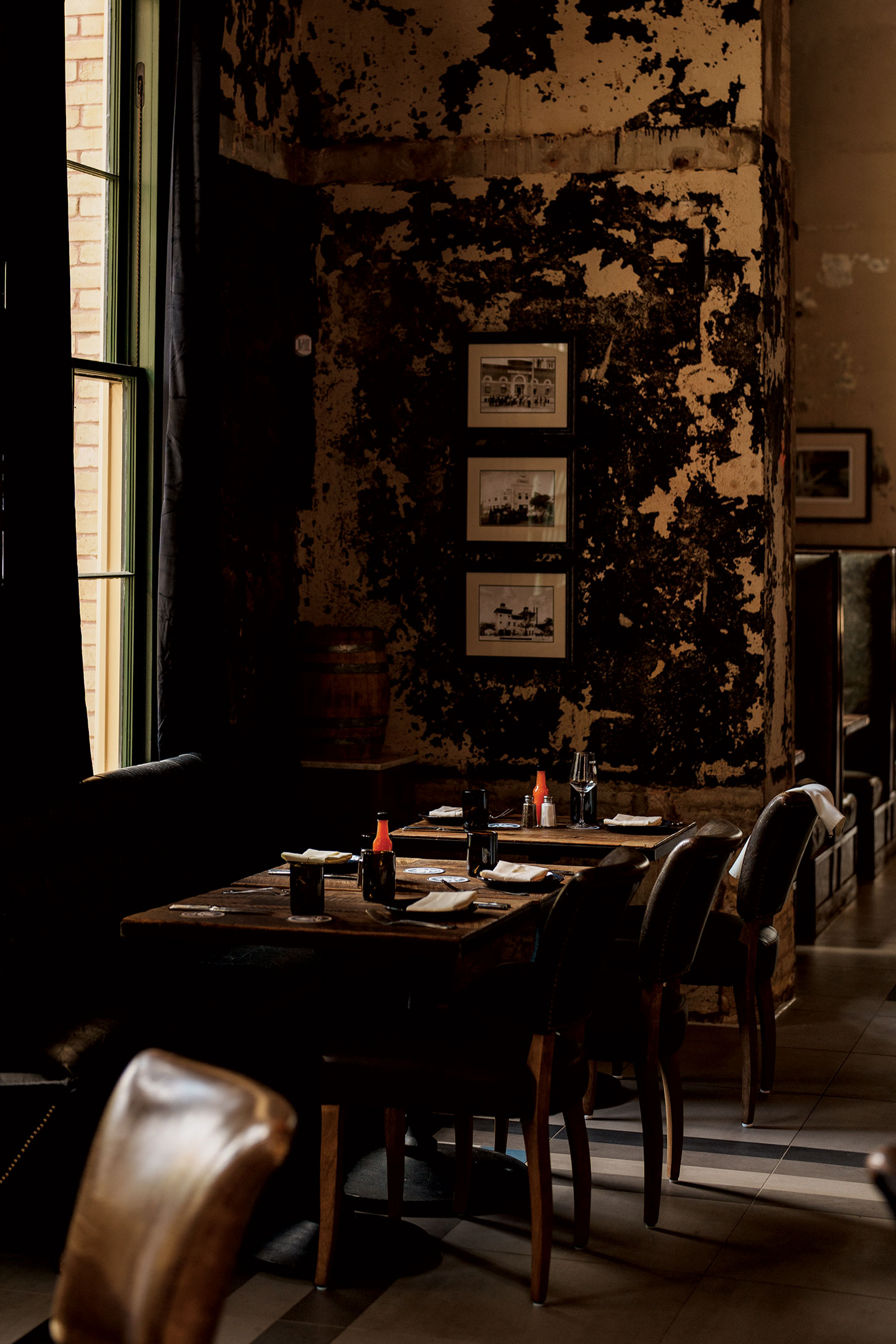
“When I first saw the building, it was a magnificent building in disrepair,” said interior designer Joel Mozersky of Joel Mozersky Design. “Not even a floor. But the walls were there, and the paint… incredible feel already. I always look at the architecture — what is important here to maintain the original integrity — and just try to stay out of its way.”

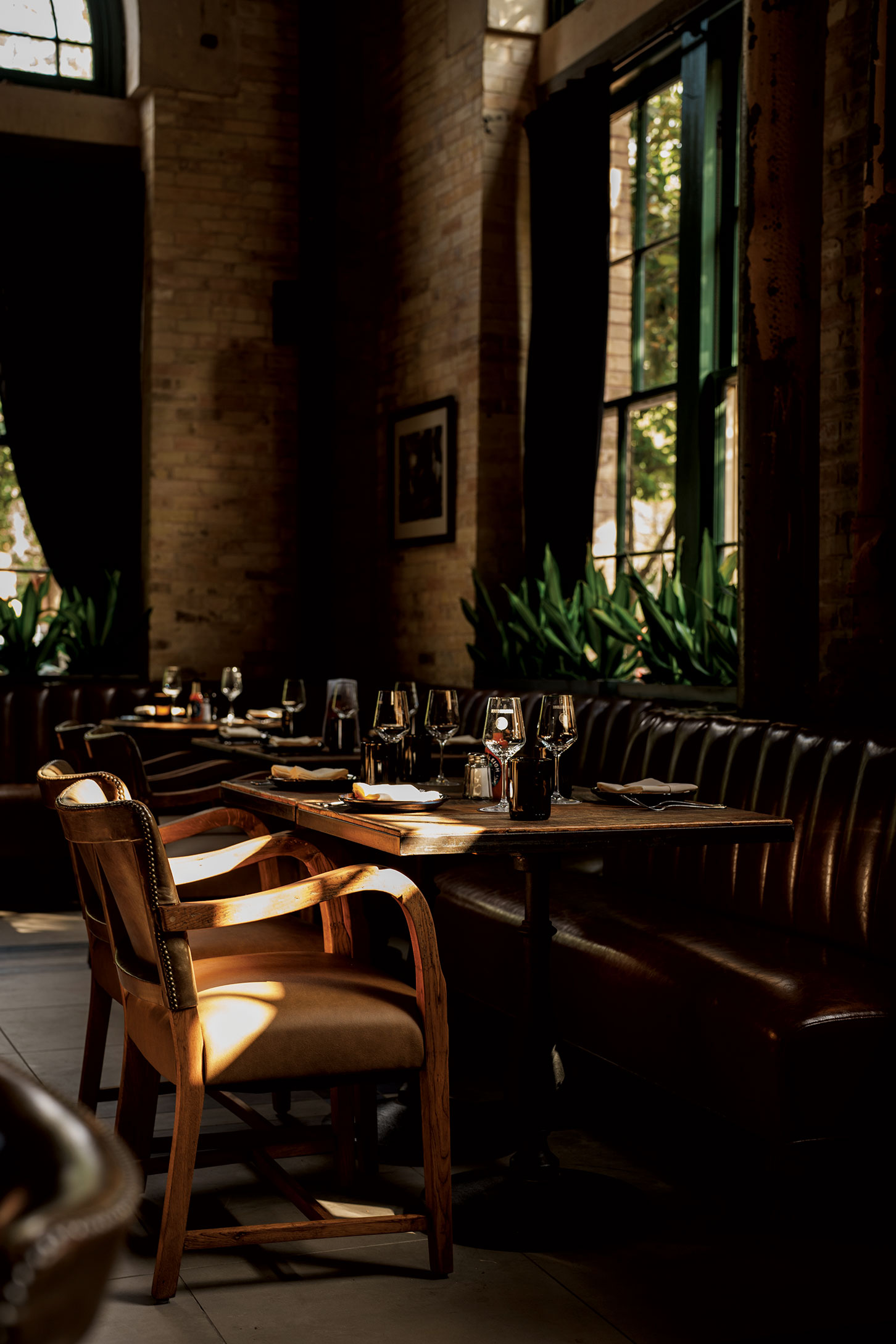
That philosophy defines Southerleigh. Instead of imposing a new identity, the design leans into the building’s original bones — towering ceilings, weathered plaster, expansive windows — allowing its esteemed age and beautiful authenticity to remain visible. Original materials were preserved wherever possible, including peeling paint and structural elements that speak to the building’s industrial past. “No faux finishes,” added Joel. “We didn’t recreate any of that. We cleaned it up but didn’t fake its patina. That’s what gives it authenticity.”

Adaptive reuse is not just a backdrop here — it’s embedded in the details. Light fixtures were crafted from salvaged pieces of the original brewery, including elements from the bottling department. A hand-painted rendering of the building’s original blueprint stretches across a wall, subtly connecting diners to the structure’s history. Even the layout works in harmony with the building’s constraints, with a continuous bar flowing through multiple rooms to create cohesion across divided spaces.

For co-founder Jerome Serot, the design mirrors the philosophy of the menu. “It’s a high and low concept,” he explained. “You have fried chicken that’s exactly what it should be, and next to that, dishes that are more elevated and sophisticated. The décor reflects that — industrial, with the planks and the feeling of the old brewery — but balanced with sophistication.”

This interplay between casual and elevated is what shapes the dining experience. Guests can settle in for a beer at the bar in shorts, or delight in a more composed meal — all within the same space. The open kitchen and visible brewing equipment reinforce that transparency and concurrently reflect the building’s original purpose, offering a glimpse into the craft behind the food and beer. As Joel described it, “You see how the sausage is made — well, in this case, the beer. It’s sophisticated without being pretentious.”

That sense of approachability is made to look effortless. Despite the grandeur of the architecture, the space is not built to intimidate guests. Instead, it invites. “The volume of the space is just magnificent,” praised Jerome, pointing to the soaring ceilings as a defining feature. Yet, the space is softened by warm wood tones, hand-picked furnishings and a layout designed for movement and connection.

In many ways, Southerleigh set the tone for what the Pearl would become — a place where history is not erased, but reinterpreted. The building’s past life as a working brewery didn’t just influence the design; it enhances the experience, grounding each meal in a sense of place that feels lighthearted and alive, and very much nostalgic. 
Brasserie Mon Chou Chou

Photography by John-Paul Garrigues

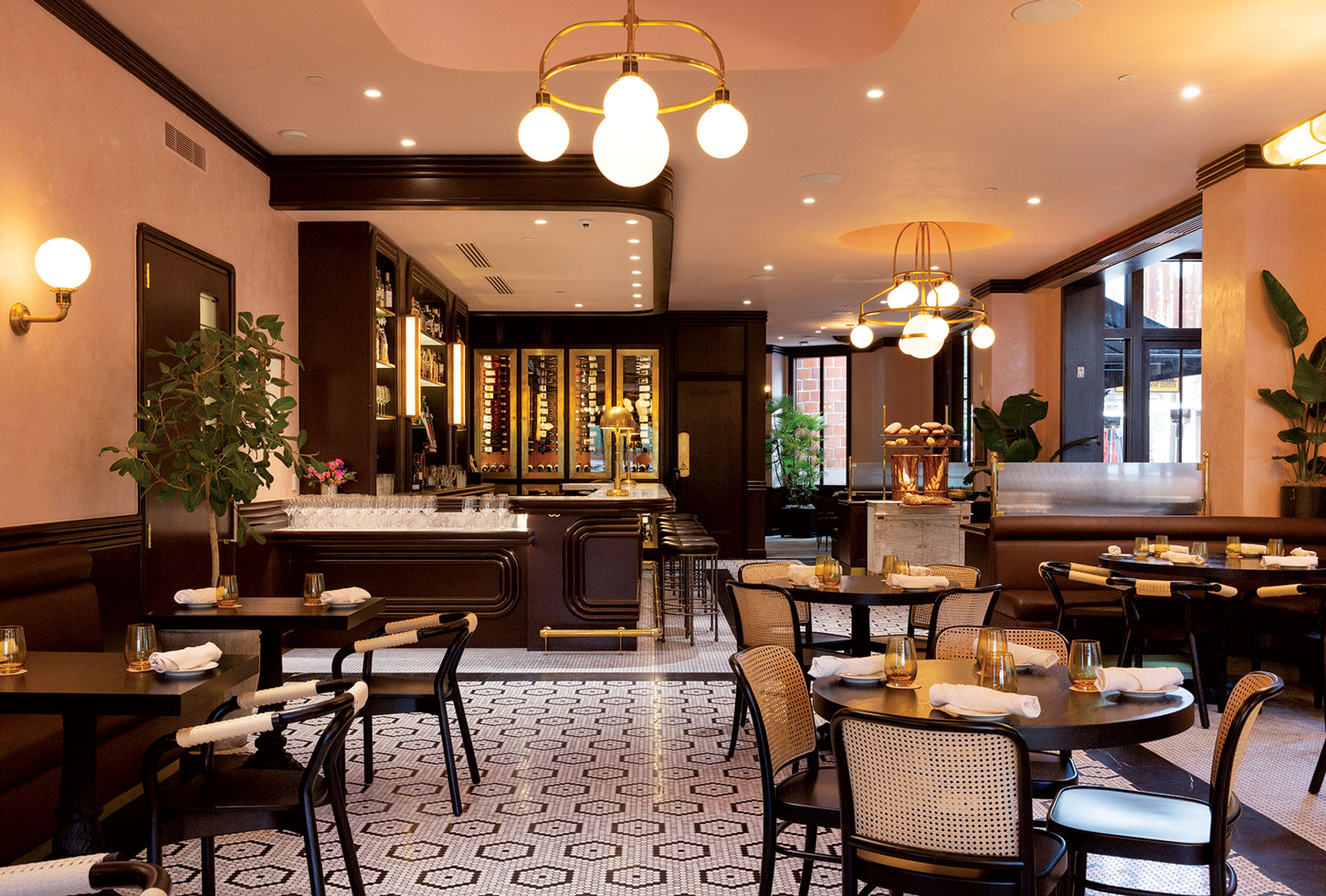
If Southerleigh is about honoring what already exists, Mon Chou Chou is about creating the illusion that it always did. Located at the Pearl in a much newer, late-20th-century storefront building — once home to the Culinary Institute of America’s NAO restaurant — this space presented a very different but exhilarating kind of challenge for Jerome and Joel. Built in the 1990s with offices above, it lacked the architectural gravitas of the Pearl’s historic brewery structures. Which, for a concept grounded in the timelessness of a French brasserie, was precisely the point.

“That was the challenge — to do an authentic French brasserie… something that feels like it’s been there for over 100 years,” explained Jerome. “But in one of the only newer buildings at the Pearl.”

Undaunted, Joel didn’t shy away from the contrast. “It was one of the least exciting spaces in the entire Pearl,” he admitted. “So the goal was to create a place where people walk in and say, ‘I feel like I’m in Paris.’”

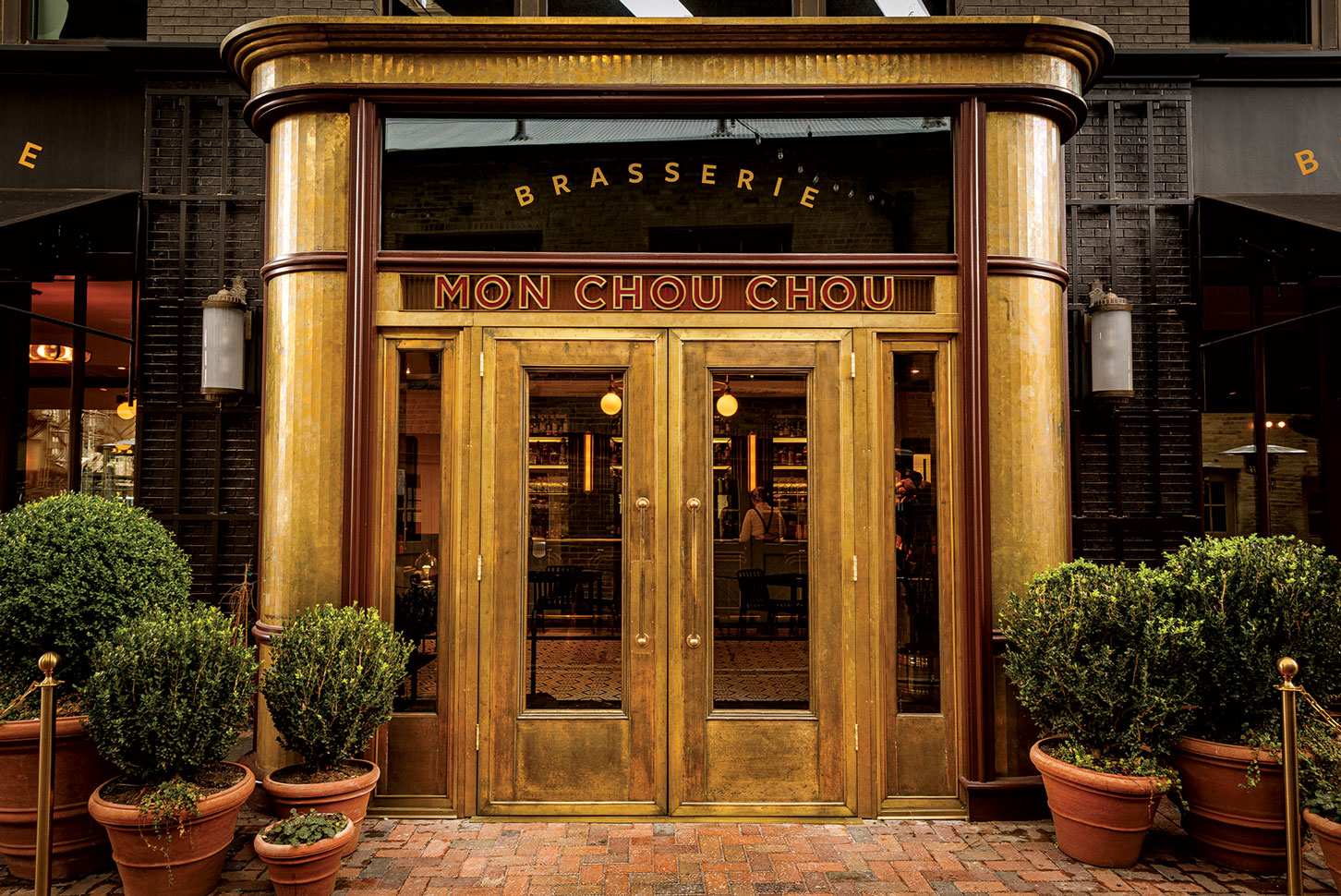
The transformation begins before you even step inside. A reimagined entry sequence — complete with an antique brass doorway sourced specifically for the project — creates a sense of arrival, while allowing for charming French-style outdoor seating that activates what was once an underutilized alley. Inside, the design speaks the language of a traditional brasserie — brass rails, banquettes, vintage-inspired lighting — but filters it through an individualized, modern lens.

“The goal was to avoid every cliché,” pointed out Jerome. “It’s very easy with French concepts to fall into cookie-cutter design. We wanted the opposite — to take those references and add our own spin.”

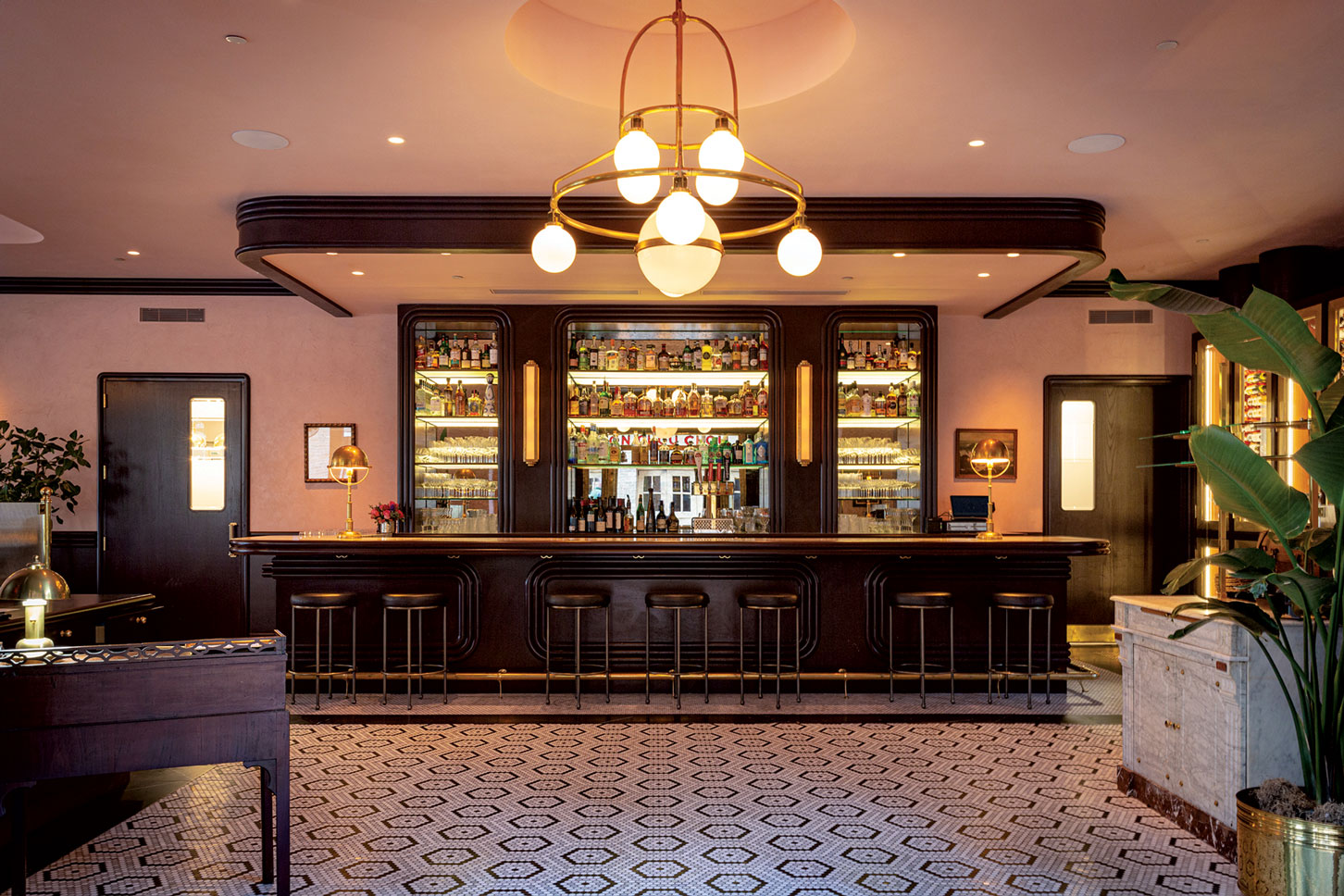
That restraint is what gives Mon Chou Chou its ‘joie de vivre.’ Rather than replicating a Parisian brasserie outright, the design suggests one through carefully chosen cues and a cohesive narrative that unfolds the moment you enter. A central bar anchors the space, acting as both focal point and emotional entry point. “It’s theatrical,” shared Jerome, proudly. “You walk in, and that bar gives you perspective right away. It makes you feel like you’re at the right place at the right time.”

Here, color plays a powerful role. Soft pink walls and reddish-brown tones create a balance between masculine and feminine — an intentional departure from the more traditional red-and-white palette associated with French brasseries. “There’s a science to it,” said Joel. “Lighting, color, seating — it all has a psychological effect. At night, it feels warm. Everyone looks good in it.” Serendipitously, a painting of a reclining nude was found later — its palette echoing the soft pinks and warm browns already chosen — and added to the space, reinforcing the color palette. 

The attention to atmosphere directly shapes how the space is experienced. Like a true Parisian brasserie, Mon Chou Chou was designed to hold multiple energies at once — a casual lunch, a celebratory dinner, a glass of wine at the bar. “Someone can come in dressed casually or in a suit, and they’re all having the same experience. That’s what makes a brasserie special,” said Jerome.

Even within the adaptive reuse framework, the design has built its own sense of history. Vintage artwork lines the walls, and a smartly sourced marble bread display right here in Texas that dates back to turn-of-the-century France sits near the entrance, elegantly reinforcing the narrative. “It was the luckiest find of my career,” confided Joel. “Everything had a purpose. The goal was to make it feel like it’s been there forever — even though it hasn’t.”

That illusion proved genius. When Mon Chou Chou opened in December of 2020, it quickly became one of the most sought-after reservations in the city. “On day two, a guest told us they thought we’d been open for decades,” recalled Jerome. “That spoke volumes.”

Ultimately, Mon Chou Chou demonstrates a different side of restaurant design — one where architecture doesn’t lead, but storytelling does. Through thoughtful layering of detail, tone and intention, the space doesn’t just support the dining experience — it defines it.

Make Ready Market

Photography by Andrea Calo

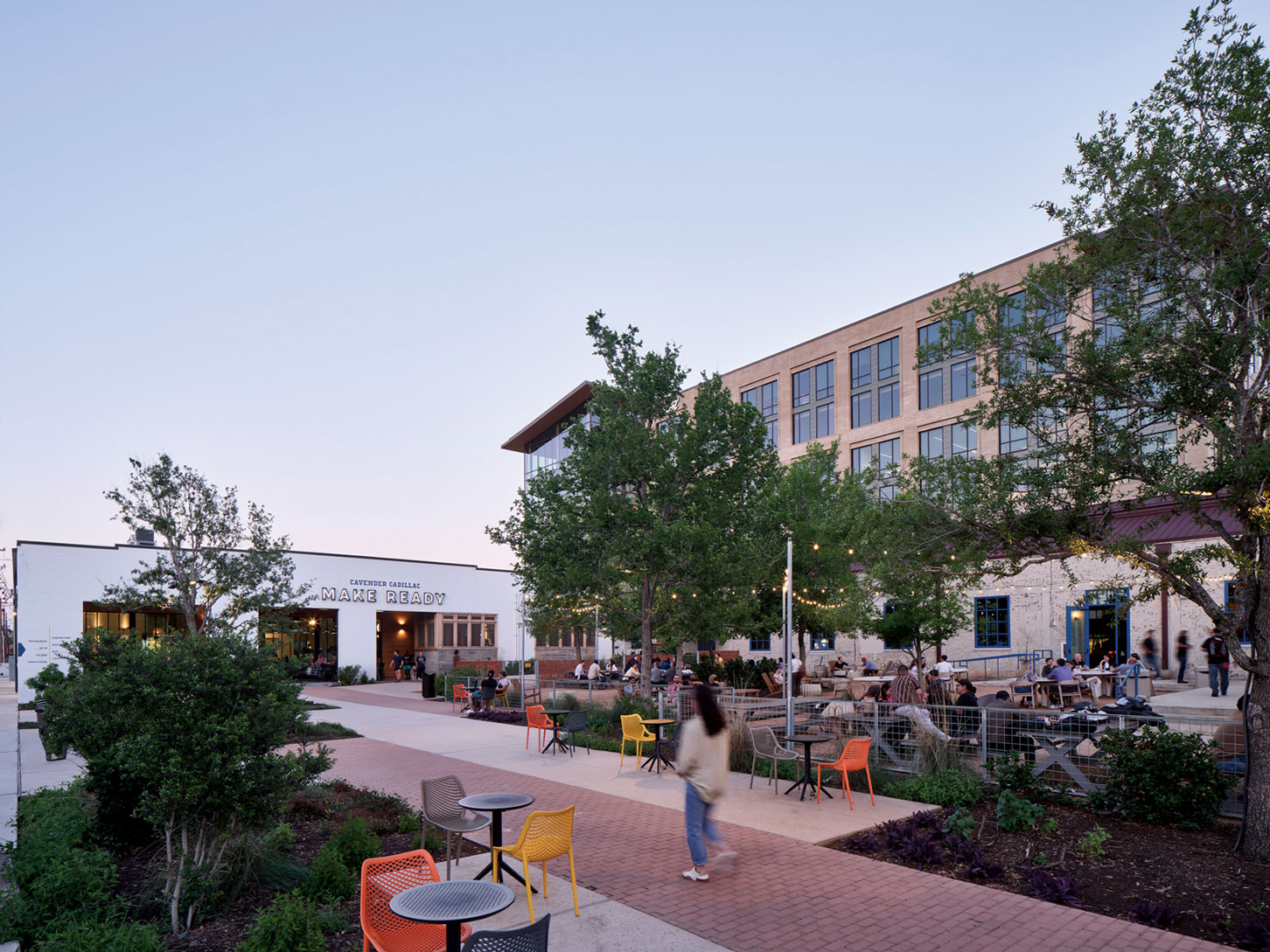
At first glance, Make Ready Market feels truly modern — a bright, open gathering space filled with conversations and delectable fast casual dining choices. But beneath that energy is a carefully layered story of adaptive reuse. Located in San Antonio’s River North district, Make Ready Market officially came to life in late 2023, transforming a former Cavender Cadillac “make-ready” garage into a vibrant, multi-concept food hall. Today, the space brings together a rotating mix of culinary voices — from Mediterranean bowls at Bowls n Go and Venezuelan arepas at Four Brothers to sushi from Hotaru, Tex-Mex staples from Teka Molino, burgers from Ize Box and soft-serve treats just steps away — creating a dynamic, communal dining experience under one roof.

“The real charm is knowing that we turned this old car garage into a place of gathering with eclectic offerings,” said Megan Moshier, Principal and Director of Studio8 San Antonio, an architecture and interior design firm. “We kept details — some obvious and some subtle — to show that it was something before.”

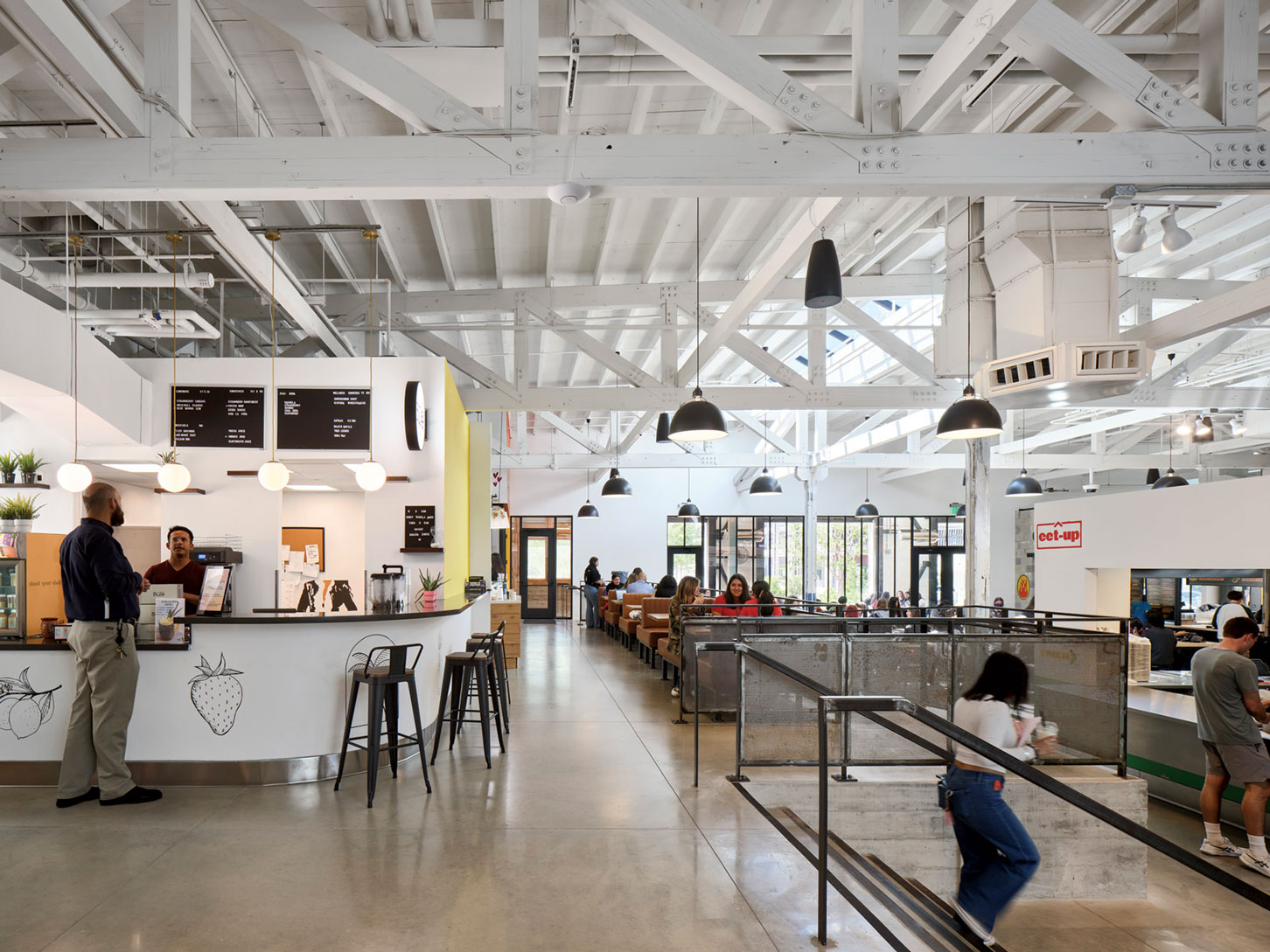
Those details are what ground the design. Original paint remains on the structural columns, while custom booths feature stitching that mimics vintage Cadillac car seats — a quiet nod to the building’s former life. Even the bathrooms carry the narrative forward, with shop sinks and headlight-inspired sconces that feel both playful and intentional. The result is a space that doesn’t erase its history, but invites guests to discover it.

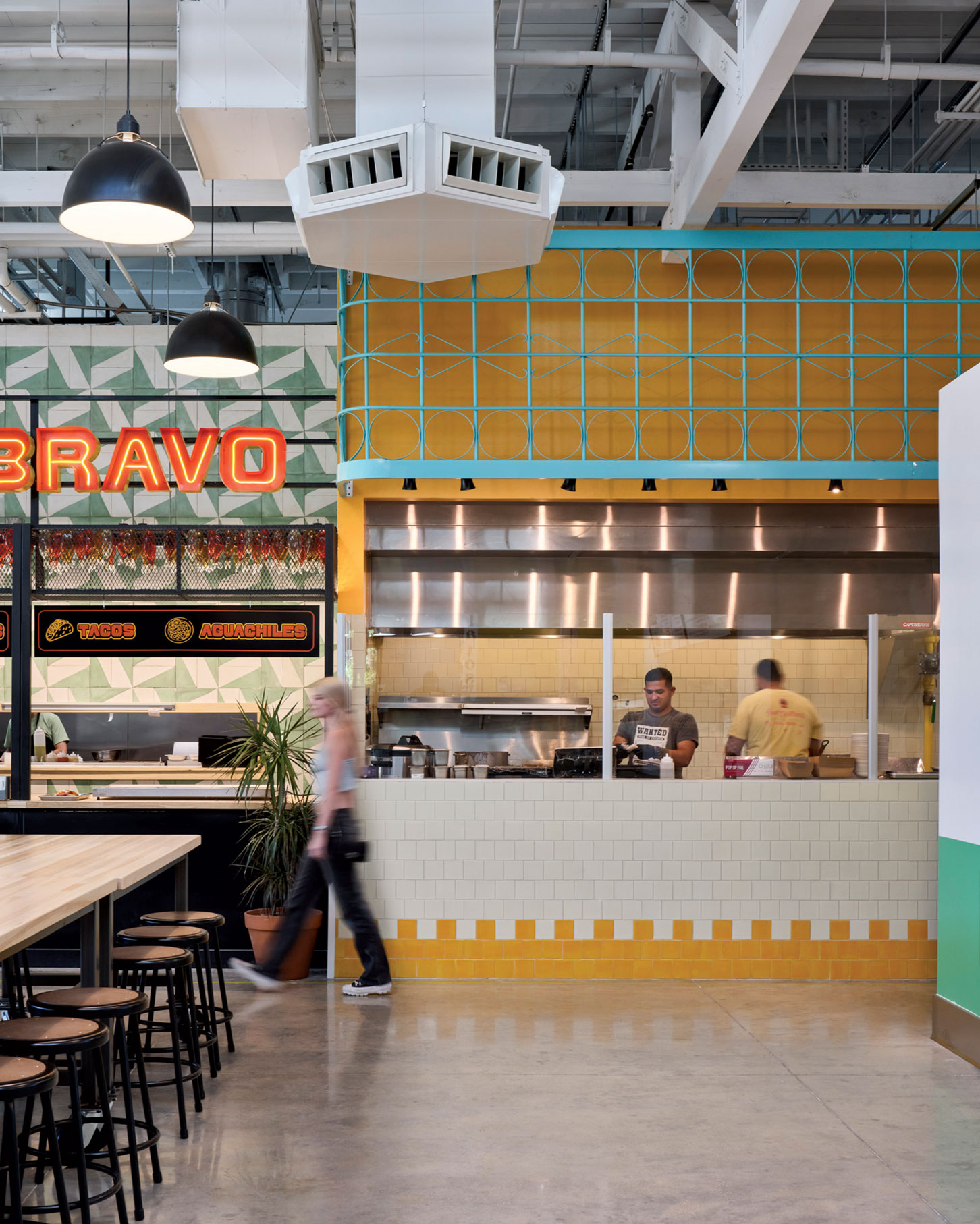
At the same time, the design had to unify multiple culinary concepts under one roof without losing their individuality. “The main goal was to preserve the history of the building and then let each culinary boutique have their own identity,” clarified Megan. “The focus is still on each tenant.”

It’s clear to see that balance was achieved. Each vendor operates within a cohesive architectural framework — clean lines, consistent materials and an overall industrial palette — while still having the freedom to express its own brand through signage, lighting and service style. “We gave them all a basic base, but each came in with unique details to make it their own,” she added. 

Flow was another critical consideration. Food halls can easily seem disjointed, but here, movement feels intuitive. “There is a clean flow through the space and intentional seating for different groups,” she noted. Back-of-house elements are carefully concealed, minimizing visual clutter and allowing the experience to feel open rather than overwhelming.

Light plays a defining role in that sense of ease. With exposed trusses and added skylights, the space feels expansive yet approachable. “Light and bright,” as Megan described it. “You still feel an element to ‘cozy in.’” The lighting itself is understated — designed to complement the garage aesthetic without competing with the vendors — while the overall palette creates a neutral backdrop that lets the energy of the space come from the people within it.

That energy is also shaped by how guests interact with the space. Communal tables and vintage shop-style stools encourage a shared experience, lightly reinforcing the idea that while everyone may be eating something different, they’re part of the same moment. “We are all going to sit together, but I can eat whatever I’m in the mood for,” she explained. Even the ordering systems — designed for ease and flexibility — support that same ethos.

In many ways, Make Ready Market reflects San Antonio itself: steeped in history, yet constantly evolving. “San Antonio is proud of our culture… especially in adaptive reuse,” shared Megan. “We love highlighting the old in a genuine way, while leaving room for the new to shine. We hope people feel comfortable and curious.”

And each of these concepts does indeed shine — shine a light on the intersection between history and reinvention, illustrating how a restaurant can reach beyond food and design to create mood, memory, even identity, one meal at a time. 

Culinary Arts

The Psychology of Space

Rumi, the 13th century Persian poet, famously wrote, “Where there is ruin, there is hope for a treasure.” It’s a sentiment that feels especially resonant in a city like San Antonio, where the past isn’t simply preserved — it’s reimagined. While the spaces we’re about to explore are far from ruins, they share that same spirit of transformation. Through adaptive reuse, former functional and commercial spaces have been given new life.

Read More »
Performing Arts

Curtains Up

San Antonio’s performing arts scene is stepping into the 2026–27 season with more energy, ambition and creativity than ever. From bold new productions to beloved classics, the city’s leading arts organizations are rolling out lineups that showcase just how vibrant and diverse our cultural community has become. Whether you’re into symphony, theatre, dance, opera or something a little unexpected, this season promises fresh stories, unforgettable performances and plenty of reasons to spend more nights out soaking up the arts across the Alamo City.

Read More »
Editor's Letter

One-of-a-kind City

I started writing this letter in Pennsylvania while visiting my son and daughter-in-law. It was a lovely first time to visit, and as we were driving through the picturesque countryside — and checking Fallingwater off my Bucket List — I realized how magical first visits are. The ones that make you start planning your next visit right away. And another thing kept coming to mind: If I were visiting San Antonio for the very first time, I’d fall for it — fast. The colors, the sounds, the food, the warmth of the people, the way history and creativity sit side-by-side. It’s one of those cities that doesn’t try too hard; it just is charming. Whether you are a first-time visitor discovering our vibrant city or a local that knows all the best places to go, I hope you find that sense of wonder woven through this issue.

Read More »
Culture

Stars & Stripes on Houston Street

San Antonio’s Independence Day traditions are bigger, bolder and more spectacular — and Stars & Stripes on Houston Street is leading the charge, returning in 2026 as part of the city’s celebration of America’s 250th birthday.

Read More »
Culinary Arts

Chefs Unleashed

In San Antonio, the city’s culinary magic doesn’t always happen on a restaurant menu. Sometimes it unfolds in a dimly lit loft, a boutique hotel or a space tucked into St. Paul Square, where top local chefs take the reins and anything can happen. These underground dinners are intimate, unpredictable and utterly delicious — offering adventurous eaters a front-row seat to the creativity, personality and heart that makes our city’s food scene truly unforgettable.

Read More »
Visual Arts

Step Into The Stories

Downtown San Antonio is packed with museums and galleries that celebrate the city’s history, culture and creative spirit. From spaces that dig into the region’s roots to those highlighting the voices shaping San Antonio today, each spot offers its own way of telling the stories that make this community unique. Whether you’re into local history, art or just exploring the city, these hidden, and not-so-hidden gems, give you an easy, welcoming way to connect with what makes San Antonio special.

Read More »

Culinary Arts Listings