Together, they showcase how teaching artists are nurturing courage, creativity and cultural pride in students of every age, ensuring the language of art remains a living, breathing force in our community. Why is it so important? Although there are numerous statistics that support the multi-faceted benefits of arts education, according to the Arts Education Navigator, students who receive arts instruction are four times more likely to be recognized for academic achievement and three times more likely to win awards for school attendance. Here’s what our city is doing to keep the arts alive and thriving.
Alamo City Arts: Passing Down Traditions Through Mariachi and Folklórico
When it comes to preserving and celebrating cultural heritage in San Antonio, Alamo City Arts has become a driving force. What began in 1989 as a cost-saving nonprofit for the San Antonio School for the Performing Arts has since evolved into a wide-reaching organization encompassing everything from a dance company and symphony to a mariachi academy and folklórico troupe. Their mission is clear: to perpetuate the arts by teaching, training and inspiring performers of every age and level.
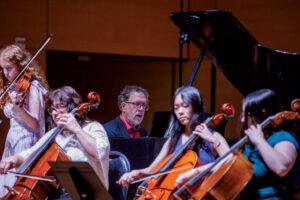
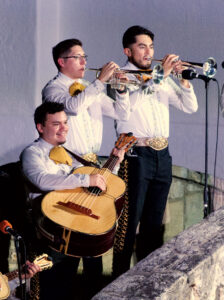
At the heart of this mission are two distinctly Mexican traditions — Mariachi and Ballet Folklórico — which Alamo City Arts has expanded to ensure future generations carry forward. The Alamo City Mariachi Academy, launched in March of 2025, is already creating ripples. Students as young as 8 years old gather to learn violin, guitar, vihuela, guitarrón, trumpet and voice, guided by instructors who are also professional performers.
“These little kids are learning the violin or guitar now, but in a few years, when they’re juniors or seniors in high school, they’ll be accompanying the mariachis for events. So, the band is sort of self-replenishing,” shared Artistic Director, Katie Rodriguez Hall. “We’re teaching the next generation to take over their spots.”
It’s not just about technique. Mariachi carries immense cultural pride — a sense of identity that resonates in every note. As Katie described, “When they start to learn some of these songs they grew up listening to, you can see it connecting dots — core memories they’re triggering and making at the same time. It’s this beautiful chord that represents a state and a heritage.” Instructors celebrate small victories, from tuning an instrument correctly to hitting that first clean note, often with laughter and encouragement.
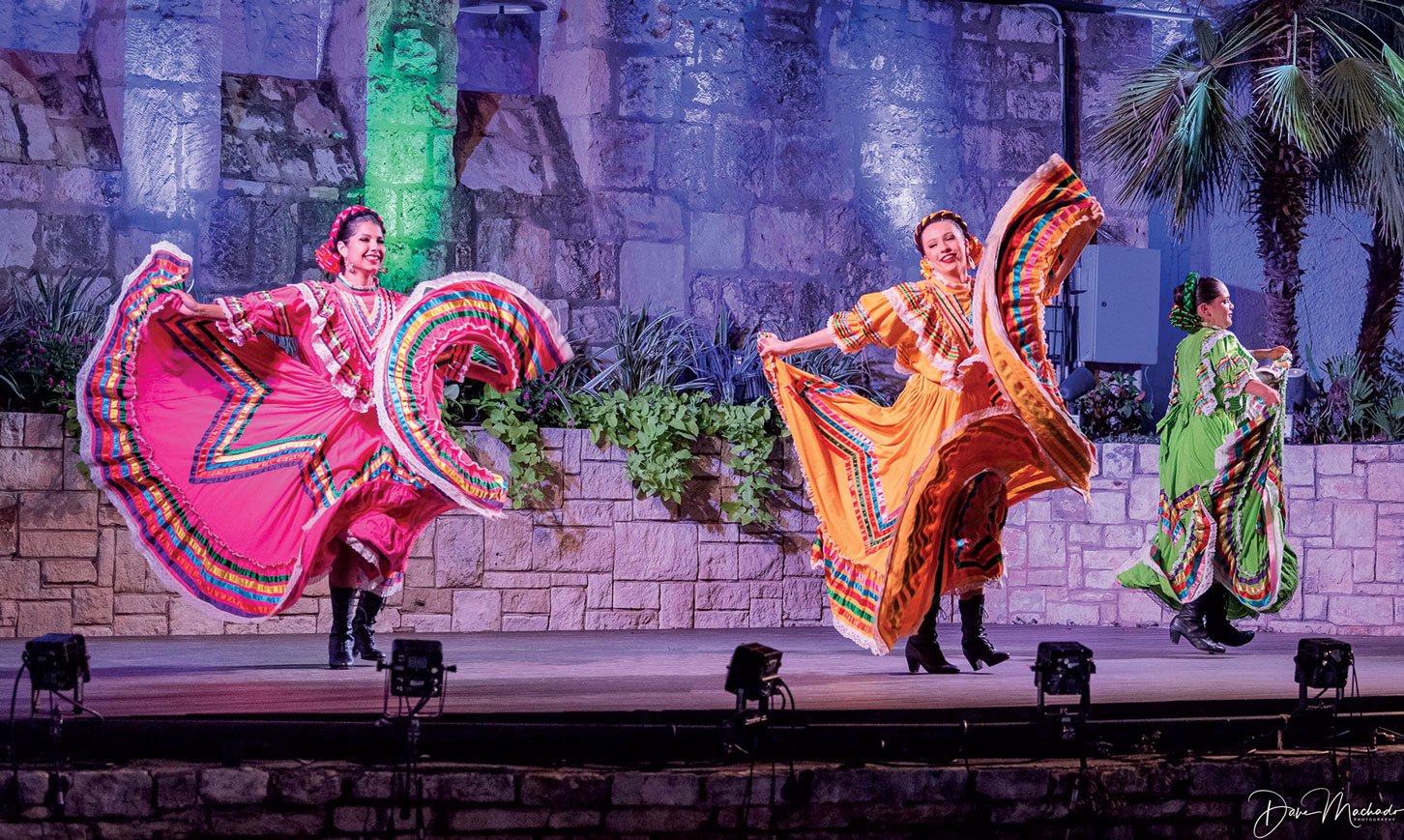
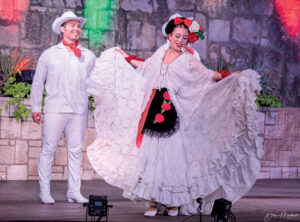
Alongside mariachi, folklórico dance remains one of the organization’s most vibrant offerings. Alamo City Arts teaches dances from regions across Mexico — Jalisco, Veracruz, Chiapas, Sinaloa, Tabasco, Chihuahua and Oaxaca — each with its own authentic costumes, rhythms and stories. The program welcomes everyone, from toddlers to a 76-year-old student who still commands the dance floor. Katie delights in the way folklórico empowers children: “What I think is so sweet is that the little girls just want to twirl in the skirt. They love it. It’s instilling that pride, again, without arrogance.”
Whether through the swirl of ribbons in a Jalisco skirt or the strum of a guitarrón, Alamo City Arts is ensuring that these living traditions remain accessible and alive. With year-round classes, frequent performances and a focus on passing oral and artistic traditions from one generation to the next, they embody what it means for artists to teach artists — and in turn, to sustain community and culture.
The Tobin Center for the Performing Arts:
Generation NEXT
At The Tobin Center for the Performing Arts, education isn’t an afterthought — it’s at the heart of their mission. Through the Generation NEXT initiative, The Tobin Center has built a dynamic framework of programs designed to nurture creativity from birth through 12th grade.
“Our goal is to bridge the gap between education and the arts,” explained Kimberly Stephenson, Director of Education. “We want students to express themselves through the arts. There’s no need to become something else — we want to empower them.”
That empowerment begins at the very earliest stages of life. The Baby Arts Play program helps teachers use music, rhythmic speech and playful interaction to engage infants and toddlers, preparing them for later learning. From there, children grow into Early Arts, which introduces 3- to 5-year-olds to performance through classroom visits from dancers, actors, musicians and even puppeteers. For many, it’s their first-ever field trip to a theatre. The Tobin Center then expands into school-time performances, sensory-friendly programming, master classes and artist workshops tailored to match curriculum in subjects ranging from architecture to reading comprehension.
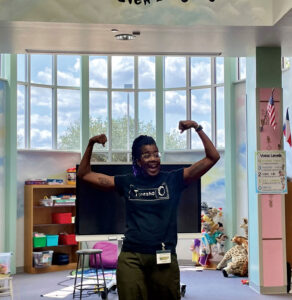
The impact is tangible. In one example, Stephenson recalls a selectively mute student who, through a visual art tableau exercise, revealed comprehension and engagement in ways teachers hadn’t seen before. “Creating that safe space where students feel empowered to take risks — that’s the real work in creative education,” she said.
Artists themselves are integral to the program’s strength. Puppeteer Katrin Blucker Ludwig has witnessed the spark first-hand: “What I enjoy about working with young artists is their fearless creativity and teamwork. Theatre, improv and puppetry create a space where all ideas are welcome — it’s a ‘yes and’ environment that encourages even the shyest voices to join in.”
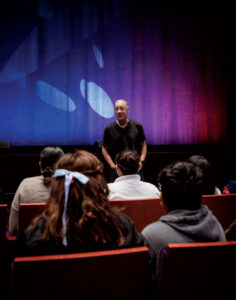
Sarah Davis, a Tobin teaching artist and Certified Child Life Specialist, highlights the developmental impact: “It’s amazing to see what the performing arts can do for a child of any age and it’s clear that it’s a necessary part of a child’s education.”
Other artists echo the sentiment. “Being a teaching artist means witnessing how art inherently creates space for collaboration and relationship,” said Tanesha Payne, founder of sumRset Movement. And Joyous Windrider Jimenez added, “The joy and engagement I see on children’s faces during these sessions inspire me to keep learning and growing in this important work.”
Now in its tenth year, Generation NEXT has grown into one of San Antonio’s most robust arts education programs. With world-class artists like David Gonzalez leading workshops on storytelling and bullying prevention, The Tobin Center is raising the bar for communities not just in Texas, but across America. As Kimberly puts it, “We bring in amazing programming that others can’t or won’t. We want to create more
options rather than making people choose.”
S.M.A.R.T. 501c3:
Creativity as a Foundation for Learning
At the heart of San Antonio’s Southside, renowned artists, Yvette and Andy Benavides, have created more than just a studio — they’ve built an ecosystem of creativity. For over three decades, the couple has combined art handling, design, cultural consulting and community-building with a passion for education. Their nonprofit program, centered at Briscoe Elementary School, has become a model for how the arts can shape academic performance, emotional wellness, self-confidence and, ultimately, success in young learners.
Two decades ago, when art was being stripped from public school curriculums, the couple saw an opportunity. “At the root of it, it’s all about creativity — being an innate part of our human existence,” reflected Andy.
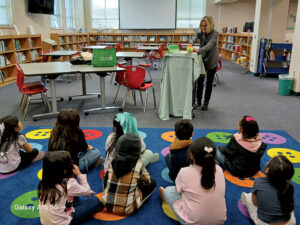
Their approach has been transformative — Briscoe Elementary’s performance has improved from a D to a B rating, with creativity woven directly into the classroom experience. The Benavides’ holistic curriculum blends art, neuroscience, yoga and gardening, teaching children not only how to create but how to understand their own minds and emotions. “You start to own your learning when you understand how your brain and body works,” said Yvette.
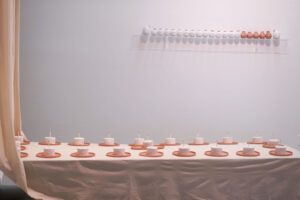
The program is comprehensive and grade-specific: kindergarteners begin with ceramics, first graders explore abstract painting and color theory, and by third grade, students are connecting optical illusion art to neuroscience. Fourth and fifth graders dive deeper, often creating public art projects — some even commissioned and paid for — that give them real-world validation as artists.
As Andy puts it, “We’re not just creating the next generation of artists, we’re empowering them with individuality so they can become independent decision makers, empathetic adults and contributors to society.”
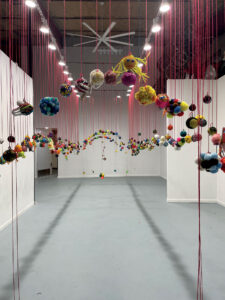
Field trips to the Benavides’ garden and studio add yet another dimension. Briscoe Elementary integrates these visits into its year-round curriculum, allowing children to connect art with sustainability, science and daily life. For Andy and Yvette, the message is clear that creativity isn’t a luxury, it’s a foundation for human growth. “We teach our kids that everything is art,” said Yvette. “It’s how you speak, how you pick out your clothes. I don’t say art anymore — I say creativity.”
Through their work, Andy and Yvette have taught over 10,000 children in 20 years. Their program is ambitious, but its impact is undeniable. Generations of young San Antonians are learning not just how to draw or sculpt, but how to see themselves as creators in every aspect of their lives.
Fueling the Future of San Antonio’s Creative Pulse
Across the Alamo City, these integral programs highlight a simple yet profound truth — that the arts are not just for audiences, they’re for all of us. They’re how we learn to see ourselves, how we preserve traditions and how we imagine what’s possible. Whether it’s a preschooler discovering rhythm through puppetry, a teenager finding pride in a mariachi song or an elementary student planting the seeds of creativity in a garden classroom, the impact reaches far beyond the stage or studio. By teaching the next generation, San Antonio’s artists are doing more than passing on skills — they’re cultivating empathy, resilience and imagination in our communities, and in the leaders of tomorrow.