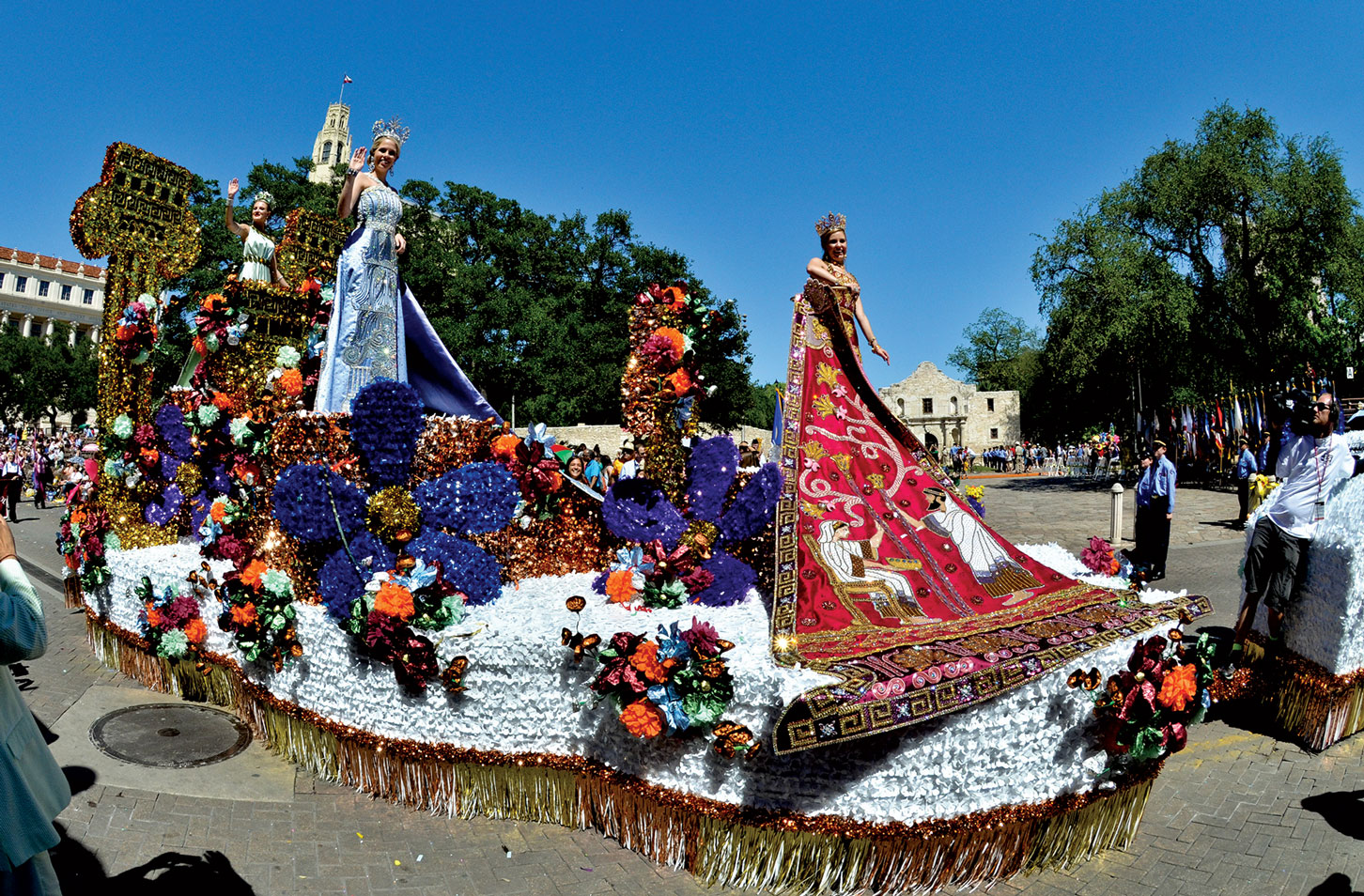
This is the Battle of Flowers Parade, the oldest and most historic event of San Antonio’s annual Fiesta celebrations and the place where the city’s signature festival began. More than 134 years after the first blossoms were tossed in front of the Alamo, the parade remains both a beloved tradition and a living expression of the city’s identity. In 2026, that expression is shaped by a theme rooted in imagination and storytelling, “From Pages to Possibilities,” setting the tone for floats inspired by books, history and the power of ideas.
Fiesta® San Antonio is the annual spring festival that transforms the city every April, typically lasting 11 days with more than 100 official events and drawing roughly 2.5 million participants from around the world each year. The celebration falls on dates that coincide with and commemorate the anniversary of the Battle of San Jacinto, which secured Texas’ independence in 1836.
Fiesta features three major parades: the Battle of Flowers Parade in downtown San Antonio that passes the Alamo, the Texas Cavaliers River Parade as viewed from along the River Walk, and the illuminated Fiesta Flambeau Parade at night.
Each spring, for the Battle of Flowers procession, roughly 350,000 spectators line the 3.2-mile parade route through downtown, while more than a million additional viewers watch online. Rolling rain or shine, the parade is organized entirely by an all-volunteer, all-women nonprofit. It is the oldest women-sponsored parade of its kind in the United States. What audiences see is spectacle. What sustains it is history, education and civic pride.
Where Fiesta Began
The Battle of Flowers began in 1891 when Ellen Maury Slayden, a civic-minded citizen, inspired by floral celebrations she had seen in Europe and Mexico, proposed a patriotic parade to honor the heroes of the Alamo and the Battle of San Jacinto. Organized by Slayden and other civic-minded women as part of San Jacinto Day commemorations, the first parade featured horse-drawn carriages, bicycles, wagons and children dressed as flowers.
Despite torrential rain and a postponed appearance by President Benjamin Harrison, the event was an immediate success. Spectators and participants engaged in a mock battle of petals, and a veteran of the Battle of San Jacinto rode among the honorees. The parade returned the following year, marking the informal beginning of both the Battle of Flowers Association and Fiesta itself.
A Tradition That Endures
By the early 20th century, the parade had become the centerpiece of a growing citywide celebration. While oversight briefly shifted, the women reclaimed full control in 1909, formally adopting the name Battle of Flowers Association and reaffirming the parade as a women-led endeavor.
The parade paused during World War I in 1918 and again during World War II from 1942 through 1945 as members redirected efforts toward wartime relief and support for servicemen. When it returned, it symbolized renewal and collective resilience.
The Parade Today
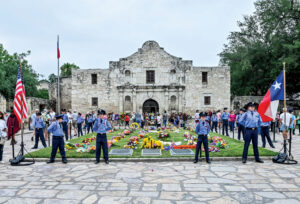
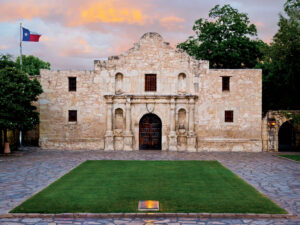
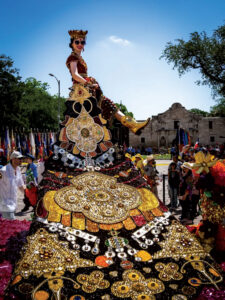
Today’s Battle of Flowers Parade is both deeply traditional and carefully contemporary. It remains focused on the Alamo, where each float pauses to present a floral tribute honoring Texas’ fallen heroes. A cadet places a wreath from each float in front of the Alamo, creating a moment of reverence and respect that explains why the parade exists.
“This year our parade theme is ‘From Pages to Possibilities,’” said Helen Meyer, vice president and parade chair. “It celebrates the timeless magic of books and stories and the power of imagination to spark change and seek limitless boundaries. It is my hope that every float you see on April 24 will be a story to be told.” Together with the current president of the Battle of Flowers, Kathleen LeFlore, Meyer is working with other volunteers to plan the 2026 parade.
“What sets the Battle of Flowers Parade apart is that we have big helium balloons, as they have in the Macy’s parade, and we also have horses, carriages and wagons, which other Fiesta parades do not have,” Meyer said. “The city opens the road in front of the Alamo for the parade, as tradition requires. Each float stops to give a floral tribute. That is something we are proud to continue.”
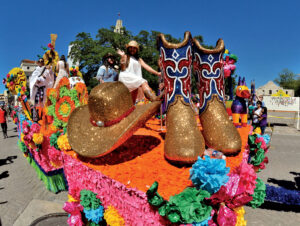
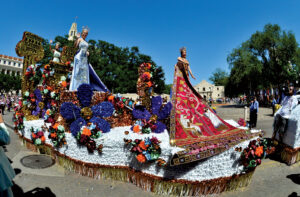
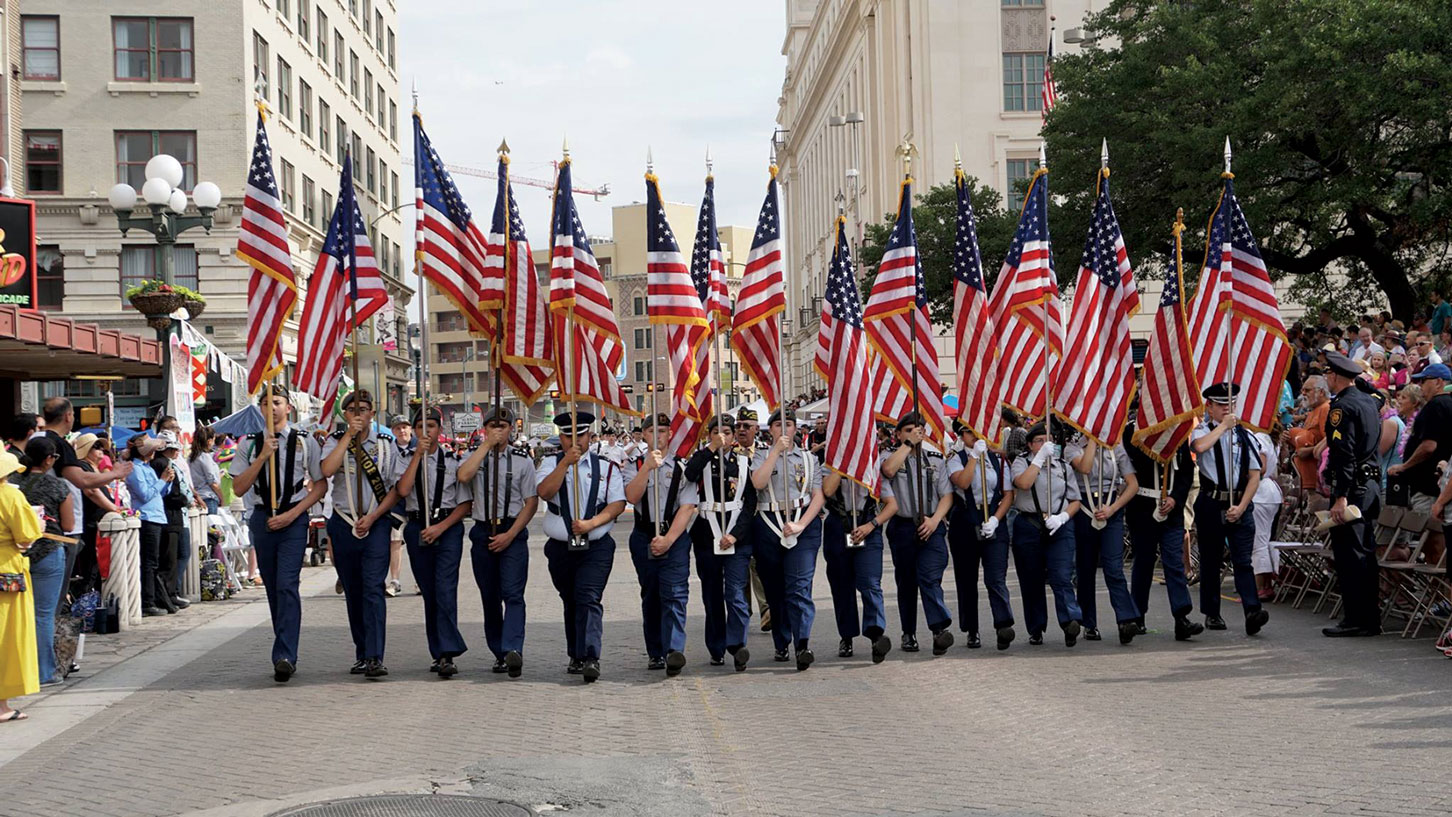
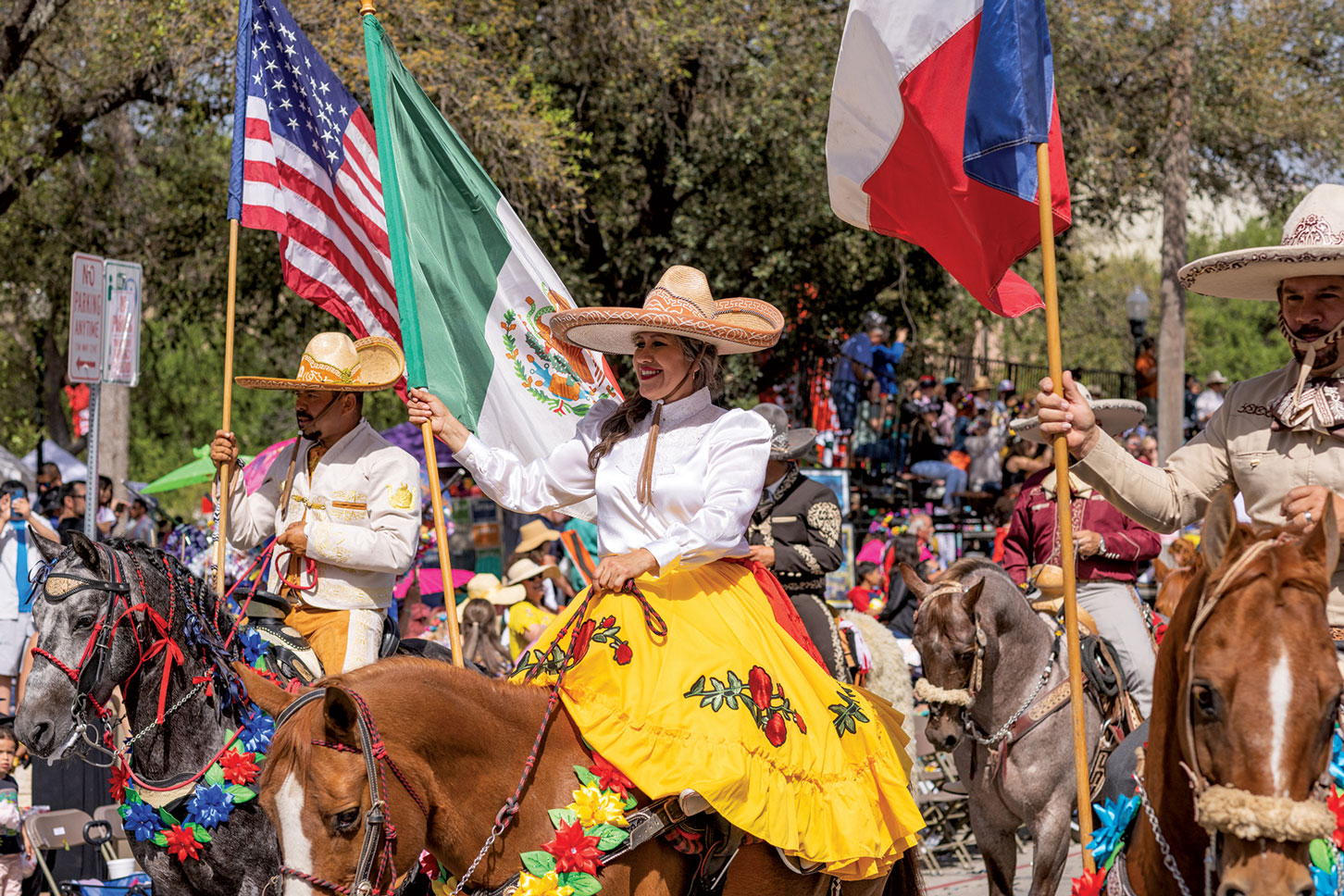
The parade typically features 56 to 58 floats, along with marching bands, equestrian units, military participants and Fiesta royalty. Volunteers in bright yellow hats move briskly along the route, keeping everything on schedule. Introduced in 1972 as a nod to the yellow rose, the hats are now worn by Battle of Flowers volunteers, a symbol of pride earned through years of service.
Stories on Wheels
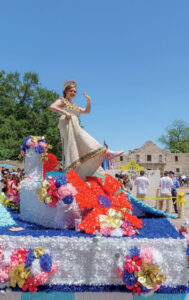
That storytelling focus is most visible in what Meyer calls the “parade within the parade.” Ten floats are designed and built by the Battle of Flowers for high school students from across the region, fully sponsored by the parade.
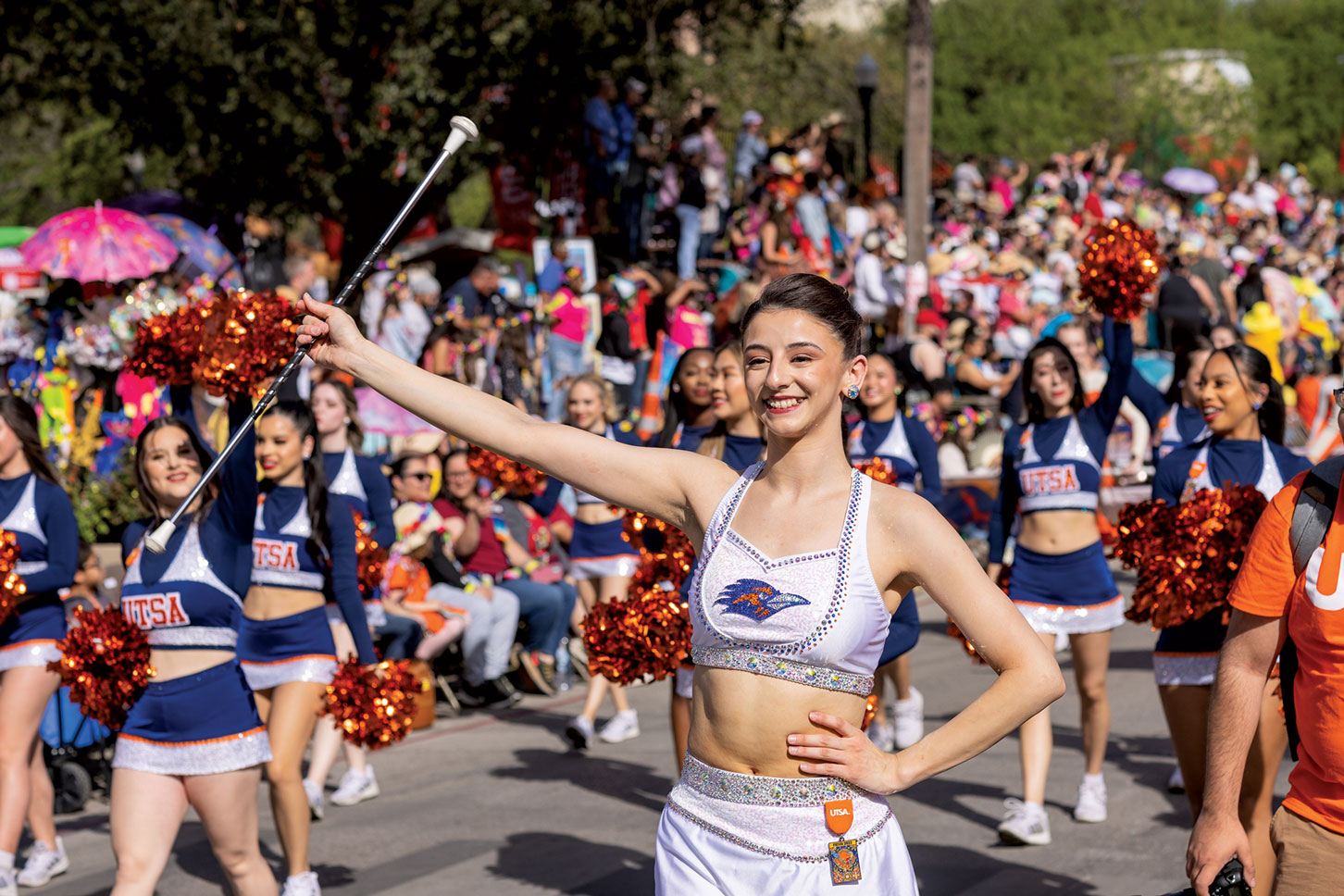
Students begin work in the fall, collaborating with parade mentors on design, music and performance. Their floats interpret literature, mythology, history and imagination, accompanied by bands, drill teams, ROTC units and pep squads. Towering figures inspired by books and stories that shaped childhood imaginations turn this section into a moving showcase of youthful creativity.
“Books can open doors for our youth,” Meyer says. “This part of the parade is really focused on our community and especially its young people.”
Three weeks before parade day, students gather for a full dress rehearsal inside the Battle of Flowers float warehouses, known as “The Dens,” offering a behind-the-scenes look at the scale and care behind the celebration.
A Fiesta Tradition with a Backbeat
The Battle of Flowers Band Festival
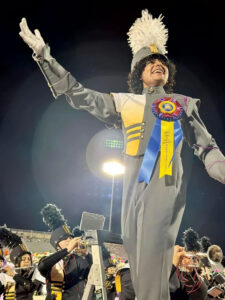
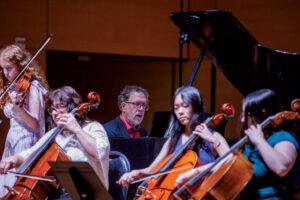
Held the evening before the parade, the Battle of Flowers Band Festival is one of Fiesta’s most cherished musical events. Founded in 1936, it is recognized as the oldest high school marching band festival in the nation.
The festival takes place at Alamo Stadium and brings together more than 4,000 student musicians from San Antonio and surrounding communities. The evening includes individual band performances followed by a massed band finale.
This year’s festival includes a special appearance by Tejano music icon Patsy Torres, who will perform alongside the students. Torres will open the evening singing John Lennon’s “Imagine” and return during the finale to join the massed bands for a Journey song as fireworks light the stadium. Her participation underscores the festival’s connection to San Antonio’s musical heritage while bridging generations through performance.
Beyond the spectacle, the Band Festival remains a cornerstone of the Battle of Flowers educational mission, awarding scholarships and supporting school music programs that reflect decades of community investment.
Show Us Your Shoes
One of the parade’s most beloved traditions began spontaneously in the late 1960s or early 1970s, when a spectator called out to a Fiesta queen to reveal her shoes. She lifted her skirt to her ankle, the crowd erupted, and a tradition was born.
Today, during all Fiesta parades, the Queen of Fiesta, duchesses and other court members wear custom footwear tied to parade themes, Texas history or personal symbolism. Cowboy boots, sneakers, whimsical slippers and elaborate designs peek out from beneath formal gowns.
“They are royalty for a week,” Meyer said, “but they are San Antonio women who wear comfortable everyday shoes just like the rest of us.”
Royalty and Partnership
While the Battle of Flowers does not crown its own queen, it proudly welcomes Fiesta royalty selected by the Order of the Alamo and other nonprofit organizations. The Queen of Fiesta and her court serve as ambassadors throughout the celebration, adding grandeur while reflecting the cooperative spirit that defines Fiesta across organizations.
Education at the Core
Behind the spectacle is a nonprofit mission celebrating Texas history. That mission expanded with the creation of the Battle of Flowers Foundation in 2023, which supports hands-on educational experiences through travel, storytelling and the arts.
Through partnerships with San Antonio ISD, the foundation has funded field trips for approximately 1,600 students each year to the Alamo, the Texas Capitol and the Bob Bullock Texas State History Museum. Scholarships are woven throughout programming, with the group’s annual Band Festival alone awarding $120,000 through 2026 to student musicians.
“We created the foundation so we could grow and do more for the community,” Meyer said. “The future of the Battle of Flowers is sending students on trips to teach them Texas history and spark imagination. The best way to do that is through hands-on experiences.”
Beyond Parade Day
The Battle of Flowers has expanded its reach through the “Traveling Float,” visiting schools, parks and community events across San Antonio in the month leading up to Fiesta. Families climb aboard for photos while this year, in keeping with the parade theme, book drives and educational outreach at traveling float events will reflect the parade volunteers’ life-long commitment to their community.
A Living Tradition
For volunteers like Meyer, who has served the organization for two decades, the parade is both a personal commitment and a shared legacy. “We start planning the parades more than a year in advance,” she said. “Everyone works his or her way up, learning every part of the process. It is a true labor of love.”
That love has carried the Battle of Flowers through wars, economic hardship and a global pandemic. When Fiesta was canceled or scaled back in 2020 and 2021, the association helped create the Fiesta Porch Parade, encouraging residents to decorate their homes and businesses. It was a reminder that Fiesta lives in neighborhoods as much as downtown streets.
More than a century after the first flowers fell in front of the Alamo, the Battle of Flowers Parade remains where Fiesta began and where its meaning is clearest. It is a celebration, a remembrance and a promise that the stories of Texas will continue to be told, one float at a time.