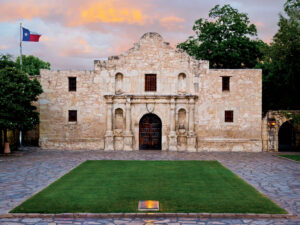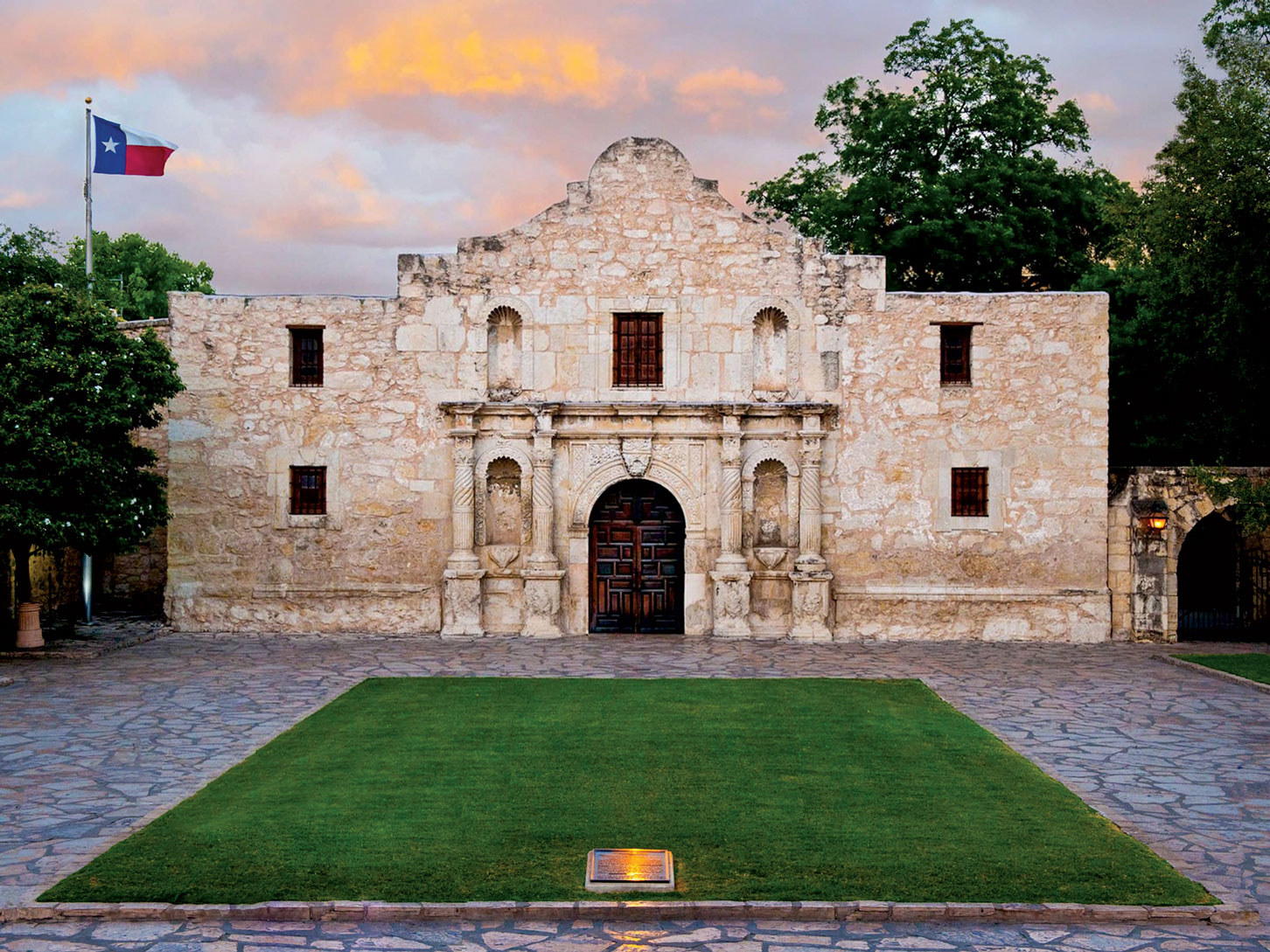
Today, most people think of the Alamo as a single structure: the limestone church rising from Alamo Plaza, solemn and self-contained. But that familiar image is the product of survival, accident and later choices — not historical reality.
“What we have to understand,” said historian and author Stephen L. Hardin, “is that most of the Alamo is no longer here.”
At its largest in the mid-1700s, the mission complex — the church, the priests’ quarters, or convento, a granary, workrooms, storerooms and housing for Native Americans, all surrounded by an outer wall, once occupied up to four acres. Spanish master masons supervised the construction, which was mostly done by the Coahuiltecan tribes that found shelter in the compound.
By 1778, disease had decimated the native population. When the Spanish government secularized the mission system in 1793, the church, never entirely finished or roofed, became a storehouse, a parish church, a hospital and a military site. (In fact, the compound changed hands at least 16 times among Spanish, Mexican, Texan, Union and Confederate forces between 1810 and the end of the Civil War.)
In 1835, with the Texian Rebellion underway, Mexican General Martin Perfecto de Cós fortified the old mission compound to defend San Antonio against Ben Milam’s Texian forces. The rebels won the Battle of Béxar, and fortified the compound further. But the added fortifications couldn’t stop the full force of Santa Anna’s siege. “Too much perimeter and too few defenders — that was the tactical dilemma for the Texians,” Hardin said. When the assault came in the predawn darkness of March 6, there weren’t enough Texians to man the cannons and the walls.
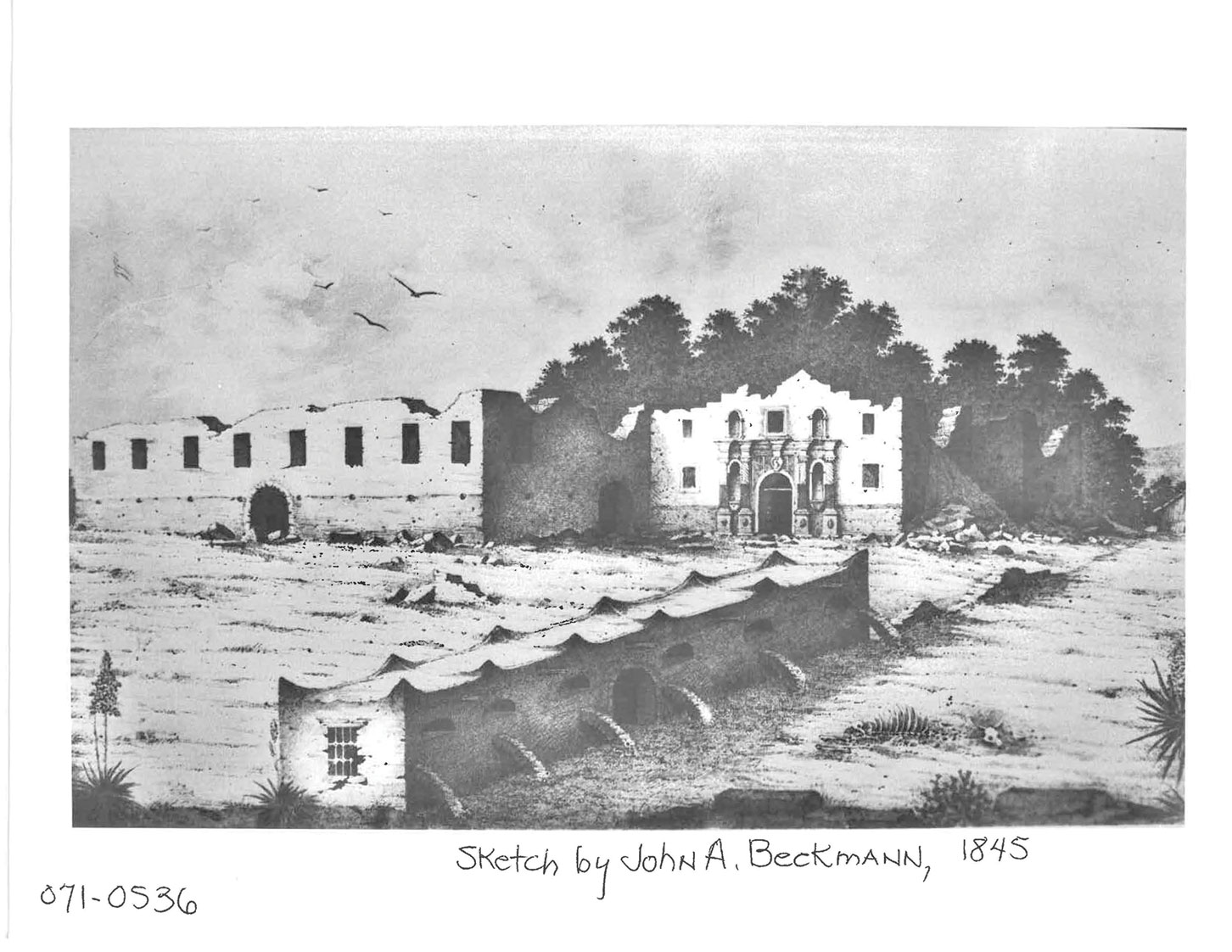
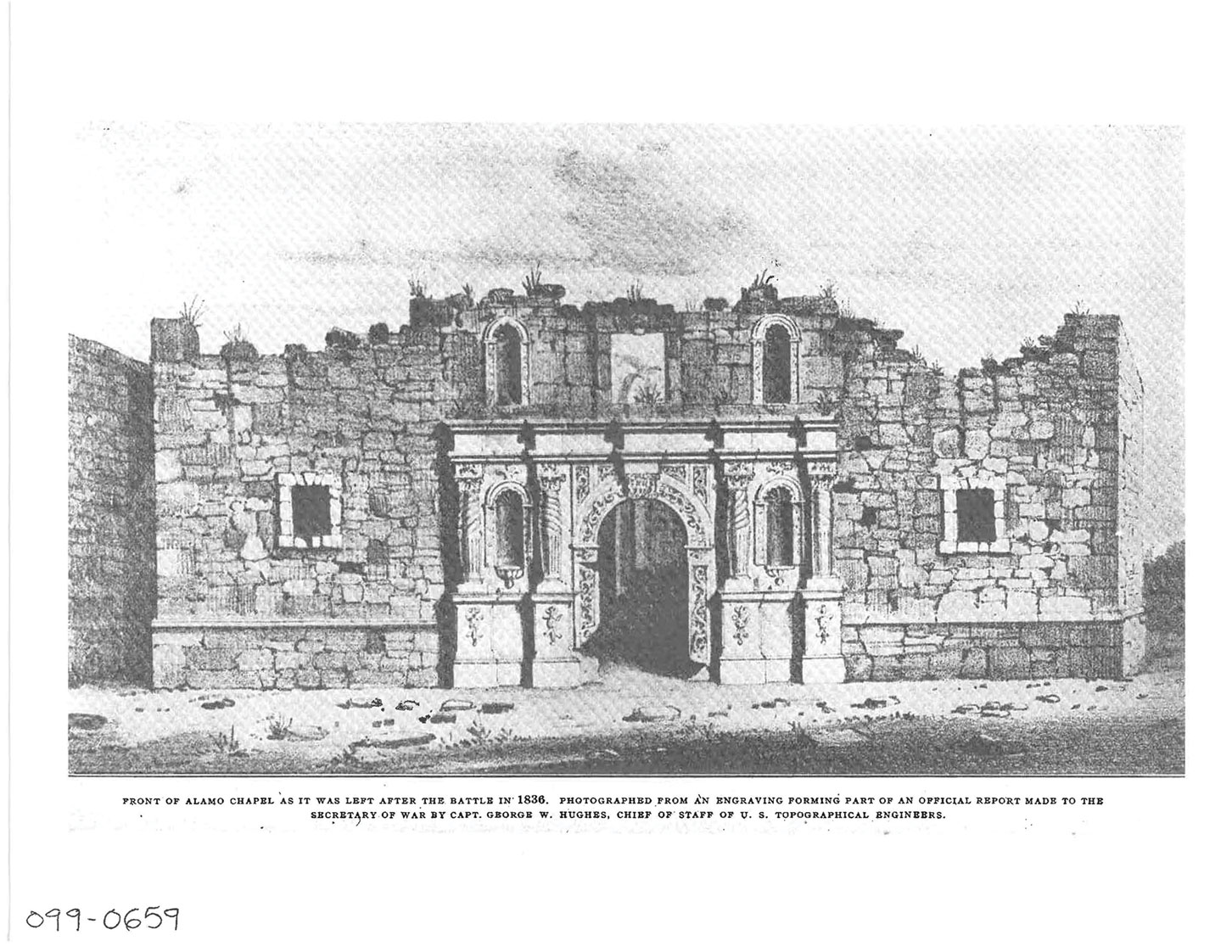
After the battle, Santa Anna ordered that anything that could be used for defending the Alamo be destroyed. When he was finished, the outer compound walls were said to have been reduced to “low ridges of rubble and earth.” At the same time, said Alamo Trust Senior Curator Ernesto Rodriguez, “Some of the other structures on the site fell into disrepair, and they began to lose their stone.”
Although the ruined fortress became a tourist attraction almost immediately, the bleak old compound area around it was not so attractive. “At first, the compound was sort of an eyesore on the outside of town,” said Hardin. “As the city grew, it became an eyesore in the middle of town. It was kind of embarrassing, really.”
The city tried to address the piles of rubble left by the dismantled walls and fortifications. “It’s said that in 1840, the City Council decided to sell that stone for fifty cents a cartload,” said Rodriguez. “So, it got shifted all over the area for building material. It’s a lot easier to buy stone that’s already been quarried than to quarry it yourself. And in 1871, the last portion of the main gate was lost when the city bought it and tore it down. So, a lot of the stone is spread out all over town, honestly, and unfortunately, we don’t know exactly where it went.”
According to an old City of San Antonio brochure about the Alamo, Samuel Maverick knew where some of the Alamo compound went. Maverick, a land baron and later Texas legislator, came to San Antonio in 1835. In 1836, when the Battle of the Alamo took place, Maverick was out of town, helping to write the Texas Declaration of Independence. But in 1838, when he moved his family here, he built his home on land on the northeast corner of the Alamo compound, and later subdivided the property, calling the neighborhood “Alamo City.”
“I don’t have any trouble believing that some of the stones of the Alamo were included in his walls or fences,” Hardin said. “There would have been a lot of stone there, and he had to clear a lot of it to build.”
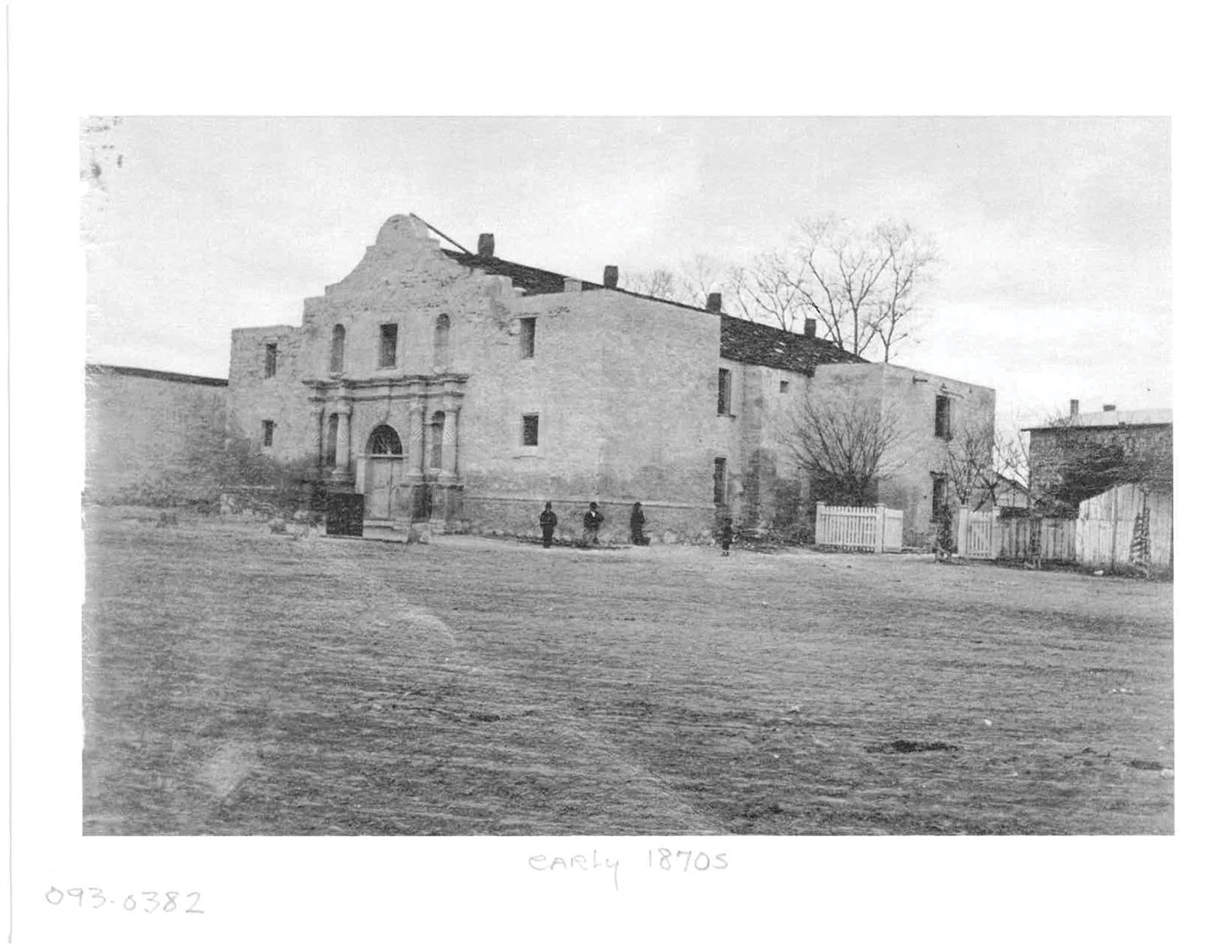
By 1850, the Alamo had become a U.S. Army quartermaster depot. That’s when the Army built a second story on the church for storage, and built the building’s first roof, adding the now-famous parapet (“the Alamo hump.”) The parapet is synonymous with the Alamo church today. But when it was added, an Army artist who sketched it described the feature as “a ridiculous scroll, giving the building the appearance of the headboard of a bedstead.”
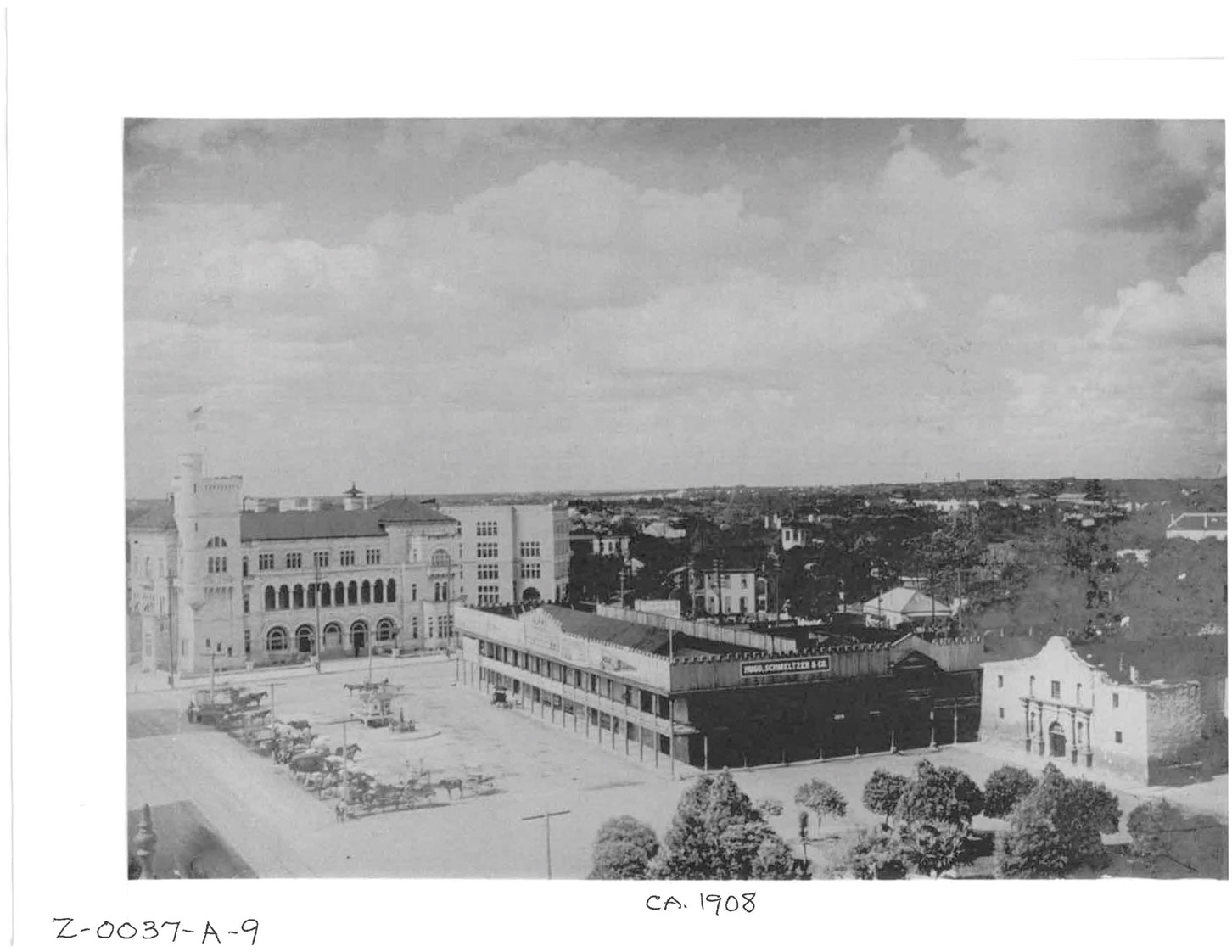
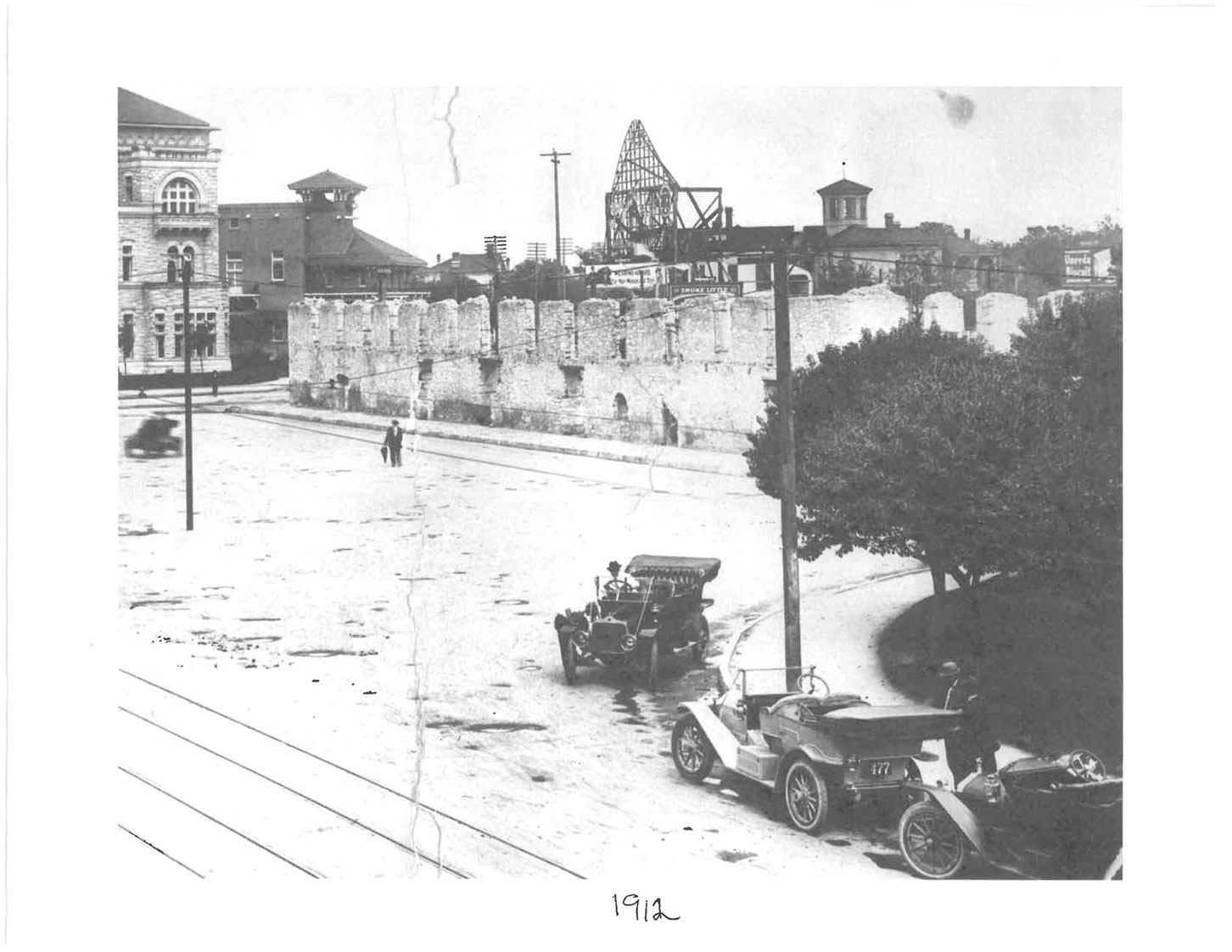
In 1878, after the Army depot moved to Fort Sam Houston, business stepped in. A merchant bought the convento, or “Long Barrack,” and turned it into a retail store, remodeling it to resemble a medieval castle wall. He used the Alamo church as a warehouse. When he died, another merchant bought the convento, but the Alamo chapel reverted to the church, and the church sold it to the state in 1883.
At that point, most folks saw the little church as the real Alamo, and the convento was in danger of destruction. In 1903, Adina de Zavala, vice president of the Daughters of the Republic of Texas (DRT), spearheaded a campaign to purchase and preserve the convento as part of the Alamo. With help from philanthropist Clara Driscoll, the campaign succeeded, but Driscoll’s intent was to tear the convento down, not preserve it. DeZavala’s view prevailed, the convento was saved, and in 1905 the state legislature entrusted both convento and church to the stewardship of the DRT.
Nearly a century later, in 2011, the Texas General Land Office assumed ownership of the Alamo site, and in 2015 took over management, delegating that job to the new nonprofit Alamo Trust Inc. With the Remember the Alamo Foundation, the Trust is overseeing a $500 million-dollar program to preserve and expand the present Alamo site and create a new Visitor Center and Museum to bring the history of the Alamo, from the mission era to the present, to life.
“You think of everything that has happened, and how the Alamo truly did fulfill its original mission,” Rodriguez said. “It established a community on the San Antonio River. And today it’s embedded in all parts of our history.”